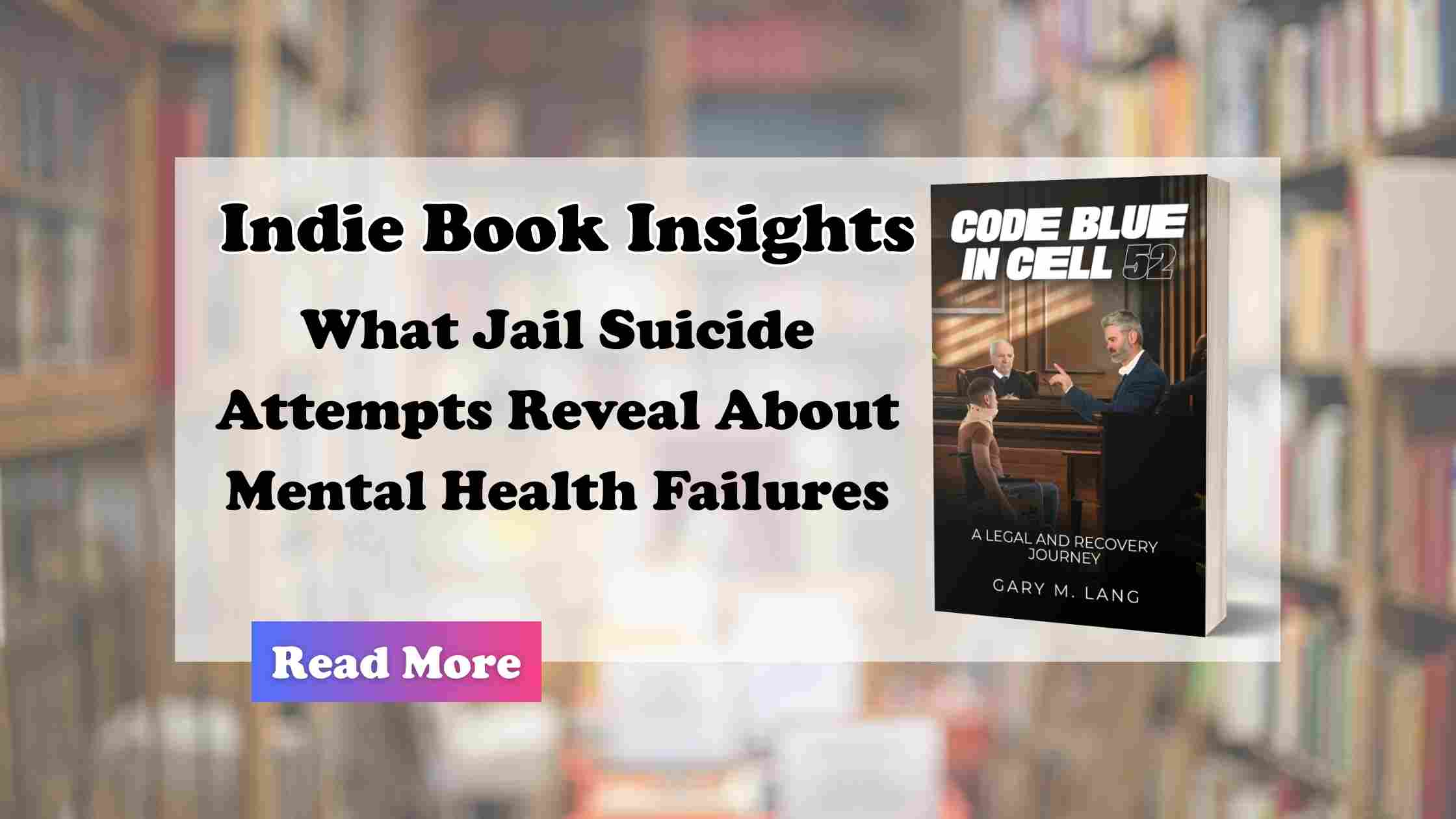
When a suicide attempt happens inside a jail, it is often treated as an isolated crisis. An emergency response is activated, reports are filed, and the system moves forward. However, these attempts rarely come without warning. They reveal deeper mental health failures that begin long before a person enters custody and continue after the incident is labeled resolved.
Suicide Screening Is Not the Same as Care
Most county jails rely on intake screenings to identify suicide risk. These screenings usually take place during booking, when individuals are frightened, exhausted, intoxicated, or withdrawn. In that moment, honest answers are unlikely. Fear of isolation or punishment can discourage people from admitting distress.
In Code Blue in Cell 52: A Legal and Recovery Journey by Gary M. Lang, the young man who attempts suicide passes through the system without effective protection. Procedures exist, but they fail to capture the reality of his mental state. It reflects a common problem. Screening tools are treated as safeguards, but their effectiveness is only as good as the conditions under which they are used.
Protocols Break Down in Real Conditions
Even when risk is identified, protocols often fail to materialize in practice. Staffing shortages, overcrowding, and poor communication can render safety measures mere checklists. Observation rounds are rushed. Notes are missed. Responsibility becomes blurred.
The novel shows how a single missed moment can have devastating consequences. The system records compliance, but compliance does not guarantee care. Real-world conditions inside jails are chaotic, and mental health support is often stretched thin. When protocols replace presence, people fall through the cracks.
Mental Illness Does Not Pause at the Jail Door
Many incarcerated individuals enter jail with untreated mental health conditions. Depression, trauma, addiction, and anxiety are common. Jail environments often intensify these struggles rather than stabilize them.
The young man in Code Blue in Cell 52 carries emotional weight shaped by family addiction and desperation. His attempt is not sudden or inexplicable. It is the result of mounting pressure with no meaningful outlet. It mirrors countless real cases where incarceration becomes the breaking point for people already in crisis.
Survival Is Counted as Success
When a suicide attempt is not fatal, institutions often treat survival as a positive outcome. From an administrative standpoint, the worst-case scenario was avoided. From a human perspective, the damage may be permanent.
The novel makes this distinction clear. The boy survives, but his life is fundamentally altered. Cognitive loss and emotional absence replace the person he once was. The system moves on, yet he and his family carry the cost. It reflects a broader failure to measure outcomes in human terms rather than institutional ones.
Accountability Requires Looking Beyond Forms
Jail suicide attempts reveal how mental health care fails when it is reduced to forms, checklists, and legal protection. Meaningful prevention requires time, trained staff, and continuity of care. It also requires a willingness to examine failures honestly rather than quietly closing files.
This book illustrates how truth only begins to emerge when individuals challenge official narratives and pose uncomfortable questions. Reform depends on this kind of scrutiny.
For mental health and criminal justice reform conversations, jail suicide attempts should be viewed as warnings, not anomalies. They reveal systems that prioritize process over people.
Readers interested in a thoughtful exploration of these failures will find Code Blue in Cell 52: A Legal and Recovery Journey by Gary M. Lang to be a relevant and grounded book that challenges easy answers and asks what real care should look like.
Discover Code Blue in Cell 52 now, available on Amazon: https://www.amazon.com/dp/B0FPZY7YZQ.