

Have you ever noticed how your state of mind shifts from calm to restless to completely drained without any clear reason? One day feels peaceful and focused, the next is filled with urgency, and another feels heavy and unmotivated. These fluctuations are not random. They reflect the natural play of three internal forces that shape your thoughts, emotions, and behavior.
Ancient Indian wisdom identifies these forces as Sattva, Rajas, and Tamas. Together, they form the foundation of how the mind operates. Understanding them brings clarity to emotional patterns that often feel confusing or uncontrollable.
Sattva is the quality of clarity, balance, and harmony. When Sattva is present, the mind feels calm, steady, and light. Thoughts are organized, decisions are thoughtful, and there is a sense of quiet confidence. In this state, actions come from awareness rather than impulse. It is the state in which a person feels most aligned and at ease.
Rajas represents movement, activity, and desire. It fuels ambition, productivity, and the drive to achieve. In moderate amounts, it helps you take action and move forward in life. However, when Rajas becomes excessive, it creates restlessness. The mind begins to race, impatience grows, and there is a constant urge to do more. This often leads to stress and emotional agitation.
Tamas is the quality of heaviness, inertia, and stillness. It is necessary for rest and recovery, allowing the body and mind to slow down. But when Tamas dominates, it results in lethargy, confusion, and lack of motivation. Tasks feel overwhelming, clarity disappears, and there is a tendency to withdraw.
These three forces are always present, constantly shifting in response to lifestyle, environment, and inner habits. This is why your mood can change so noticeably from one day to the next. It is not a flaw. It is a reflection of which quality is currently strongest.
Daily routines play a major role in shaping these states. Fresh, nourishing food, restful sleep, and time spent in calm environments tend to support Sattva. Overstimulation, constant activity, and excessive mental pressure increase Rajas. Poor habits, lack of movement, and cluttered surroundings contribute to Tamas.
Even thoughts have an impact. Gratitude, kindness, and clarity strengthen Sattva. Comparison, competition, and constant desire feed Rajas. Negative thinking and avoidance deepen Tamas.
The key is not to eliminate any of these forces. Each one has a purpose. The goal is to maintain balance, with Sattva as the guiding influence. When Sattva leads, Rajas becomes productive rather than overwhelming, and Tamas provides rest without turning into stagnation.
Simple awareness is the first step. Notice how you feel throughout the day. Are you calm and clear, driven and restless, or heavy and withdrawn? This recognition allows you to respond instead of reacting unconsciously.
Small adjustments can shift your state. If you feel weighed down, gentle movement and fresh air can reduce Tamas. If you feel overstimulated, slowing down and focusing on one task at a time can calm Rajas. If you want to strengthen Sattva, moments of stillness, mindful breathing, and intentional living are effective.
Over time, this awareness creates stability. Instead of being controlled by shifting moods, you begin to understand them. This understanding brings a deeper sense of control and inner balance.
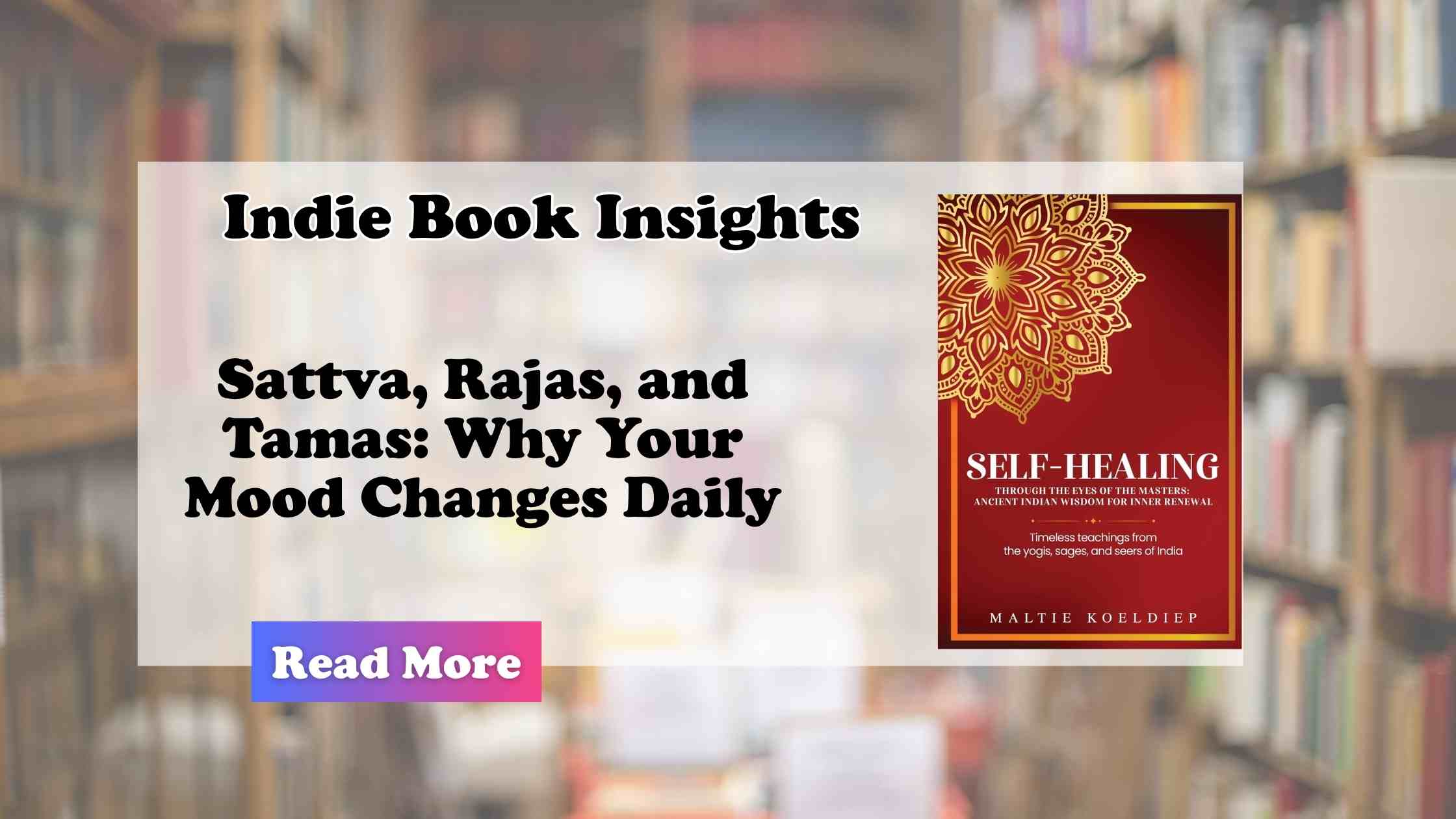
For those who want to explore these concepts further, Self-Healing Through the Eyes of the Masters: Ancient Indian Wisdom for Inner Renewal by Maltie Koeldiep offers a thoughtful and practical approach. The book presents these teachings in a clear and approachable way, helping readers connect ancient insights with modern life. Your mood is not random. It is a signal. When you learn to read it, you begin to understand yourself.
Read this book, available on Amazon: https://www.amazon.com/dp/1971228133/.