In emergency medicine, time is a commodity worth its weight in gold. It is the moment when your patient suddenly begins deteriorating, when the call comes out, and when you hear the beeping of your monitors. Medical professionals know how to handle such scenarios. They are skilled in the art of procedures. However, amidst all this, what can make or break the situation is mental fortitude.
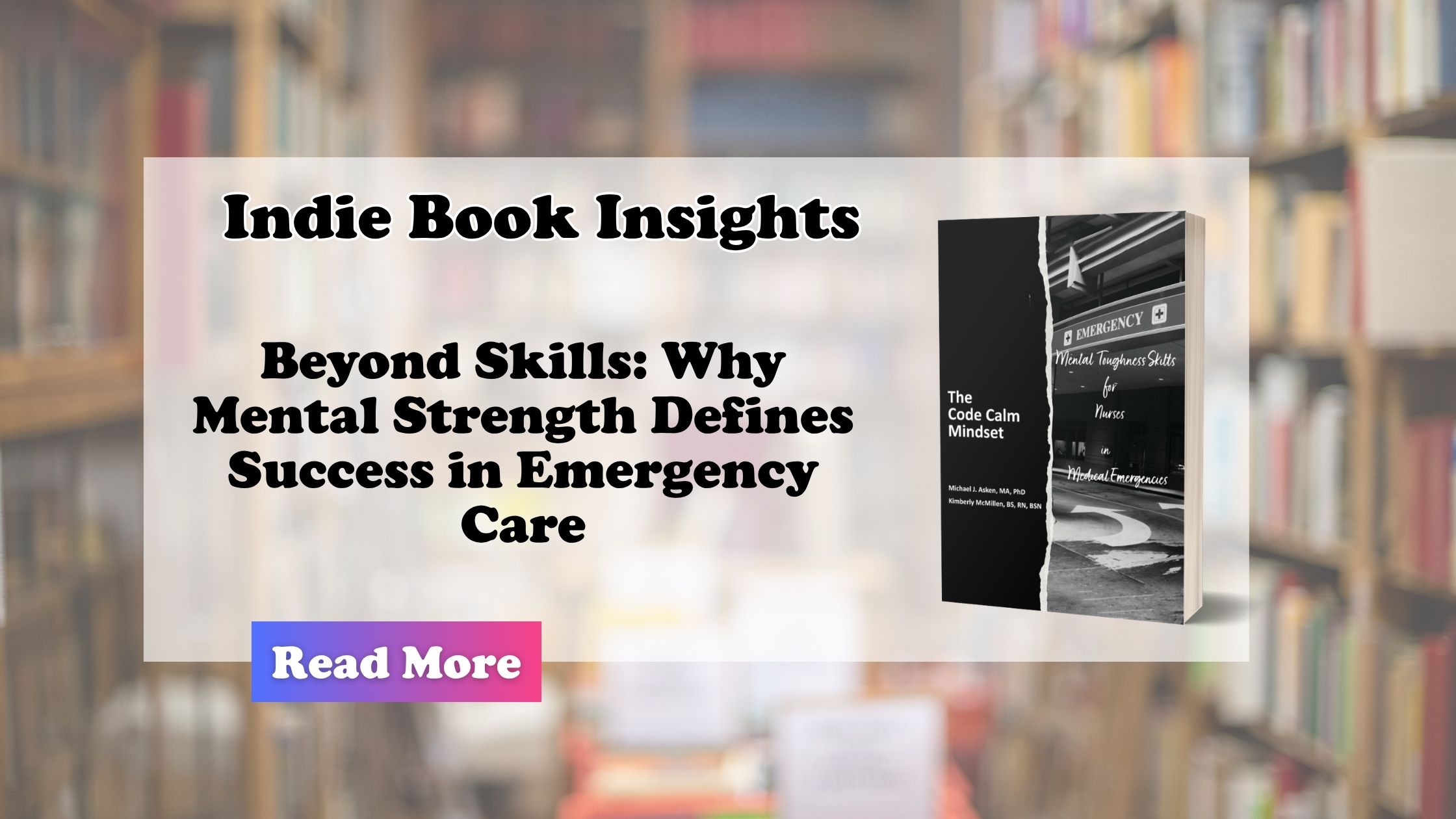
One may be tempted to think that proficiency is the key in an emergency scenario. Indeed, techniques such as cardiopulmonary resuscitation, intubation, and drug therapy are performed with utmost proficiency. Nevertheless, anyone with experience in emergencies will tell you that knowing how to act is only half the battle. You have to maintain your calm amidst the chaos. Such ideas are central to the book The Code Calm Mindset authored by Michael J. Asken and Kimberly McMillen.
Imagine a nurse dealing with a heart attack. The process seems routine, learned through years of practice. However, the reality is quite different. The atmosphere becomes charged with tension, emotions become intense, and the pressure of potential failure begins to mount. At that point, the power of mental strength helps to stay focused on the task ahead, filtering out unnecessary information from the surroundings.
What makes mental strength so effective is its emotional nature. Doctors, nurses, and other medical staff are not cold-blooded creatures who do not feel fear, anxiety, and uncertainty. The importance of having a code calm mindset lies precisely in the recognition of emotions as part of work in an acute care setting. What matters most is the ability of a healthcare provider to keep control over their emotions and focus on the problem at hand.
Asken and McMillen note that psychological strength cannot be seen as an innate trait but as a skill that can be developed. In addition, just as clinicians train to develop their physical skills, they can train their psychological capacities. Activities such as mental rehearsal, positive thinking, and breath regulation might sound unimportant at first, yet they are highly significant during stressful periods. Psychological strength enables practitioners to control their thoughts and behaviors so that they do not lose touch with reality.
There is, however, an emotional side of emergency medicine that should be mentioned too. Every emergency case tells its own story: a sick person in need of professional help, families looking for hope, and the burden of the latter’s responsibilities carried by the practitioner. The emotional capacity and psychological strength of medical workers enable them to balance their compassion toward patients with professionalism in providing assistance.
The Code Calm Mindset recognizes that excellence in emergency medicine is not only a matter of competence; it is also a matter of doing things right when it counts. Excellence lies in the ability to perform tasks efficiently despite the presence of fear, exhaustion, and ambiguity. It is the psychological toughness needed to close the gap between knowing and doing.
Ultimately, emergency medicine is more than just a physical exercise; it is a mental one as well. Technical expertise may be the foundation of survival, but psychological fortitude is the key to ensuring that such expertise is applied properly.
Available on Amazon : https://www.amazon.com/dp/B0CQF13ZRH/