

Fear is often described as a fleeting instinct, a biological reflex designed to protect us from danger. But what happens when fear is not an event, but an environment? What happens when it is not a response, but a childhood?
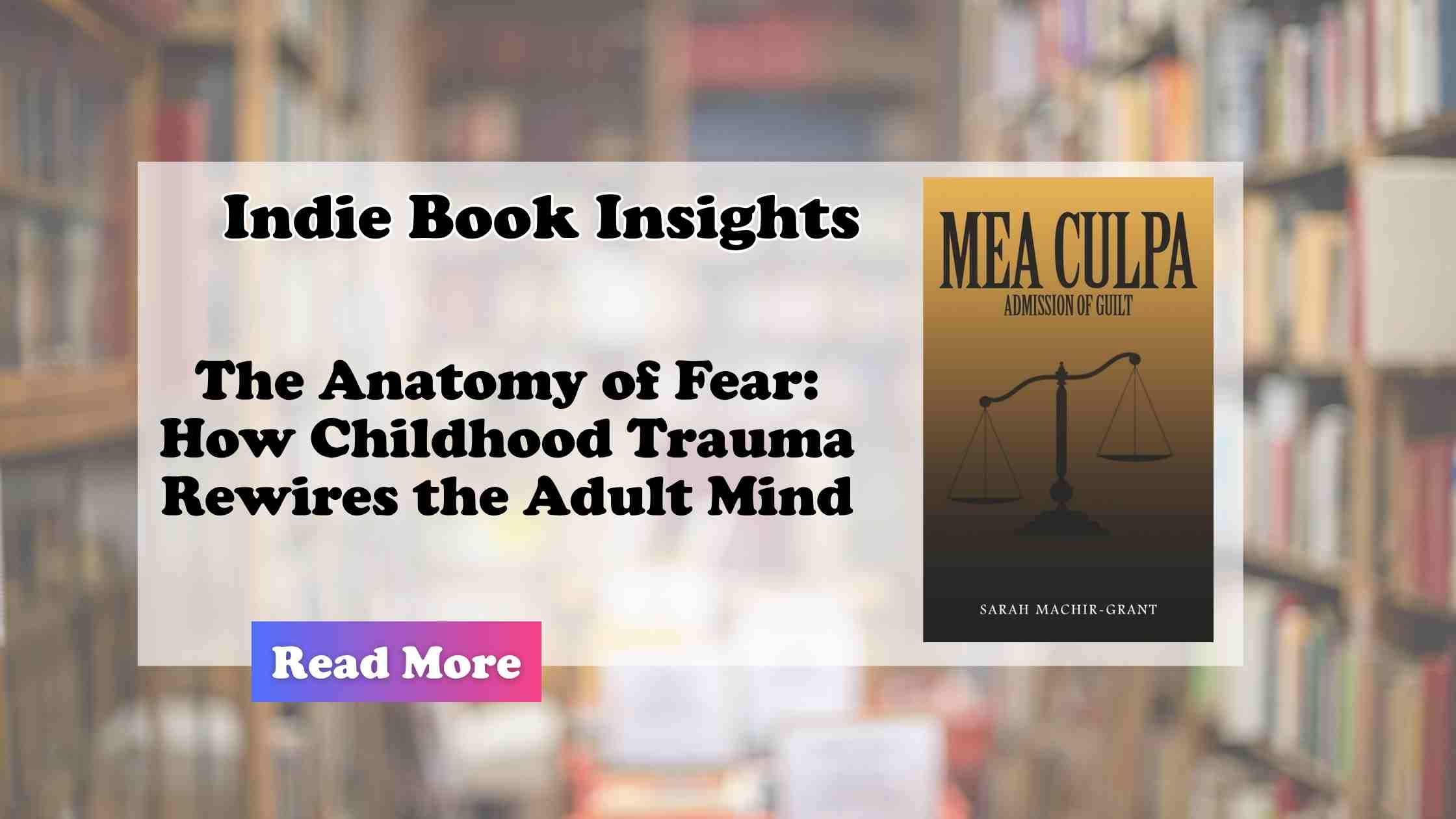
In Mea Culpa by Sarah Machir-Grant, fear is not a passing sensation. It is a constant companion, a shaping force that quietly alters perception, identity, and memory. Through a deeply reflective and emotionally precise narrative, Machir-Grant explores how childhood trauma does not remain confined to the past but continues to rewire the adult mind long after the original threat has faded from view.
Children are not equipped to contextualize terror. They do not possess the language to label coercion, manipulation, or betrayal. Instead, they internalize what they cannot explain. The developing brain adapts to survive. Neural pathways strengthen around vigilance. The amygdala becomes hyperactive. The body learns to scan rooms before entering them. A raised voice feels like imminent catastrophe. Silence feels like danger. Love feels conditional.
In adulthood, the survivor may appear composed, competent, even high functioning. They may hold a steady job, maintain relationships, and present a polished exterior to the world. Yet beneath that carefully constructed surface lies a nervous system calibrated for survival rather than safety. Ordinary stressors trigger disproportionate responses. Conflict feels existential. Intimacy feels threatening. The past intrudes into the present with relentless precision.
In Mea Culpa (Admission of Guilt), Sarah Machir-Grant captures this phenomenon with haunting clarity. The protagonist does not simply remember fear. She inhabits it. The narrative moves between adult consciousness and childhood memory, revealing how trauma fractures time itself. Moments do not line up neatly in chronological order. Instead, they coexist. The adult kneels behind a door in November while the child crouches in shame years earlier. The body does not differentiate between then and now.
Research in neuroscience supports what memoirs like this have long articulated. Chronic childhood trauma alters brain architecture. The stress response system becomes overactivated. Cortisol floods the body. The prefrontal cortex, responsible for rational thought and emotional regulation, may be compromised by prolonged exposure to threat. As a result, survivors often struggle with self-blame, anxiety, dissociation, and a persistent sense of danger that others cannot see.
Trauma also reshapes identity. When a child grows up absorbing the projection of a volatile parent, they may come to believe that they are the problem. They learn to smile when they are hurting. They learn to apologize for existing. They learn to manage other people’s emotions before their own. In adulthood, this manifests as people pleasing, hyper independence, or a crippling inability to trust one’s own instincts.
Machir-Grant’s work exposes these patterns without sentimentality. The emotional landscape of Mea Culpa (Admission of Guilt) is unflinching, yet it is also deeply humane. The book does not sensationalize trauma. Instead, it examines its subtle and insidious consequences. It shows how a child’s attempt to survive can become an adult’s prison.
Understanding the anatomy of fear is the first step toward dismantling it. When readers encounter the layered reflections in Sarah Machir-Grant’s narrative, they may recognize parts of themselves long buried. The hypervigilance. The shame. The inexplicable panic. The reflexive guilt. Recognition can be destabilizing, but it can also be liberating.
Fear rewires the brain, but the brain is not static. Neuroplasticity offers hope. With safety, therapy, and truth telling, new pathways can form. The survival strategies that once protected can be acknowledged and gently retired.
Mea Culpa (Admission of Guilt) is more than a memoir. It is an exploration of how childhood trauma shapes the adult mind and how confronting that history can begin to loosen fear’s grip. For anyone who has ever wondered why certain reactions feel larger than the moment demands, or why the past refuses to remain in the past, this book offers both insight and validation.
Book now available on https://www.amazon.com/dp/197100216X/.