
Have you ever read books with a unique genre? Perhaps, yes. But in this contemporary world, you can find numerous genres that can play a vital role in your professional and personal lives. Remarkably, in this contemporary world, one of the most preferred and worked genres by authors to offer awareness to readers has been “Public Safety.” Yes, as an individual, we must thank authors for crafting books with such genres so that valuable insights can be gained that we have been missing all these years about the roles and services of heroes who have been working for our betterment. In this modern world, safety and security are paramount concerns that must be implemented with the latest guidelines and developments.
Let’s plunge into this blog and explore some of the top contemporary books that have shed light on public safety practices.
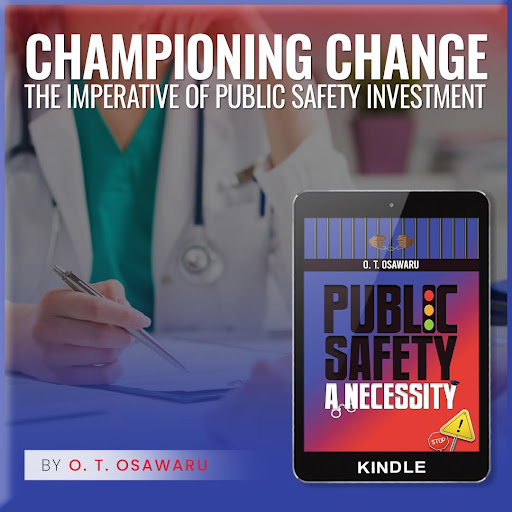
“Public Safety: A Necessity”
Do you believe, as an individual in public safety, to be considered a necessity? If yes, you need to go through the pages of this fantastic book, “Public Safety: A Necessity,” by O.T. Osawaru, in which he has delivered a compelling argument for the importance of public safety in contemporary society. In his book, he has ensured to include all the sectors that have been playing a vital role in making a society. Through meticulous analysis and compelling narratives, Osawaru’s book has profoundly highlighted the critical role that robust public safety measures play in preserving order, protecting lives, and fostering societal well-being. Throughout the pages of “Public Safety: A Necessity,” Osawaru has present a wealth of evidence demonstrating the multifaceted benefits of effective public safety measures needed within a society.
Furthermore, Osawaru addressed common misconceptions and challenges surrounding public safety, debunking myths and offering pragmatic solutions. Ideally, reading this book can help you comprehend the significant roles of contributors shaping a society and working for a community.
“The End of Policing”
All these practices of certain domains were maintained on policies, but in this modern era, the influence of power might put people in danger. In this regard, “The End of Policing” has been penned to offer a critical examination of contemporary policing practices to inquire about the changes and impact of laws in catering public. In this book, the author has challenged the conventional wisdom of policing as the solution to societal problems instead of advocating for alternative approaches that address root causes and promote social justice. Also, to offer insights, the author has skillfully dissected some historical events in the book by comparing the policing controlled action followed by the United States.
Throughout the book, the author has emphasized the need for systemic change and collective action to address the root causes of crime and inequality.