
History often remembers the battles fought but sometimes the stories that almost happened reveal just as much about courage, chance and the fragile nature of war. One such moment came early in World War II, when the USS Boise (CL-47) came within reach of a pivotal engagement at Balikpapan… only to be pulled away at the last possible moment.
In January 1942, the Pacific War was still in its chaotic opening phase. Following the devastating Attack on Pearl Harbor, Allied naval forces in Southeast Asia were struggling to regroup. Resources were thin, coordination between nations was difficult and Japanese forces were advancing rapidly through the Dutch East Indies.
Balikpapan, located on the island of Borneo, quickly became a strategic flashpoint. Its oil fields were critical and Japanese forces had moved to secure the area. For the Allies, it presented a rare opportunity: a vulnerable enemy fleet supporting the invasion.
The task of striking that fleet fell to a small but determined force, one that included the Boise. As one of the most heavily armed ships available in the region, she was expected to play a central role. With her powerful 6-inch guns and experienced crew, the Boise had the firepower to make a significant impact in what would become one of the earliest Allied naval counterattacks of the war.
Aboard the ship, anticipation ran high. Sailors like Donald “DB” Fitch knew they were heading into their first real combat test. After weeks of tension, retreats and near encounters, this was the moment they had been preparing for. The chance to strike back.
But war has a way of rewriting plans.
As the task force navigated the narrow, poorly charted waters of the region, disaster struck. The Boise suddenly shuddered, an unmistakable sign that something had gone terribly wrong. The ship had run aground on an uncharted reef or pinnacle, tearing a massive gash along her hull.
In an instant, everything changed.
Instead of charging into battle, the crew shifted into emergency response. Damage control teams raced to contain flooding. Compartments were sealed. The ship’s survival, not its offensive power, became the priority. For the men onboard, the realization was immediate and bitter: they would not be part of the fight.
The damage was too severe. The Boise had to withdraw.
As she limped away at reduced speed, vulnerable to enemy attack and far from full capability, the rest of the task force pressed on without her. A group of aging American destroyers, smaller, less powerful, but no less determined, continued toward Balikpapan under cover of darkness.
What followed was a daring and chaotic night attack. The destroyers slipped into the harbor and launched torpedoes against Japanese transports, sinking multiple ships and dealing a surprising blow to the enemy. It was a rare early-war success for Allied naval forces.
And the Boise wasn’t there to see it.
For the crew, the frustration must have been immense. After preparing for battle, after bracing for the unknown, they were sidelined by an accident, one born not of enemy action, but of the unpredictable hazards of the sea. It’s a reminder that in war, fate can intervene in unexpected ways.
Yet this “missed battle” is more than just a footnote. It highlights the precarious nature of naval operations in World War II, where poor charts, unfamiliar waters and split-second decisions could alter the course of events. It also underscores the resilience of the Boise and her crew. Though damaged and temporarily out of action, the ship would return to service and go on to fight in major campaigns, including the fierce clashes around the Battle of Guadalcanal and later operations in both the Pacific and European theaters.
In many ways, Balikpapan represents a turning point not in terms of victory or defeat, but in experience. It was an early lesson in how quickly circumstances could change and how survival itself was often the first victory.
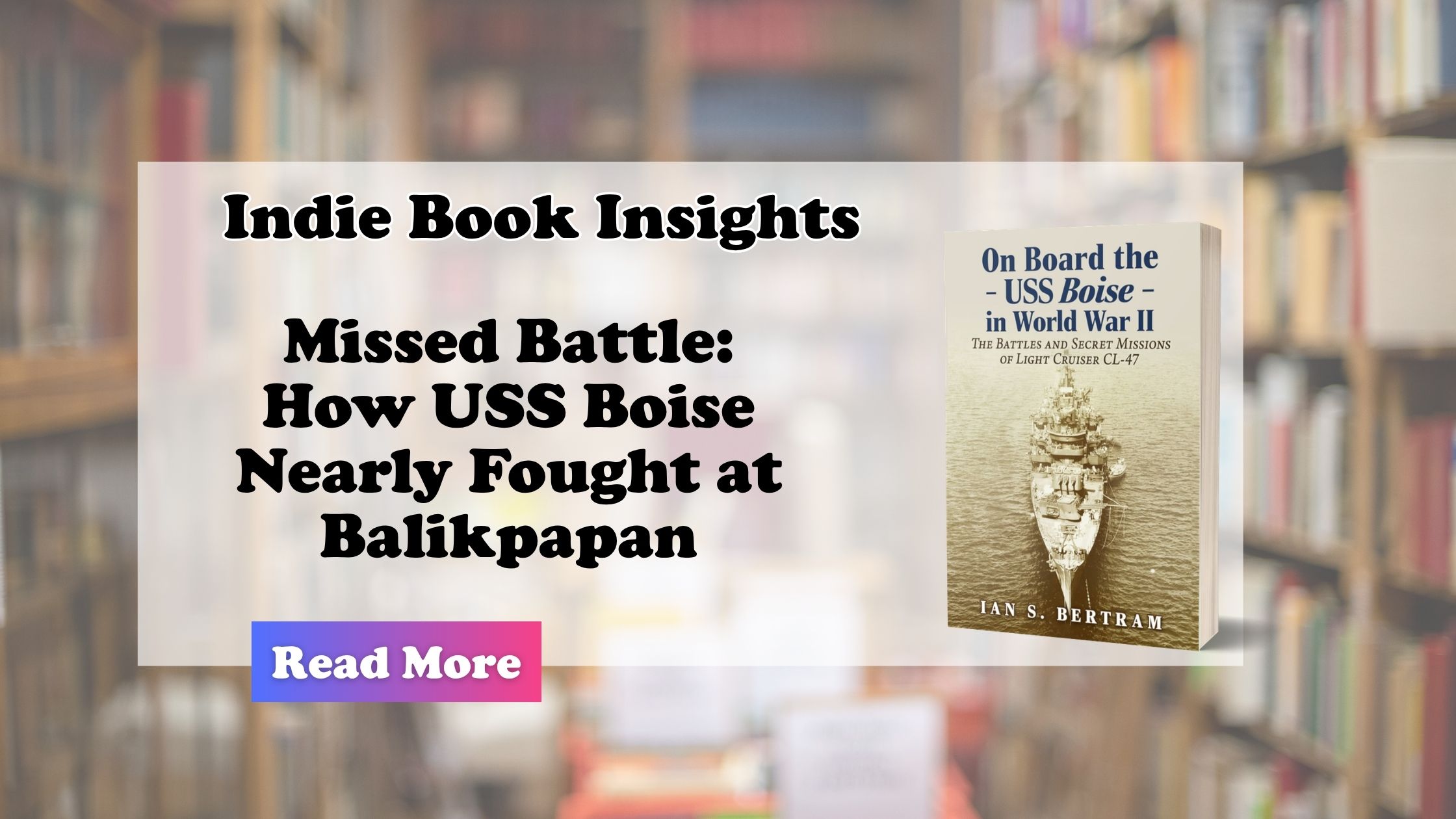
In On Board the USS Boise in World War II, author Ian S. Bertram brings this moment to life through firsthand accounts, detailed research and the voice of those who were there. The result is a story that goes beyond battle reports, capturing the uncertainty, tension and human emotion behind the headlines.
Because sometimes the battles that shape history aren’t just the ones fought.
They are the ones that almost were.
Get Your Copy On Amazon https://www.amazon.com/dp/1476698074