Cuba’s survival in the face of sustained external pressure is not an accident of history. It is the result of a deliberate and layered strategy that blends psychological strength, political clarity, and social cohesion. For a small nation confronting far larger powers, survival required more than defense. It required a system capable of absorbing pressure without losing direction.
At the center of this approach was the cultivation of national consciousness. Resistance is most effective when it is internalized. In Cuba’s case, the population was not positioned as passive observers of geopolitical tension but as active participants in a shared struggle. This collective awareness created a foundation where external aggression was understood not as isolated incidents but as part of a broader conflict over sovereignty and self-determination. When people believe in the purpose behind resistance, endurance becomes possible.
Unity reinforced this psychological foundation. External pressure often seeks to divide, to create internal fractures that weaken a nation from within. Cuba’s response was to prioritize cohesion at every level. Political messaging, social programs, and institutional structures were aligned toward a common objective. Unity was not treated as a slogan but as a strategic necessity. It reduced vulnerability and strengthened the nation’s ability to respond consistently to external challenges.
Economic adaptation played an equally critical role. Restrictions and limitations forced Cuba to rethink conventional development models. Rather than relying on external systems, the focus shifted toward self-reliance and resource efficiency. This was not a simple transition. It required reorganization, innovation, and long term planning. Yet it allowed the country to maintain stability under conditions that might have destabilized others. Economic resilience became a form of resistance in itself.
Defense strategy extended beyond traditional military considerations. While preparedness remained important, the concept of defense was broadened to include intelligence, deterrence, and societal readiness. The objective was not only to respond to aggression but to make it difficult and uncertain for those who might attempt it. This multidimensional approach reduced the effectiveness of direct confrontation and shifted the balance toward endurance.
International relationships added another layer to this strategy. By building alliances and fostering cooperation, Cuba countered isolation and strengthened its position globally. These relationships were not only practical but symbolic. They demonstrated that resistance was not confined to one nation but connected to wider global dynamics. Diplomacy, in this context, became an extension of survival strategy.
Education and culture also contributed significantly. A well informed population is more capable of understanding challenges and participating in solutions. By investing in education and reinforcing cultural identity, Cuba strengthened its internal structure. This investment ensured that resistance was not limited to leadership or institutions but embedded within society itself.
Leadership provided the direction that connected these elements. In an environment defined by uncertainty, leadership had to balance firmness with adaptability. It required the ability to maintain consistency while responding to changing conditions. Effective leadership aligned national identity, economic strategy, and political messaging into a coherent system that could be sustained over time.
Cuba’s experience illustrates that resistance against aggression is not defined by a single response. It is the integration of psychological, economic, political, and social factors that creates lasting resilience. Each element reinforces the others, forming a structure capable of withstanding sustained pressure.
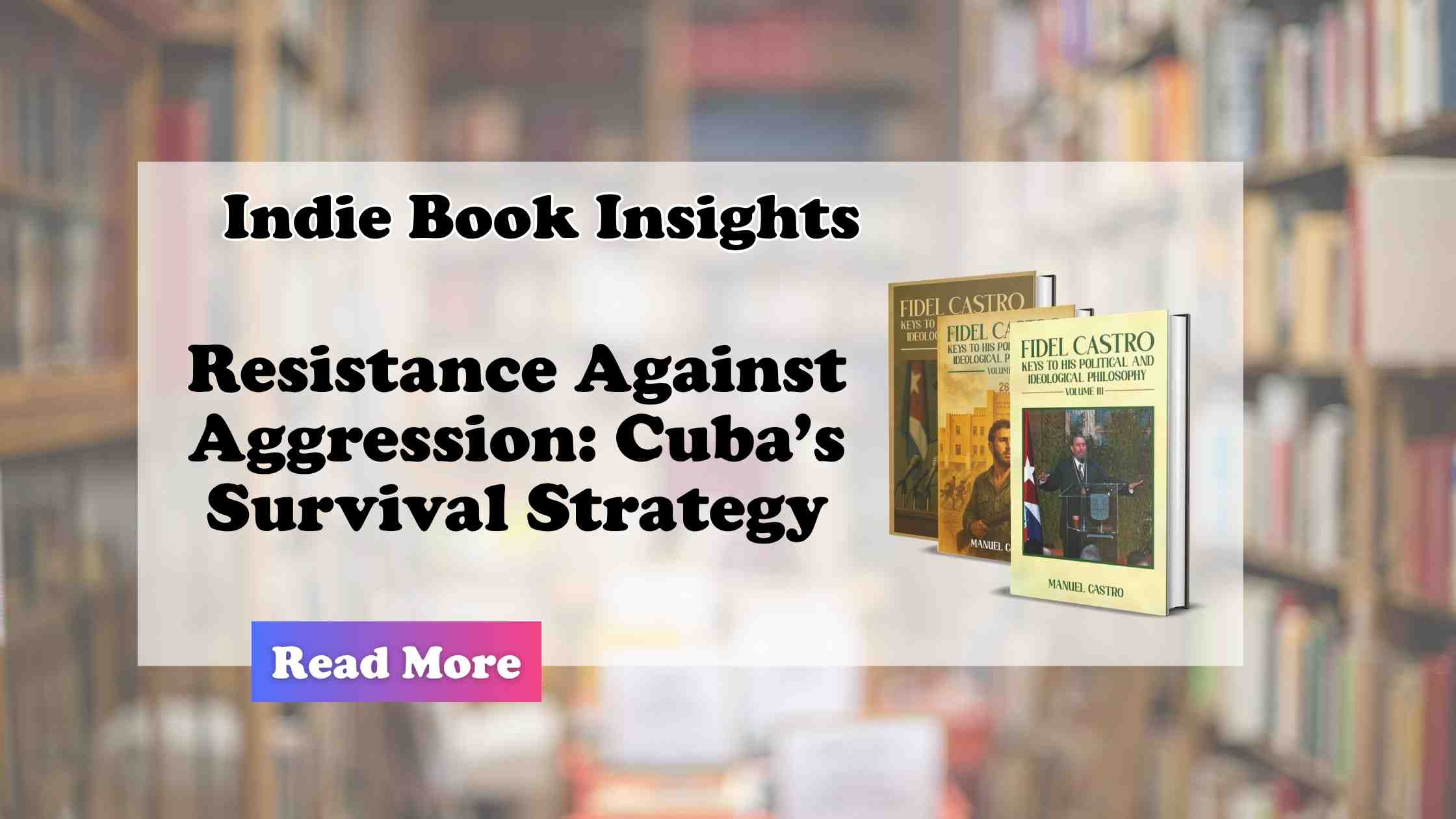
For those interested in understanding how such a strategy is developed and sustained, Fidel Castro: Keys to His Political and Ideological Philosophy by Manuel A. Castro offers a comprehensive perspective. The book presents a structured analysis of the principles, decisions, and ideological foundations that shaped Cuba’s response to external challenges.
Head to Amazon to purchase your copy: https://www.amazon.com/dp/197213454X