
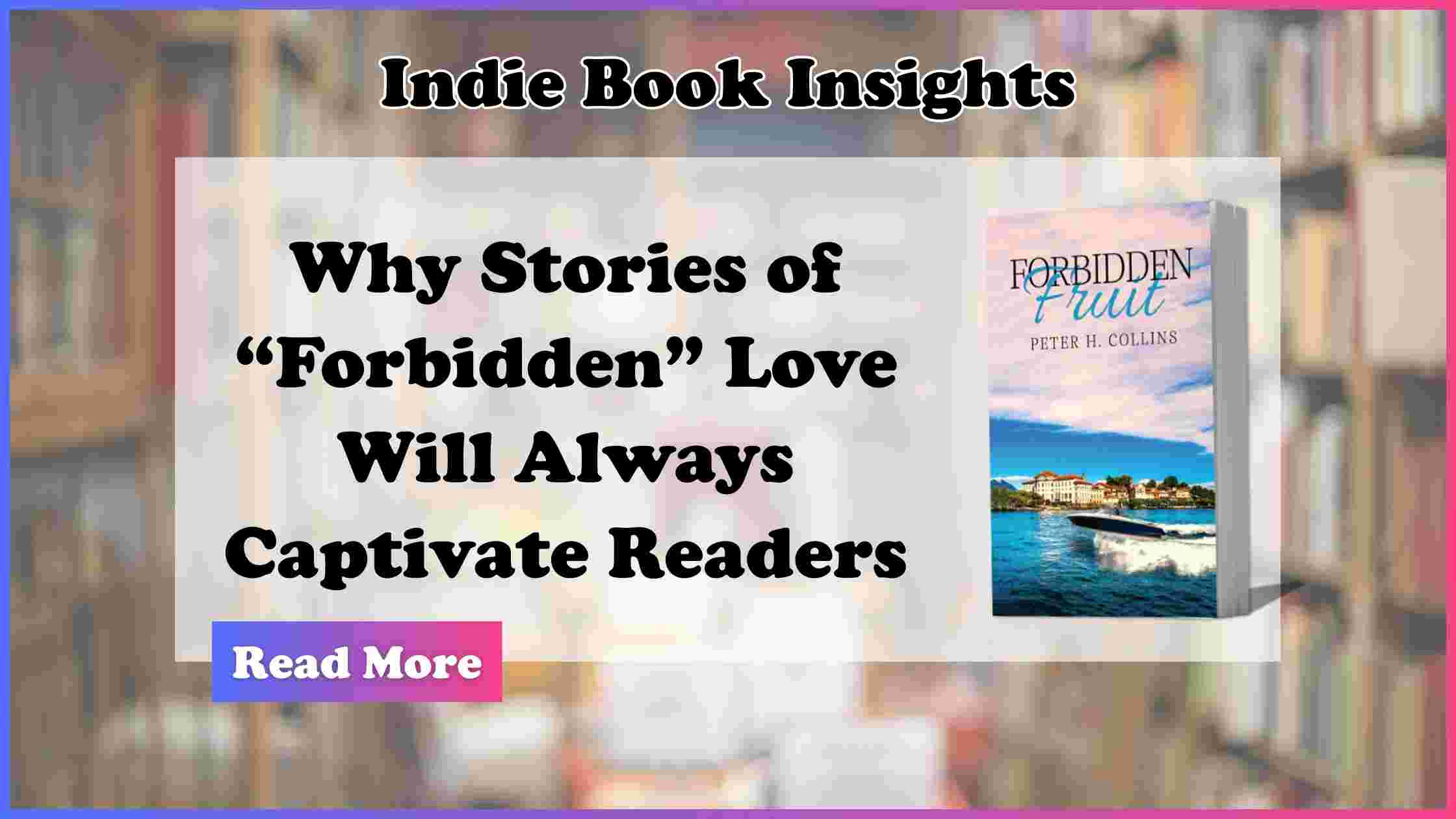
There is something timeless about a love story that feels just out of reach. Whether it is Romeo and Juliet defying their feuding families, or a modern couple navigating cultural divides, readers are drawn to romances that test the boundaries of society. Stories of “forbidden” love endure because they capture the struggle between personal desire and external rules. Peter H. Collins’s novel Forbidden Fruit is a recent example. The book tells the story of Jeff, a Jewish-American soldier, and Maria, a Catholic Italian nurse. Their relationship is not forbidden by law. But by tradition, expectation, and fear of rejection, it is precisely these kinds of conflicts that keep readers engaged across generations.
When two people are told they should not be together, every choice becomes weightier. Jeff and Maria know that their families may not approve, yet their feelings for each other only deepen. That tension creates a sense of urgency. Readers turn the page not just to see if the characters will stay together, but to see how far they are willing to go for love.
Another reason these stories matter is that they reflect universal human struggles. Everyone has faced a moment when what they want conflicts with what is expected. Forbidden love takes that conflict to its highest form. Jeff and Maria are not just choosing each other—they are choosing between tradition and independence, between family loyalty and personal happiness. This kind of choice resonates with readers because it reflects real-life dilemmas, even if the circumstances are different.
Forbidden love also speaks to the allure of the unattainable. There is something powerful about wanting what seems out of reach. Literature and film often explore how that desire shapes human behavior. In Forbidden Fruit, the relationship is not scandalous, but it feels dangerous because of the cultural and religious walls surrounding it. That sense of risk gives their romance intensity and makes their tender moments feel all the more meaningful.
Culturally, forbidden love stories also challenge society’s rules. They ask whether those rules are fair, necessary, or outdated. Romeo and Juliet questioned family feuds. Modern interfaith romances question religious and cultural divisions. By putting characters in conflict with tradition, these stories invite readers to reflect on their own values. Do we accept the rules we inherit, or do we carve out new paths?
Another reason readers are drawn to forbidden love is its vulnerability. These relationships are fragile because they exist under constant threat. Jeff and Maria are aware that their love might not survive the distance between their families’ beliefs. This vulnerability makes their connection more intimate. Readers are reminded that love is not invincible—it requires courage, sacrifice, and sometimes loss.
Stories of forbidden love endure across cultures and time because they speak to the heart of human experience. They are about longing, choice, and the cost of following one’s desires. Whether set in Renaissance Italy, modern America, or a hospital in Milan, these stories echo the same theme: love often comes with risks, but it is those very risks that make it meaningful.
Forbidden Fruit stands as a modern reminder of this truth. Jeff and Maria’s romance is tender, complicated, and uncertain. It does not promise easy answers but instead captures the timeless pull of love against the odds. Readers will continue to be drawn to such stories because they reveal not only the power of love but also the barriers that still exist in our world.
In the end, forbidden love captivates us because it is both deeply personal and universally relatable. It shows us the beauty of connection, the pain of sacrifice, and the courage it takes to reach for something that others say we cannot have. That struggle, both heartbreaking and hopeful, will always keep readers turning the page. Head to Amazon to purchase your copy: https://www.amazon.com/dp/1968615199