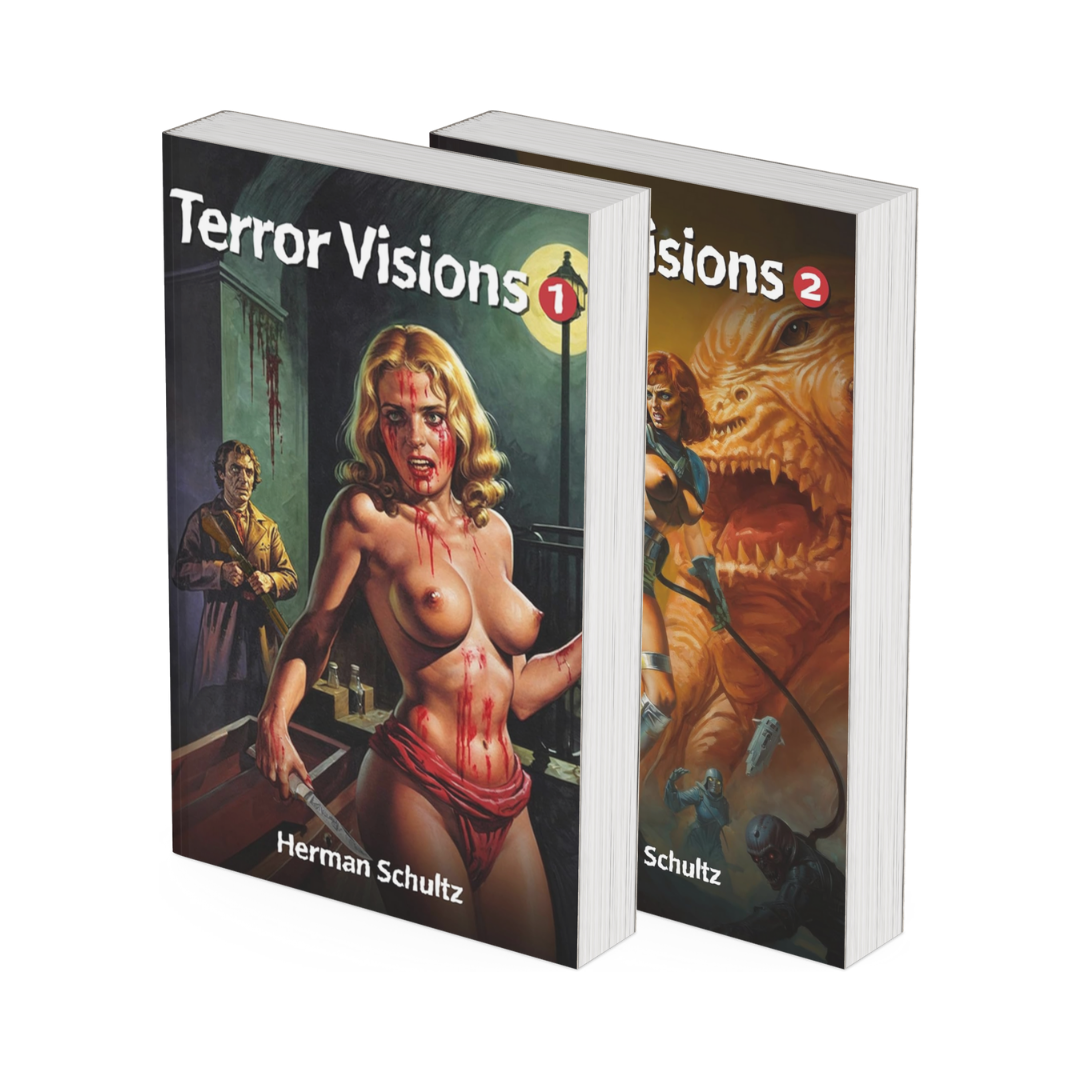
Herman Schultz’s Terror Visions 1 & 2 are filled with gothic horror, eroticism, and supernatural terror, but one of their most striking features is the portrayal of powerful women. Whether they are warriors, vengeful spirits, or cursed figures trapped between desire and doom, the women in these stories are far from passive victims. Instead, they shape their own destinies—sometimes as avengers, sometimes as the haunted, and sometimes as the very forces of darkness themselves.
Women as Warriors: Strength in the Face of Horror
Many of Schultz’s female protagonists are fighters, survivors, and leaders, battling supernatural and existential threats in extreme conditions.
- In Donne Coraggiose, three female soldiers navigate a nuclear wasteland, fighting off monstrous beings in a world consumed by darkness. Their bond and resilience keep them alive, showcasing the raw power of women in war.
- Elysia and Lyra in Furia Femminile embark on a perilous journey to save their realm from an encroaching darkness, wielding their weapons with unwavering determination. They are reminiscent of legendary warrior women, standing against supernatural evil with both steel and willpower.
- In La Regina Pantera della Savana, Amani, known as the Panther Queen, is a fearsome jungle warrior who hunts down poachers with ruthless efficiency. Accompanied by her two deadly panthers, she enacts brutal revenge on those who dare to desecrate her sacred land.
These women are not merely fighting for survival—they are taking control, reclaiming power, and turning the tables on the forces that seek to oppress them.
Women as the Cursed: The Tragedy of Supernatural Entanglement
Horror has long explored the idea of cursed women—figures ensnared by fate, supernatural pacts, or dark forces beyond their control. Terror Visions embraces this trope but gives it a fresh, more complex treatment.
- In Visioni della Mia Fine, Sylvia repeatedly dreams of her own gruesome death. When the nightmare finally becomes reality, she realizes she was doomed from the very beginning—her suffering an inescapable prophecy.
- Ayumi in Il Richiamo delle Tenebre is haunted by an ancient spirit in Kyoto, its whispers pulling her deeper into madness. Trapped between reality and nightmare, she struggles to free herself but ultimately faces the overwhelming power of the supernatural.
- Samantha in La Maledizione dello Spirito unknowingly brings a cursed object into her home, only to be consumed by it. What begins as a simple fascination turns into a terrifying struggle for survival, her own body betraying her as the curse tightens its grip.
Unlike traditional horror, where cursed women are often helpless victims, Schultz’s characters fight against their fate. Some succeed, others succumb—but all resist, making their stories more compelling and tragic.
Women as Avenging Spirits: The Power of Revenge
Vengeance is a powerful theme in Terror Visions, with several female characters transforming their suffering into righteous fury.
- Amina in La Ricerca di Una Donna Araba embarks on a blood-soaked journey of revenge after her lover is brutally murdered. She mirrors classic horror anti-heroines like La Femme Nikita or The Bride from Kill Bill, her rage driving her to destroy those who wronged her.
- Lena and Maya in Sorelle dell’Ombra e dell’Acciaio discover monstrous beings preying on innocent victims in their city. Instead of running, they take up arms and fight back, vowing to eliminate the creatures no matter the cost.
- Elara in Flagello delle Terre Oscure seeks vengeance against the necromancer Malgoth, who destroyed her home. She carves her way through armies of the undead, willing to sacrifice everything to see justice done.
In these stories, revenge is not just about settling scores—it’s about empowerment, transformation, and reclaiming lost agency.
Women as the Horror Itself: The Monstrous Feminine
Some of the most terrifying figures in Terror Visions are the women who embrace darkness rather than fight it.
- Evelyn in Passaggio Averno willingly turns to the occult for vengeance, summoning demonic forces to destroy those who wronged her. However, her growing power consumes her, and she ultimately becomes the very evil she sought to wield.
- Mara in Passione Fatale is a femme fatale who stops at nothing to claim the man she desires. When jealousy drives her to murder, she does not feel remorse—only satisfaction, her twisted passion making her a true villain.
- Ava in Regina degli Inferi methodically betrays and murders her own criminal gang, seizing power through deception and ruthless ambition. She is not haunted by guilt but thrives in the chaos, emerging as a queen of blood and brutality.
These characters are fascinating because they subvert the traditional horror trope of women as victims. Instead, they become predators, manipulators, or supernatural entities, embracing the dark side fully.
Herman Schultz’s Terror Visions 1 & 2 offer a rich and diverse portrayal of women in horror, from warriors to ghosts to deadly seductresses. These characters challenge outdated horror stereotypes, giving us women who fight back, take control, and even become the stuff of nightmares themselves.
Whether they are battling eldritch horrors, seeking vengeance, or embracing the abyss, the women in Terror Visions prove that in horror, as in life, power comes in many forms. And sometimes, the scariest thing of all is a woman with nothing left to lose.