

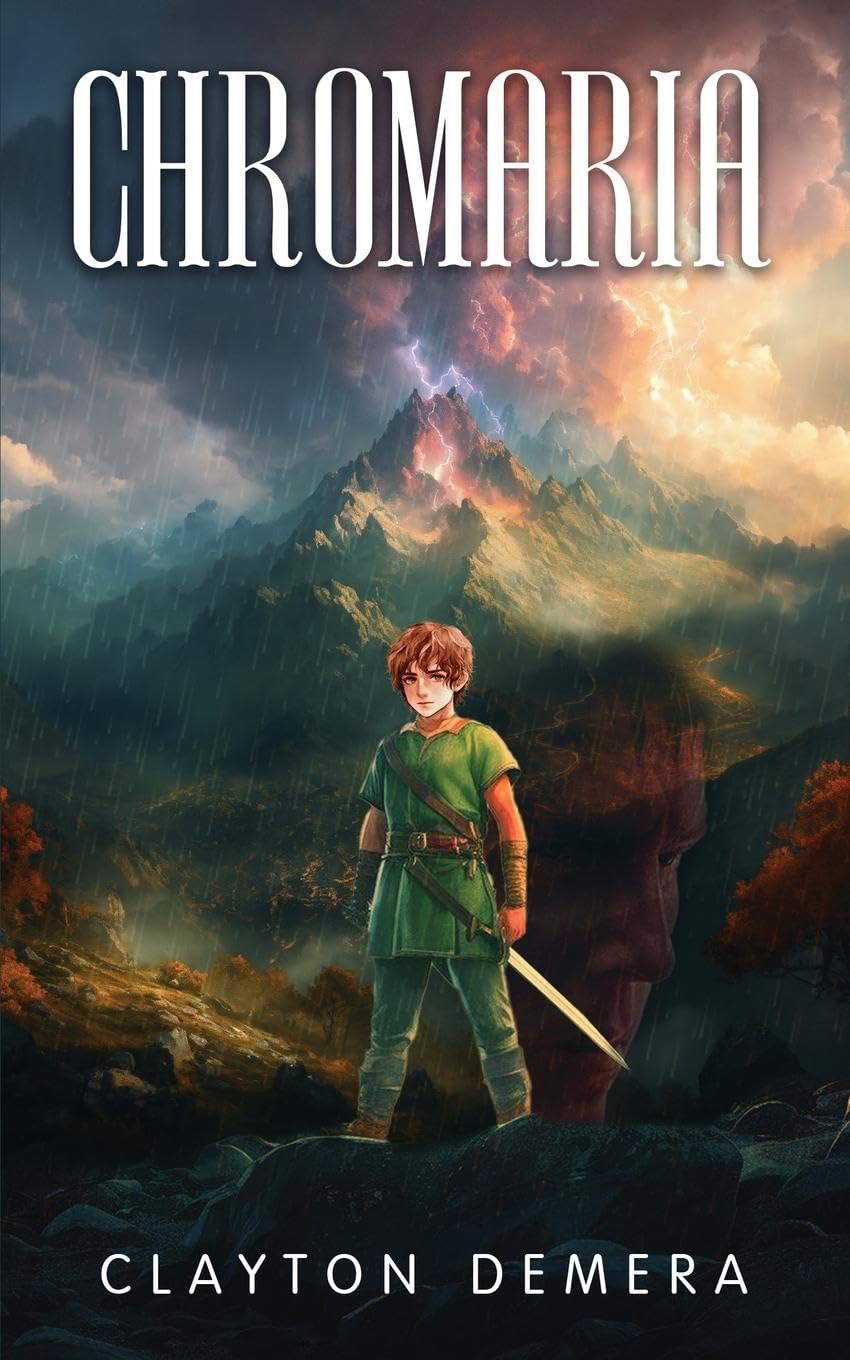
In a world where faith is often questioned, and our obedience to spiritual truths is often blurred in restrictive, there is an urgent need to seek the Divinity of God. While scripture and prayer provide much-needed strength, we sometimes require more to sharpen our understanding and strengthen our spirituality.
Chromaria can help!
This book presents a powerful allegory that reminds us of the beauty of trusting in God’s plan. By reflecting on the seven tribes, the book beautifully illustrates how faith is about living in harmony with divine truth and compels us to reflect on our own relationship with obedience. It teaches us that true faith is not blind submission but an active, purposeful trust in God.
In Chromaria, the tribes are given a covenant. It is a divine agreement meant to guide their lives and maintain balance in their world. However, over time, they begin to focus more on the symbol of their faith (the rainbow) rather than the Creator himself. This mirrors how, in today’s world, many people cling to religious traditions without fully understanding the faith behind them.
When the tribes stop seeing the Creator as their source, they begin to worship the rainbow. As a result, they lose their divine protection, much like how losing sight of God in our own lives can lead us into confusion and despair.
The Purple Tribe, set apart as spiritual leaders, was given sacred instructions to maintain worship, honor life and death, and ensure the tribes met at Divine Mountain every 700 cycles. However, as obedience faded and self-interest grew, their connection to the Creator weakened, leading to their and the other six tribes’ fall.
By focusing on the symbol of their faith and diverting from the Creator’s laws, the tribes eventually faced the wrath of the Creator when it rained swords instead of water droplets.
The book also focuses on grief and anger and seamlessly blends them with the connotation of faith. For example, the story of Ando exemplifies what happens when grief and anger replace faith and trust. After losing his son, he turns away from the Creator, listening instead to the whispers of Darkness, which promise him power and vengeance, only at the expense of his faith and conviction in the creator—that reflects how easily we can lose faith when faced with pain and suffering.
However, Ando’s redemption at the end of the book shows that no one is beyond God’s mercy. When he finally sees his son’s spirit and realizes his own voice of anger has consumed him, he repents. His final words—“The Creator is rich in mercy. Forgive me.”—remind us that even in our darkest moments, faith and obedience can lead us back to the light.
Reading Chromaria compels us to ask ourselves:
- Are we following God or just the traditions of faith?
- Do we see obedience as a burden or as a path to joy?
- Are we allowing pain and doubt to pull us away from God as Ando did?
In the end, Chromaria is not just a fantasy story. It is a call to recenter our faith, recognize the power of obedience, and trust in God’s mercy. The novel’s allegorical approach makes these lessons deeply personal. By engaging with the story, we can help ourselves reframe our understanding of faith—not as something forced on us but as a choice to live in divine harmony.






16 thoughts on “How Reading Chromaria Will Help Us Reframe Faith and Obedience in God”
Good https://lc.cx/xjXBQT
Very good https://lc.cx/xjXBQT
Good https://lc.cx/xjXBQT
Good https://lc.cx/xjXBQT
Very good https://lc.cx/xjXBQT
Good https://lc.cx/xjXBQT
Very good https://t.ly/tndaA
Very good https://t.ly/tndaA
Very good https://t.ly/tndaA
Good https://urlr.me/zH3wE5
Awesome https://urlr.me/zH3wE5
Awesome https://rb.gy/4gq2o4
Very good https://rb.gy/4gq2o4
Good https://rb.gy/4gq2o4
Very good https://is.gd/N1ikS2
Awesome https://is.gd/N1ikS2