Believe it or not, from Jules Verne’s Journey to the Center of the Earth to Arthur C. Clarke’s 2001: A Space Odyssey, science fiction has long been a laboratory for human imagination. It’s where we explore distant galaxies, future technologies, and the deepest questions about ourselves. Yet despite its popularity, crafting a compelling science fiction novel is no easy task.
So—what’s the secret?
It starts with one thing: plausibility grounded in wonder. Great science fiction doesn’t just throw out dazzling concepts or jargon-laced tech. It builds worlds that feel just real enough to believe in—and then it dares to ask, what if? That fusion of believability and bold speculation is the foundation of any successful sci-fi narrative.
Hard science fiction often focuses on technology, physics, or biology. But the best sci-fi uses those elements to explore what it means to be human. Think about The Martian. The tension doesn’t come from fancy gadgets but from one man’s will to survive, adapt, and find meaning in solitude. In other words, science sets the scene, but character drives the plot.
In speculative fiction, world-building is key. But a well-crafted sci-fi world isn’t just about cool gadgets or alien species. Rather, it concerns political, social, and technological systems. After that, the exciting part begins: applying pressure to those systems. What happens when the tech fails? When the AI evolves, or when humans make mistakes in a perfect machine? A good story starts with control, and to make a sound impact, it gradually reveals chaos.
A good sci-fi novel challenges the reader to think. Great sci-fi makes them question everything. Should we trust our institutions? Are we still ourselves when technology changes our minds or bodies? Is progress always good? This moral tension and the questions that don’t have easy answers keep us thinking long after the story ends.
Whether it’s a slow-burn political thriller or a pulse-pounding space race, a good sci-fi story knows how to move. Many science fiction novels fall short because of lengthy exposition, info dumps, or excessively technical sidebars. Combining action and information is the key. Instead of listening to a lecture, readers prefer to learn about your world as the plot develops. They want tension and thrill and possibly a reason to continue reading.
Science fiction isn’t about getting the future right. It’s about asking what could happen if we follow current trajectories. It involves extrapolating current conflicts onto future environments. Themes like artificial intelligence, energy crises, climate collapse, and cyberwarfare are relevant because they seem like modern-day extensions. In short, science fiction uses the future to say something vital about now and pique our interest.
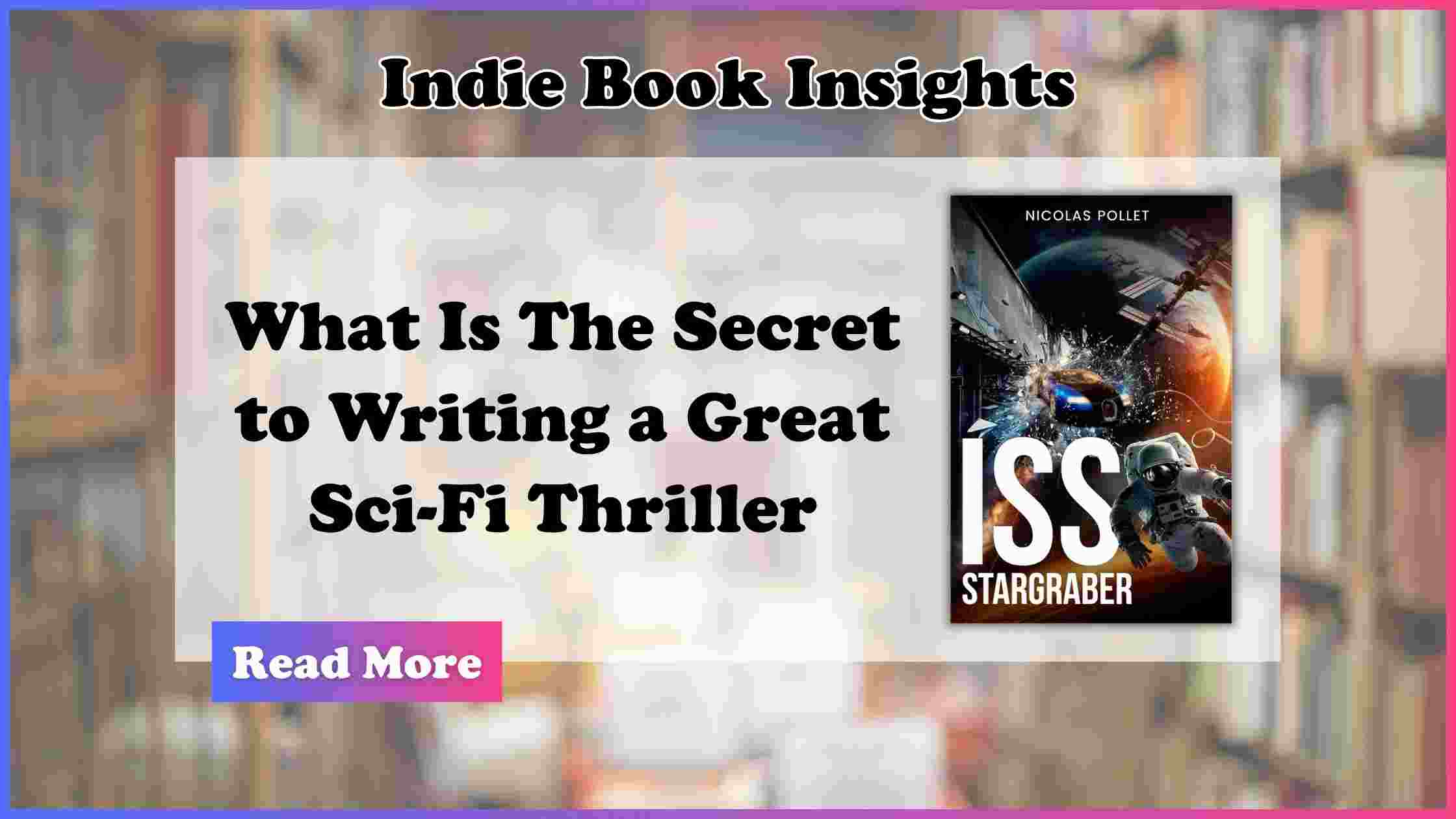
While all of these aspects are necessary to create great science fiction, it varies. These qualities can be used by the author to create a unique story that hits the mark. One modern example that excels at this balance is ISS Stargraber by Nicolas Pollet. Set in 2153, it features a massive 25,000-mile-long space station orbiting Earth, built to harness solar energy and maintain planetary peace. But beneath its gleaming structure lies a haunting mystery. When sabotage threatens the ISS and the world it powers, one security officer must unravel the truth before disaster strikes.
Blending believable science, political tension, emotional depth, and relentless suspense, ISS Stargraber is a masterclass in smart, character-driven sci-fi. For writers and readers alike, it’s a brilliant example of how to make the future feel alive—and dangerously close.
Head to Amazon to grab your copy. www.amazon.com/dp/1967963223