For too long, the debate about trade with China has lived in policy circles, expert panels, and business conferences. It has been treated as technical, complex, and distant from everyday life. While many of us think this is effective, that approach no longer works, as trade is not an abstract concept. It shapes jobs, prices, supply chains, and political power. When trade becomes unbalanced for long periods, it reshapes society itself. That is not a specialist issue. It is a public one.
The problem is not that people do not care. It is that the discussion has been framed in ways that exclude them. Terms like “comparative advantage” or “market efficiency” mean little when factories close or shortages appear. People understand results, not jargon.
China’s trade relationship with the West affects more than economics. It influences diplomacy, security, and independence. Yet public discussion often reduces it to tariffs or consumer prices. That misses the larger picture.
When debates stay elite, accountability disappears. Decisions made quietly face little resistance. Assumptions go unchallenged. By the time consequences become visible, reversing them becomes difficult.
Grassroots platforms, local media, and community discussions are essential because they connect policy to experience. When people see how trade decisions affect their town, their work, and their future, engagement changes.
Making the debate mainstream does not mean simplifying facts until they lose meaning. It means explaining them clearly. Who gains from current arrangements. Who loses. And why balance matters.
China did not become powerful overnight. It accumulated strength year after year through predictable mechanisms. Explaining those mechanisms in plain language is not fearmongering. It is education.
Democratic societies rely on informed consent. When major economic choices are treated as technical necessities rather than political decisions, democracy weakens. Bringing trade into the open strengthens it.
The debate must also move beyond left and right. Trade imbalance is not an ideological issue. It affects workers, businesses, and national resilience. Treating it as partisan only delays action.
If the China trade debate remains confined to experts, it will remain disconnected from the public will. Alternatively, if it becomes part of everyday conversation, pressure for clarity and correction grows. To address this, we must become more aware of how China’s influence works.
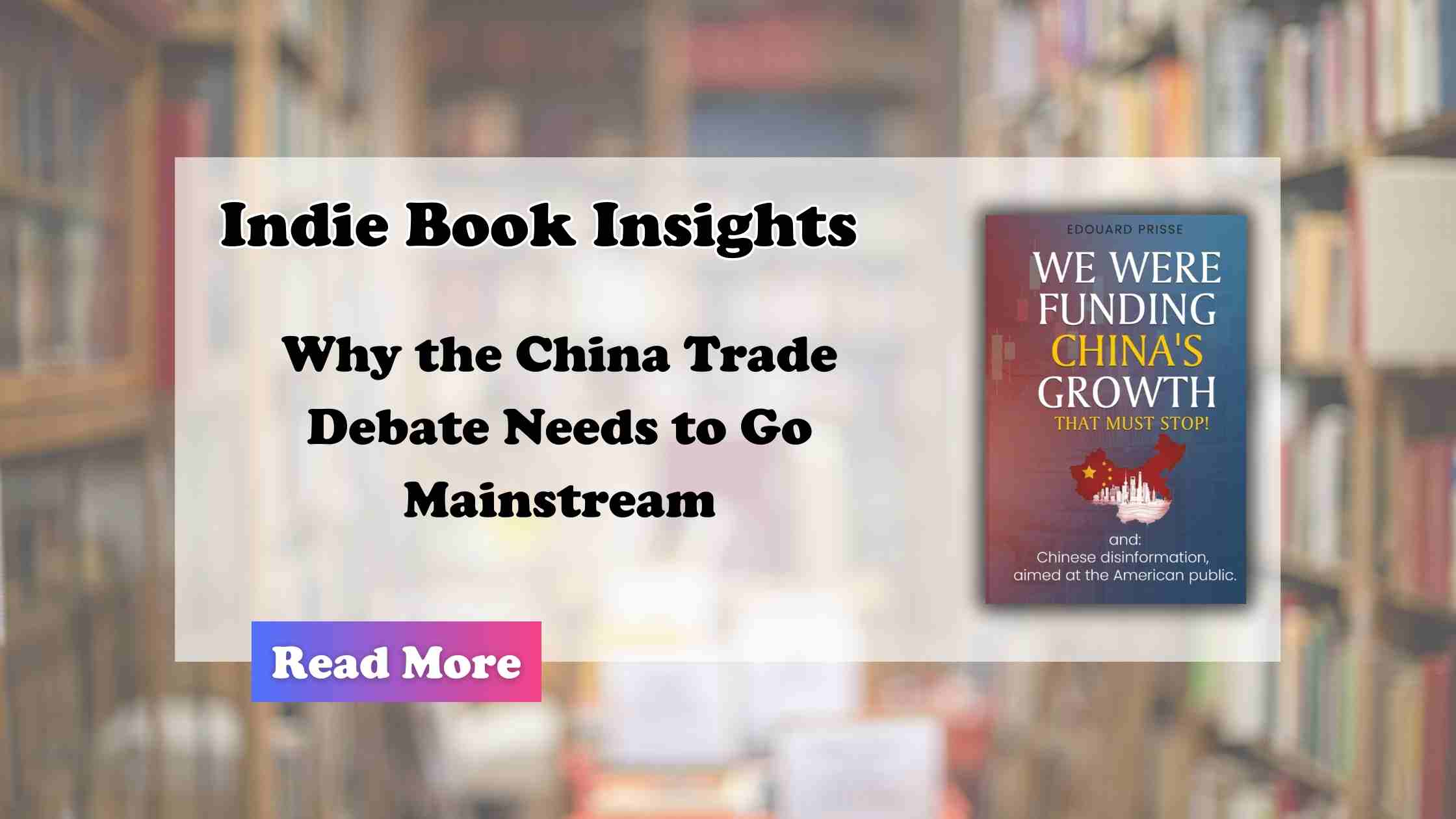
For a deeper, clearer understanding of how Western mistakes and misinformation have supported China’s rise, readers should explore We Were Funding China’s Growth That Must Stop! by Edouard Prisse.
Here is a link to purchase: www.amazon.com/dp/1967963053.
We Were Funding China’s Growth That Must Stop! by Edouard Prisse is a sharp, well-researched examination of how decades of misguided free trade with China have fueled the rise of America’s greatest rival. Drawing on the economic insights of John Maynard Keynes, Prisse explains how the 2001 decision to welcome China into the global trade system created a one-sided relationship that drained Western industries while empowering Beijing’s authoritarian regime. The book not only exposes the dangers of this ongoing imbalance,e such as job losses, weakened manufacturing, and growing geopolitical risks, but also offers a clear solution: shifting from “free trade” to “Equal Trade,” a value-balanced system that ensures reciprocity and protects democracy. Both a warning and a roadmap, this book is essential reading for policymakers, business leaders, economists, and citizens who care about safeguarding the future of free societies.