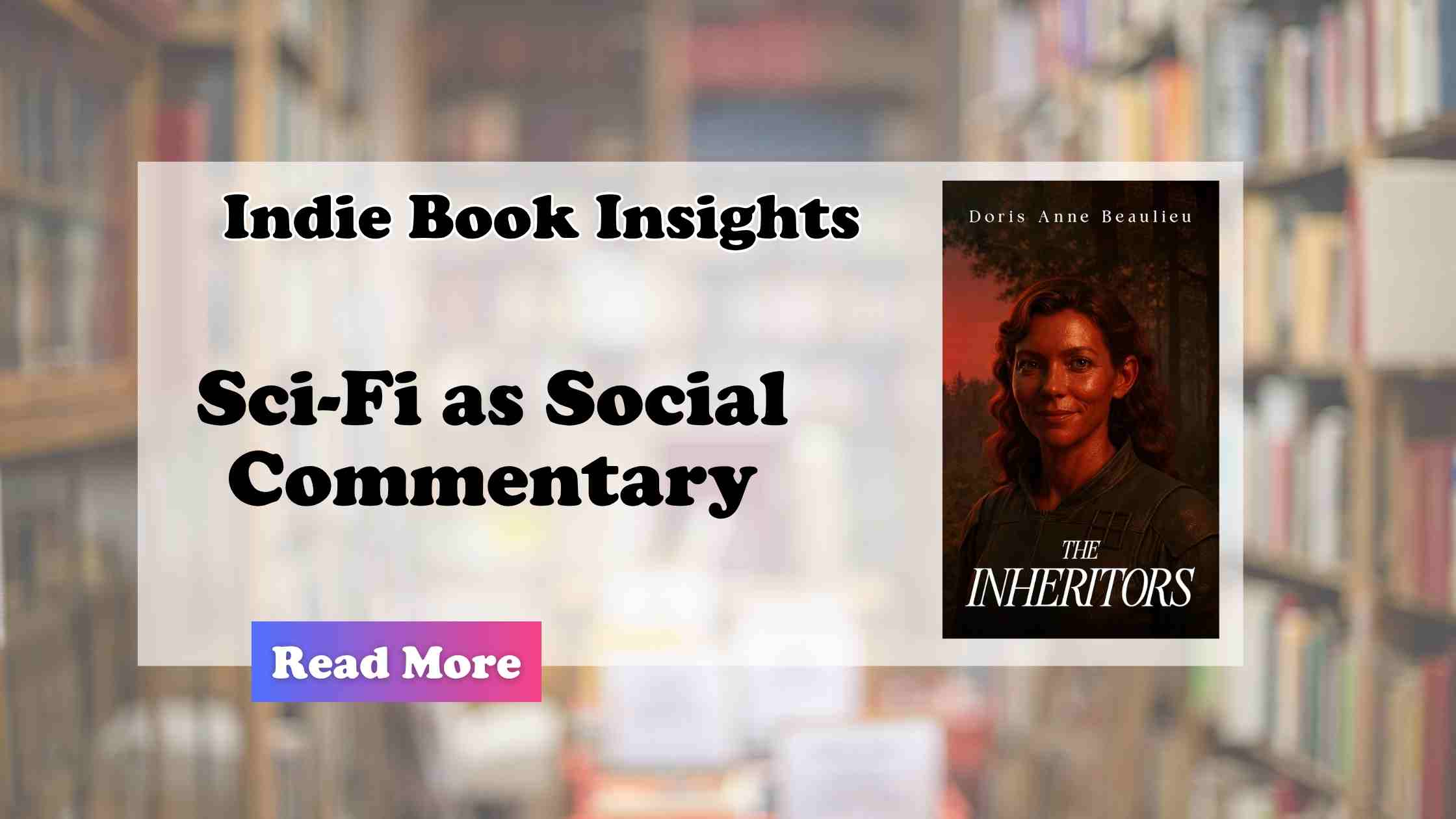
How The Inheritors Tackles Environmental Issues and Human Impact
In The Inheritors, Doris Anne Beaulieu masterfully weaves a story that goes beyond the boundaries of traditional science fiction. While it is a tale set on a distant planet and involves a race to save a species, at its core, the book is a poignant reflection on the environmental challenges and human impact we face today. Beaulieu uses the world of Planet Cenradus to highlight the consequences of neglecting our planet’s health and the lengths we may one day go to in order to survive.
Planet Cenradus is in the throes of an ecological disaster. A black hole’s gravitational pull has altered the rotation of a nearby neutron star, which in turn caused a devastating gamma-ray burst that is slowly but surely destroying their environment. With a red sun casting an unrelenting light over jungle-filled landscapes, the ORU people the planet’s inhabitants are struggling for survival. Their atmosphere is shifting, and the very genetic makeup of their species is being affected by the planet’s declining state. In desperation, they turn to Earth, seeking human DNA to save their species.
The central theme of environmental degradation is glaringly clear as the ORU people explain their plight. The planet, once lush and thriving, is now on the brink of collapse, mirroring the global environmental challenges that humans are witnessing on Earth. Beaulieu does not shy away from portraying the dire consequences of unchecked environmental destruction, and she subtly challenges readers to think about how our own actions are impacting the world around us. Through the ORU’s struggle, the novel serves as a cautionary tale of what could lie ahead if we continue to disregard the delicate balance of nature.
What makes The Inheritors especially relevant is its portrayal of the ORU people’s solution to their environmental crisis genetic manipulation. Faced with an unsolvable ecological dilemma, they use genetic engineering to adapt to their changing world. In a desperate bid to survive, they look to Earth’s genetic pool to save their own species. This act of seeking human DNA is not just a plot device; it is a commentary on humanity’s own tendency to tamper with nature and the unintended consequences of such actions.
But The Inheritors is not just about the ORU people’s environmental collapse; it also reflects the human impact on the Earth. Through the character of Rosalie, a human who becomes entangled in this interplanetary struggle, the book explores the fragility of human health in the face of ecological changes. Rosalie’s condition—illness caused by Lyme disease—acts as a symbol of how human beings are often the victims of environmental neglect. Her survival, aided by the ORU’s intervention, is not just a plot point; it’s a commentary on how human health is intrinsically linked to the environment around us.
The novel ultimately challenges readers to consider how much longer we can ignore the warnings of our own environmental crisis. The ORU people’s struggle is an allegory for humanity’s own fight against the degradation of our environment. The book calls attention to the urgent need for sustainable living practices, conservation efforts, and global cooperation to prevent the destruction of our planet. Beaulieu’s The Inheritors shows that while science fiction may depict a world far from our own, the underlying message is rooted in the very real issues we face today.
Through its rich storytelling and thought-provoking themes, The Inheritors offers much more than just an escape into another world. It serves as a powerful social commentary on the environmental challenges that we are currently grappling with. Beaulieu’s exploration of environmental destruction, genetic engineering, and the interconnectedness of human health and ecology provides a much-needed wake-up call. The novel invites readers to reflect on our own role in shaping the future of the planet and the potential consequences of our actions.
Get Your Copy On Amazon: https://www.amazon.com/dp/B0GTBNH7RX/