
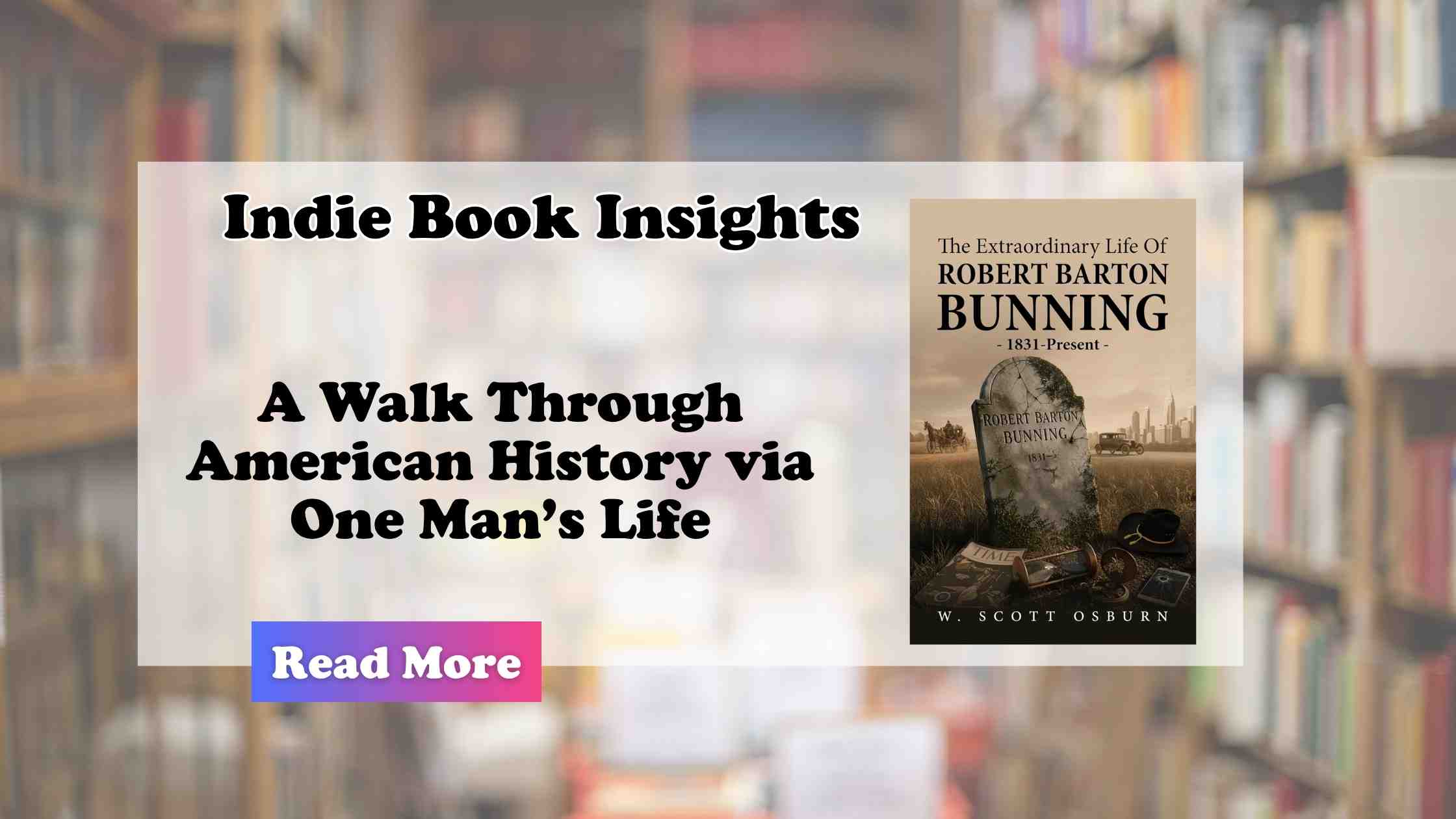
History is often told through dates, events, and names that fill textbooks, but rarely does it feel alive. What if one person could carry that history within their own memory, not as distant facts, but as lived experience? The Extraordinary Life of Robert Barton Bunning by W. Scott Osburn offers exactly that. It transforms American history into a vivid, continuous journey seen through the eyes of a single man whose life stretches far beyond ordinary limits.
The story begins in the early nineteenth century, when America was still raw, expanding, and uncertain. Through Robert Barton Bunning’s early years, readers are brought into a world of frontier survival, where families carved out lives from untamed land. There are no romantic filters here. Life is harsh, unpredictable, and shaped by hard labor and personal loss. This grounding gives weight to everything that follows.
As the nation moves toward conflict, the narrative carries the reader directly into the Civil War. Instead of detached summaries, the war unfolds through personal experience. The fear, confusion, and brutality of battle become immediate and human. The story does not glorify war. It shows the cost, the uncertainty, and the lasting impact it leaves behind. Through Bunning’s perspective, the Civil War becomes more than a historical milestone. It becomes a defining chapter in a life that continues long after the guns fall silent.
From there, the journey moves westward, mirroring the expansion of the United States itself. The frontier towns, cattle drives, and gold rush settlements come into focus with striking clarity. Readers encounter the rough energy of places like Abilene and Leadville, where opportunity and danger exist side by side. These settings are not just backdrops. They are living environments that shape the people within them.
What sets this book apart is its seamless blending of fictional narrative with real historical figures. Encounters with individuals such as Abraham Lincoln, Wild Bill Hickok, and Annie Oakley are woven naturally into the story. These moments do not feel forced or ornamental. They deepen the sense that Bunning is moving through the same world that history remembers, standing at the intersection of personal life and national events.
As the years pass, the tone of the story evolves. The excitement of youth gives way to reflection. The rapid changes of the late nineteenth and early twentieth centuries unfold before Bunning’s eyes. Industrial growth, financial upheaval, and shifting social structures reshape the country. Through it all, he remains a constant observer, watching as the world transforms in ways few could fully grasp within a single lifetime.
This long perspective reveals something powerful. History is not a series of isolated events. It is a continuous flow, where each moment builds upon the last. By following one man across decades, the reader begins to see connections that are often missed. The Civil War influences the frontier. The frontier shapes the economy. The economy reshapes society. Everything is linked.
At the heart of The Extraordinary Life of Robert Barton Bunning by W. Scott Osburn is not just history, but the experience of living through it. The passage of time brings knowledge, but it also brings loss. Relationships change. Loved ones fade. The weight of memory grows heavier with each passing year. This emotional layer gives the story depth and resonance that goes far beyond historical detail.
For readers who enjoy history, this book offers something rare. It does not simply recount the past. It allows them to walk through it. Every chapter feels like stepping into a different era, guided by someone who has seen it all unfold.
In the end, this is more than a story about one man. It is a sweeping portrait of a nation, told in a way that feels immediate, personal, and unforgettable.
Book now available on https://www.amazon.com/dp/B0GP1QR19Y