
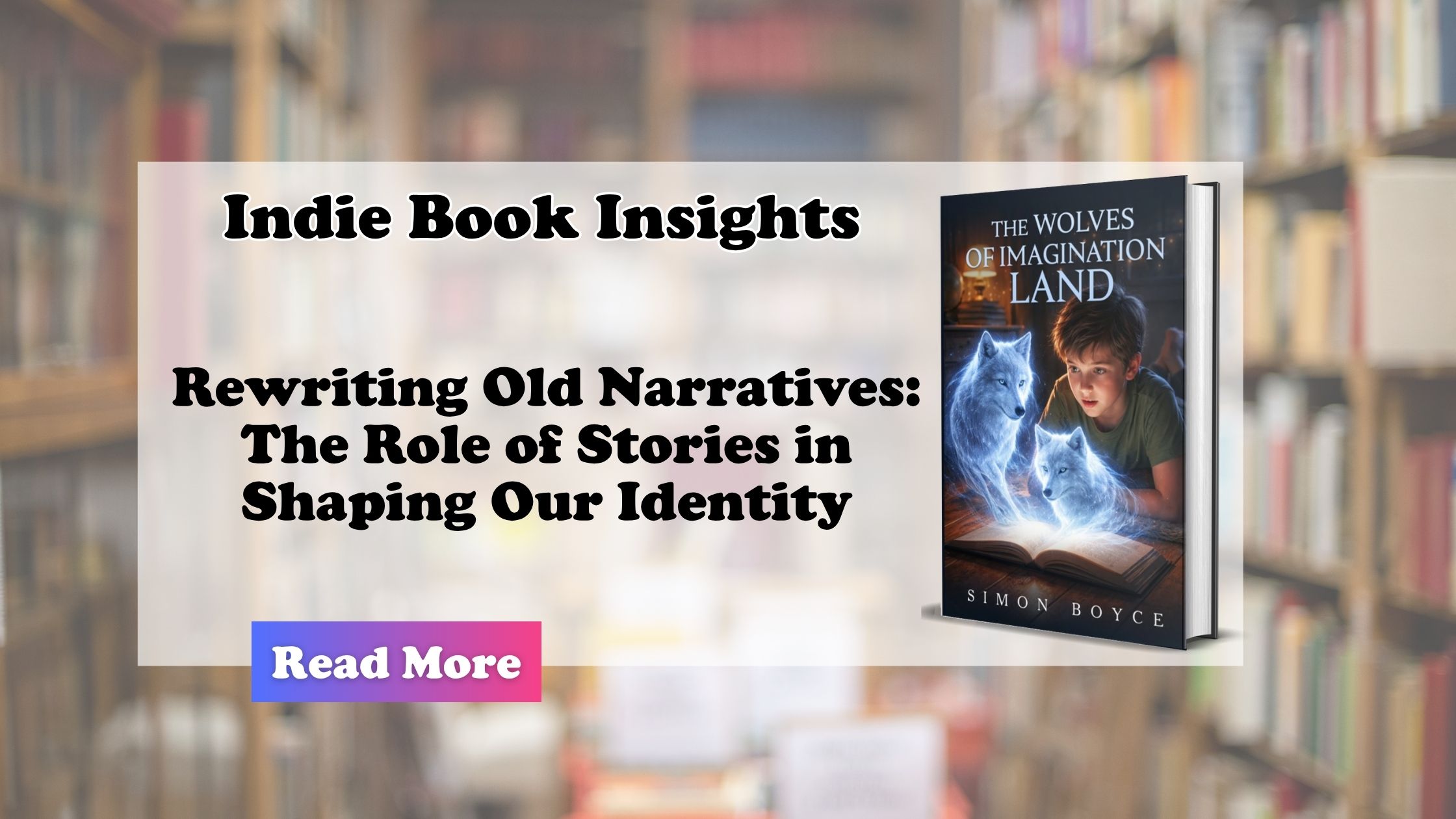
In The Wolves of Imagination Land, Simon Boyce weaves a powerful narrative about the influence of stories on our identities and how changing the stories we tell can reshape our world. The book’s protagonists, Junior and Luna, are two young wolves from different backgrounds, each living under the shadow of long-held tales about their families. Through their friendship, they not only challenge these old narratives but also rewrite them, showing us the profound impact of the stories we get and how we have the power to transform them.
At the heart of this story is a simple yet compelling question: What happens when we confront the stories that have defined us for generations? Junior, raised in the hard-working world of Terraced Street, has always known wolves like himself practical and grounded. The stories he’s heard throughout his life have painted a picture of wolves as reliable, if somewhat unremarkable, creatures. On the other hand, Luna, from the elegant and refined world of Moonhill, has grown up with a different set of stories ones that cast wolves like Junior as reckless, unworthy of trust, and unfit for association with those of her station.
These stories, handed down through generations, shape how Junior and Luna view themselves and the world around them. But when the two meet, they begin to question everything they’ve been taught. As they venture into the unknown together, they not only uncover the truth about each other but also discover the power they hold to change the stories that have always been told about their families.
The narrative of The Wolves of Imagination Land illustrates how stories are not merely words on a page or tales passed around a campfire. They are powerful forces that shape our perceptions, our relationships, and even our futures. For Junior and Luna, the stories about their families are so ingrained that they’ve become truths, unchallenged and unchanging. But through their friendship, they realize that these narratives are not set in stone. They are alive, breathing, and most importantly subject to change.
As they face dangers and embark on adventures together, Junior and Luna show us that the stories we tell can either trap us or set us free. By choosing to trust each other and form a bond despite the divisions between their worlds, they prove that rewriting old narratives is not only possible, but necessary. Their journey teaches us that identity is not something we are born into; it is something we can shape through the stories we choose to believe and pass on.
In a world where narratives often define who we are, The Wolves of Imagination Land urges us to reconsider the power of the stories we inherit. Just as Junior and Luna challenge the assumptions about their families, we too can challenge the stories that limit our potential and our understanding of others. The book reminds us that stories are not changed; they are dynamic and can shift, just like the characters who dare to question them.
At its core, The Wolves of Imagination Land is a celebration of the courage it takes to reform old narratives and redefine our identities. It’s a reminder that we are not bound by the past; we have the power to create new stories. The type of stories that unite us, inspire us, and, ultimately, help us become the best versions of ourselves. Junior and Luna’s friendship is a powerful testament to the fact that when we change the stories we tell, we change the world around us.
Amazon Book Link : https://www.amazon.co.uk/dp/B0GYFVW1NM