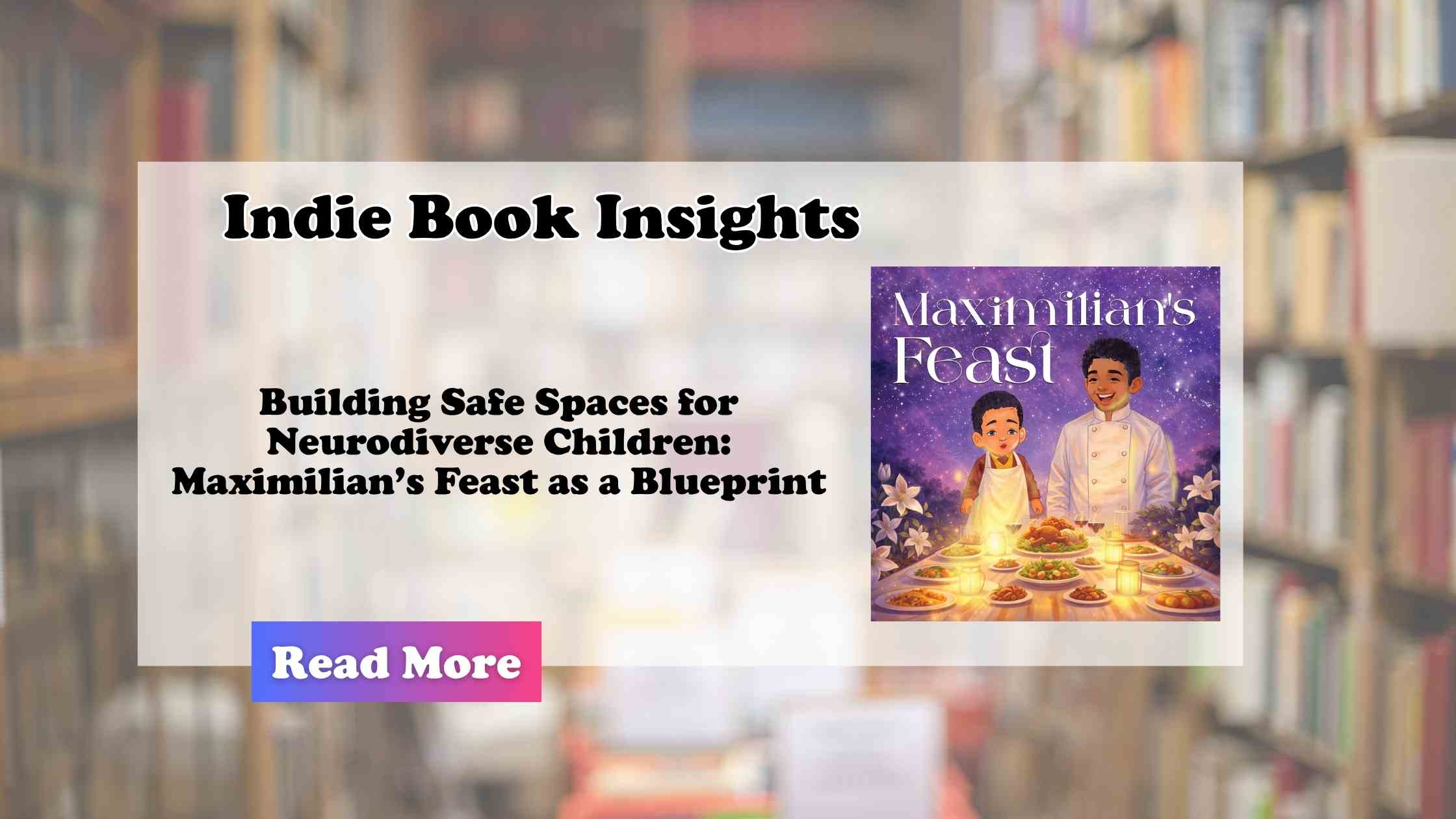
In Maximilian’s Feast, Briahna R. Wilson tells the inspiring story of Maximilian, a young boy whose sensory sensitivities shape his experience of the world. His journey through life is not just a path of personal growth, but also a testament to the power of creating safe, supportive spaces for neurodiverse children. Maximilian’s story offers valuable insights into how we can build environments where children, regardless of their unique needs, feel understood, valued, and encouraged to thrive.
Maximilian’s experiences highlight the importance of understanding and embracing neurodiversity. From the very beginning, he faces challenges that many children his age don’t experience—overwhelming sounds, intense smells, and the difficulty of interacting with the world. Instead of seeing these as obstacles, Maximilian’s mother, Rae, creates a safe space for him, fostering an environment of acceptance and love where Maximilian can express himself freely. Rae’s approach is centered on patience, trust, and respect for Maximilian’s needs, which ultimately allows him to flourish.
The kitchen becomes Maximilian’s sanctuary, a place where he can escape from the chaos of the world and focus on what brings him joy: cooking. Here, Rae introduces him to the wonders of food—its textures, its smells, and its transformative power. But more importantly, the kitchen becomes a space where Maximilian can explore at his own pace, without judgment or pressure. This safe space encourages Maximilian to experiment, make mistakes, and, most importantly, discover what he loves. It is in this environment that he learns to connect with his senses in a way that feels safe and empowering.
Building a safe space for neurodiverse children is about more than just providing physical space—it’s about fostering an emotional environment where children feel understood and supported. In Maximilian’s case, Rae doesn’t try to force him into a mold or change his sensitivities; instead, she helps him embrace them, teaching him that his uniqueness is something to be proud of. She provides him with the tools he needs to navigate the world, helping him build confidence and a sense of self-worth. By offering love and understanding, Rae helps Maximilian transform his challenges into strengths.
As Maximilian grows older, he begins to share his gift of cooking with others, particularly children who also see the world differently. He teaches them that their unique perspectives are valuable and worthy of celebration. Maximilian’s journey illustrates that when neurodiverse children are given the right support, they can thrive and use their gifts to contribute to the world in meaningful ways. His story encourages us to recognize the importance of creating spaces where children can explore their identities and abilities, free from fear or judgment.
The message of Maximilian’s Feast is clear: safe spaces are essential for neurodiverse children. These spaces allow them to feel accepted, to explore their talents, and to develop the confidence to be themselves. By embracing neurodiversity and fostering an environment of kindness and support, we empower children like Maximilian to not only cope with the world around them but to shape it in their own unique way.
Maximilian’s story offers a powerful blueprint for building safe spaces for neurodiverse children. It reminds us that with the right support, understanding, and encouragement, all children can reach their full potential. Whether in a kitchen, a classroom, or at home, we can create spaces where neurodiverse children feel seen, heard, and celebrated. Maximilian’s Feast is a shining example of how love and acceptance can transform challenges into opportunities for growth and success.
Available now on Amazon: https://www.amazon.com/dp/B0GX2WVQL4