
Who are we without community? What shapes our identity beyond personal ambition and individual success? And how do spirituality, culture and human relationships influence the way we understand ourselves?
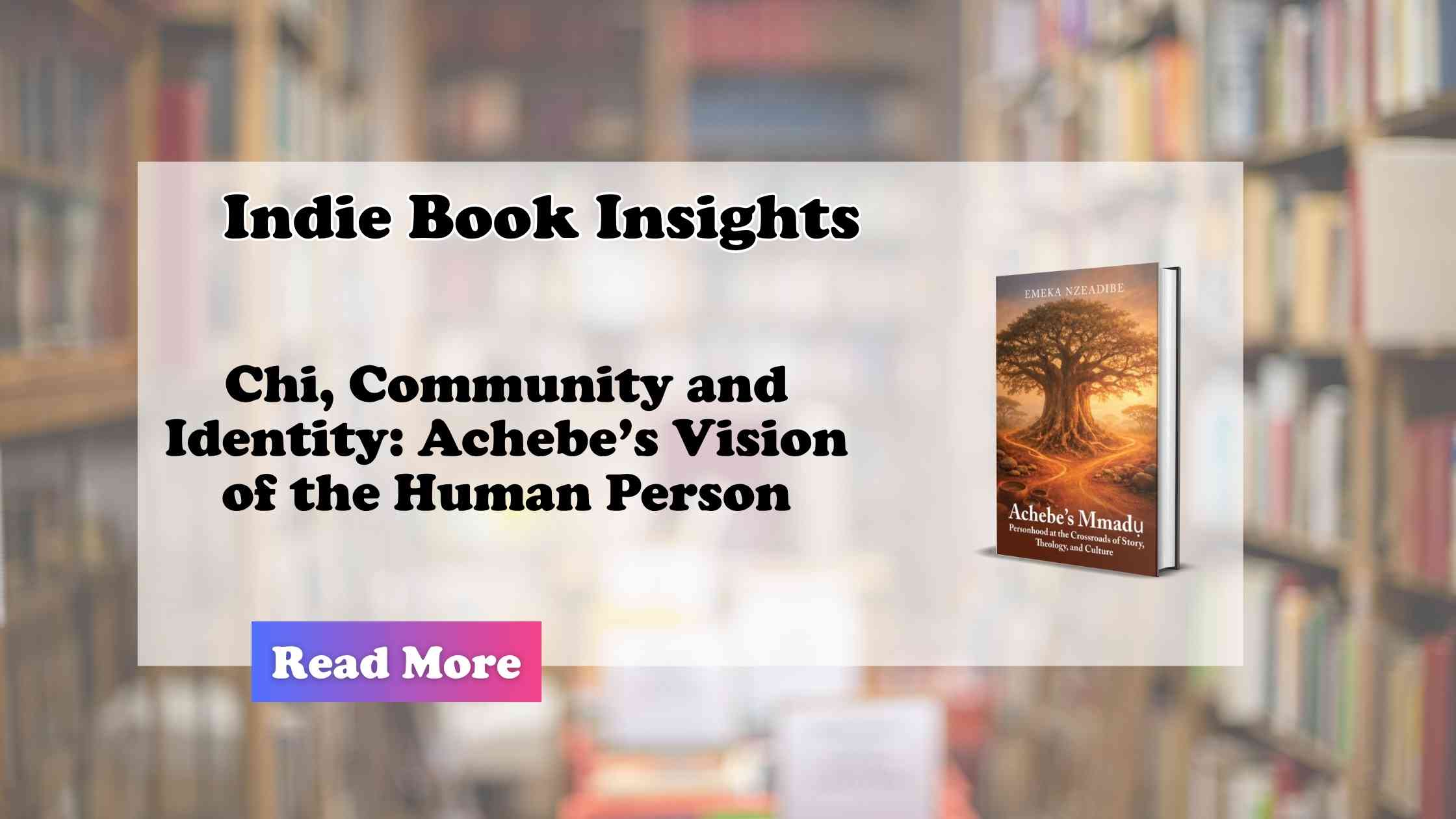
These questions lie at the heart of Achebe’s Mmadụ, an insightful new work by Emeka Nzeadibe that explores the profound concept of personhood in Chinua Achebe’s literary world. Through an engaging dialogue between African literature, Igbo cosmology, theology and philosophy, the book offers readers a fresh understanding of what it means to be human.
At the center of this exploration is the Igbo concept of Mmadụ personhood understood not as isolated individuality, but as a deeply relational reality. In Achebe’s Igbo worldview, a person exists within a network of relationships involving family, ancestors, community, spirituality and the divine. Identity is not something created alone; it is shaped through connection.
This perspective becomes especially powerful in Achebe’s classic novels, such as Things Fall Apart and Arrow of God, where characters struggle not only against external pressures like colonialism and social change, but also against internal tensions involving pride, destiny, responsibility and belonging.
One of the most fascinating dimensions of Achebe’s Mmadụ is its discussion of Chi, a central concept in Igbo thought. Often described as a personal spiritual force or guiding presence, Chi represents the mysterious relationship between human effort and destiny. Achebe’s famous proverb, “Onye kwe, chi ya ekwe,” “When one says yes, one’s chi says yes,” captures this dynamic beautifully.
In this understanding, human beings are neither completely controlled by fate nor entirely detached from spiritual realities. Instead, life unfolds through a dialogue between personal agency and transcendent guidance. A person’s choices matter, but so does their harmony with the deeper spiritual order of existence.
Nzeadibe’s book carefully unpacks this relationship, showing how Achebe’s characters embody both the strengths and fragilities of the human condition. Okonkwo’s tragedy in Things Fall Apart, for example, is not merely political or cultural. It is also profoundly existential. His struggle reveals the tension between individual will and communal balance, between personal ambition and relational humanity.
At the same time, the book highlights how community functions as an essential element of identity in the Igbo world. In many Western frameworks, identity is often treated as highly individualistic, centered on personal freedom and self-definition. Achebe’s vision offers a compelling alternative. To be fully human, according to the Igbo worldview, is to live in relationship with others.
This idea is reflected in Igbo proverbs, traditions and social structures throughout Achebe’s fiction. Human dignity emerges not through isolation but through participation, recognition, responsibility and mutual belonging. The community shapes the individual, just as the individual contributes to the life of the community.
What makes Achebe’s Mmadụ especially relevant today is its ability to connect African thought with broader global conversations about identity and humanity. In a world marked by division, loneliness and cultural fragmentation, Achebe’s relational understanding of personhood feels remarkably timely.
The book also challenges long-standing misconceptions about African intellectual traditions. Rather than presenting Igbo cosmology solely as folklore or anthropology, Nzeadibe reveals its philosophical and theological richness. Storytelling, spirituality and communal ethics become sophisticated frameworks for understanding the human person.
More than literary criticism, Achebe’s Mmadụ is an invitation to rethink humanity itself. It encourages readers to see identity not as a solitary achievement, but as a living relationship between self, community, culture and the sacred.
For readers of African literature, theology, philosophy and cultural studies, the book offers a compelling and deeply human journey into one of the most important questions of our time: what does it truly mean to be a person?
Available On Amazon: https://www.amazon.com/dp/B0GZV57B1G/