
For years, she wasn’t building her own life; she was maintaining someone else’s.
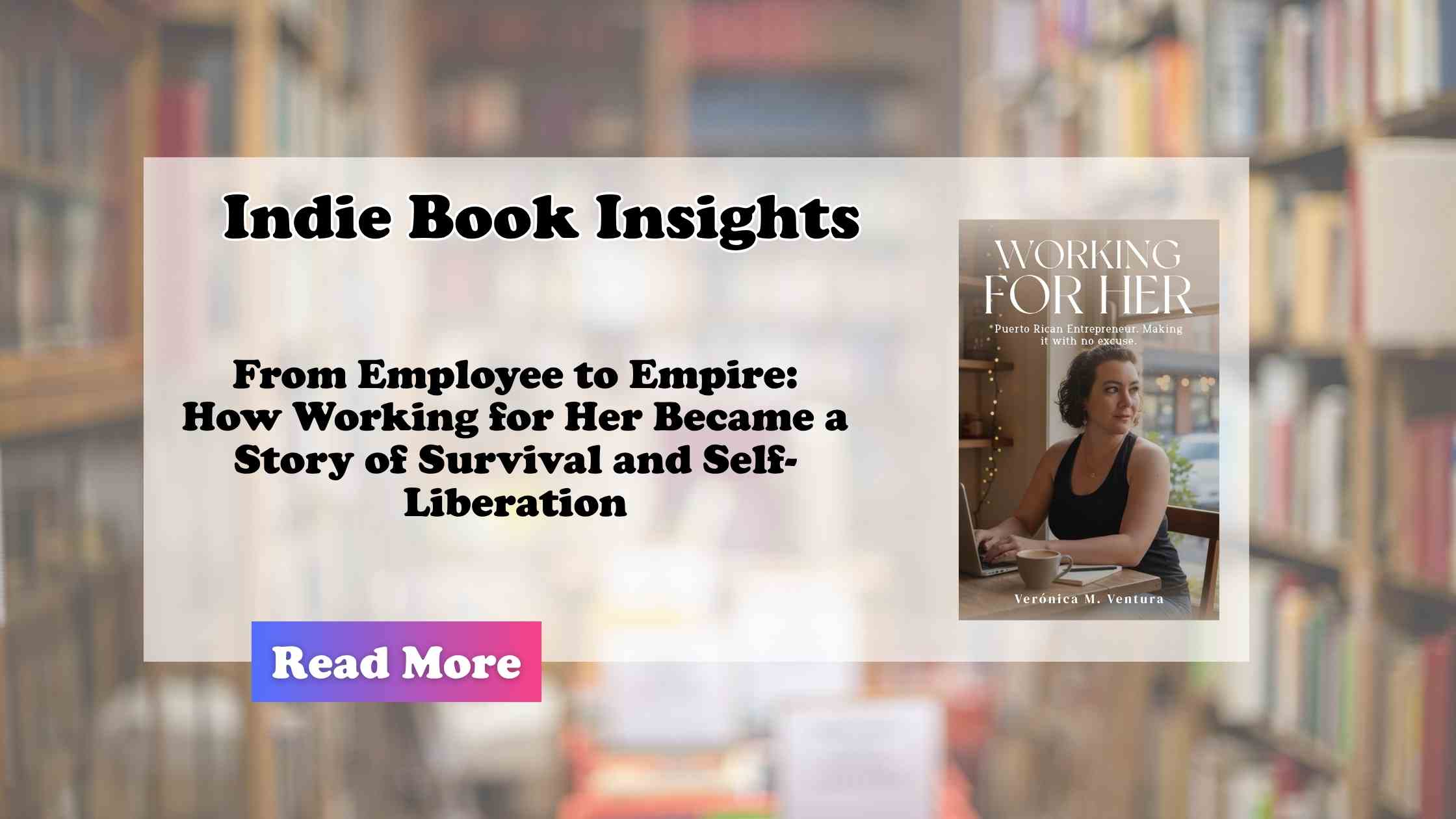
That’s the quiet truth at the center of Working for Her, a memoir that traces the transformation of a woman from trusted employee to accused outsider and ultimately into the founder of her own future. What begins as a story of professional dedication slowly reveals itself as something far more complicated: a life where boundaries disappeared, roles blurred and survival became indistinguishable from service.
At the start, everything looks like commitment. She manages finances, payroll, insurance claims and business operations. She works from home, linked to multiple accounts and handling systems that span personal and professional worlds. After COVID-era shifts, the separation between “hers” and “theirs” no longer exists. It all runs through her hands, her computer, her time, her attention.
And for a while, that arrangement works until it doesn’t.
When trust fractures, the same systems she maintained become the evidence used against her. A laptop becomes a symbol. Shared expenses become accusations. Years of invisible labor are compressed into a single word: theft. What follows is not just professional fallout, but emotional displacement, the kind that forces a person to question how something so essential to others’ survival can suddenly be reframed as wrongdoing.
But Working for Her is not interested in staying inside that collapse.
Instead, it documents what happens after: the slow, often painful process of rebuilding identity from the wreckage of misplaced loyalty. The protagonist is not rescued. She recalibrates. She begins to separate what was hers to carry from what was never meant to define her. And in that separation, something new begins to form.
That something new becomes Candles by MnM, a business built from necessity, creativity and a desire to create something that belongs entirely to her and her children. What starts as a side effort becomes a foundation. Not just for income, but for autonomy. Not just for survival, but for legacy.
This shift from employee to entrepreneur is not portrayed as glamorous or sudden. It is messy, uncertain and deeply personal. It is built in the margins of exhaustion, grief and responsibility. But it is also where the story changes tone. Because survival is no longer the endpoint. It becomes the starting line.
The memoir also grounds itself in place and identity. West Kendall, Miami-Dade, is not just a backdrop; it is part of the emotional architecture of the story. Community spaces, family ties, cultural heritage and generational resilience all shape how the protagonist understands work, sacrifice and success. Her Cuban and Puerto Rican roots, alongside a family history marked by migration and rebuilding, echo through every decision she makes.
At its heart, Working for Her asks a difficult but necessary question: What happens when the life you built for others becomes the reason you must rebuild your own?
The answer unfolds through self-liberation. Not as a dramatic escape, but as a series of choices, financial, emotional and spiritual, that slowly return agency to the person who lost it along the way.
Veronica M Ventura offers a narrative that speaks to anyone who has ever over-functioned in someone else’s system until they could no longer recognize their own reflection. It is a story about breaking roles, reclaiming ownership and discovering that empire-building sometimes begins the moment you walk away from what was never truly yours.