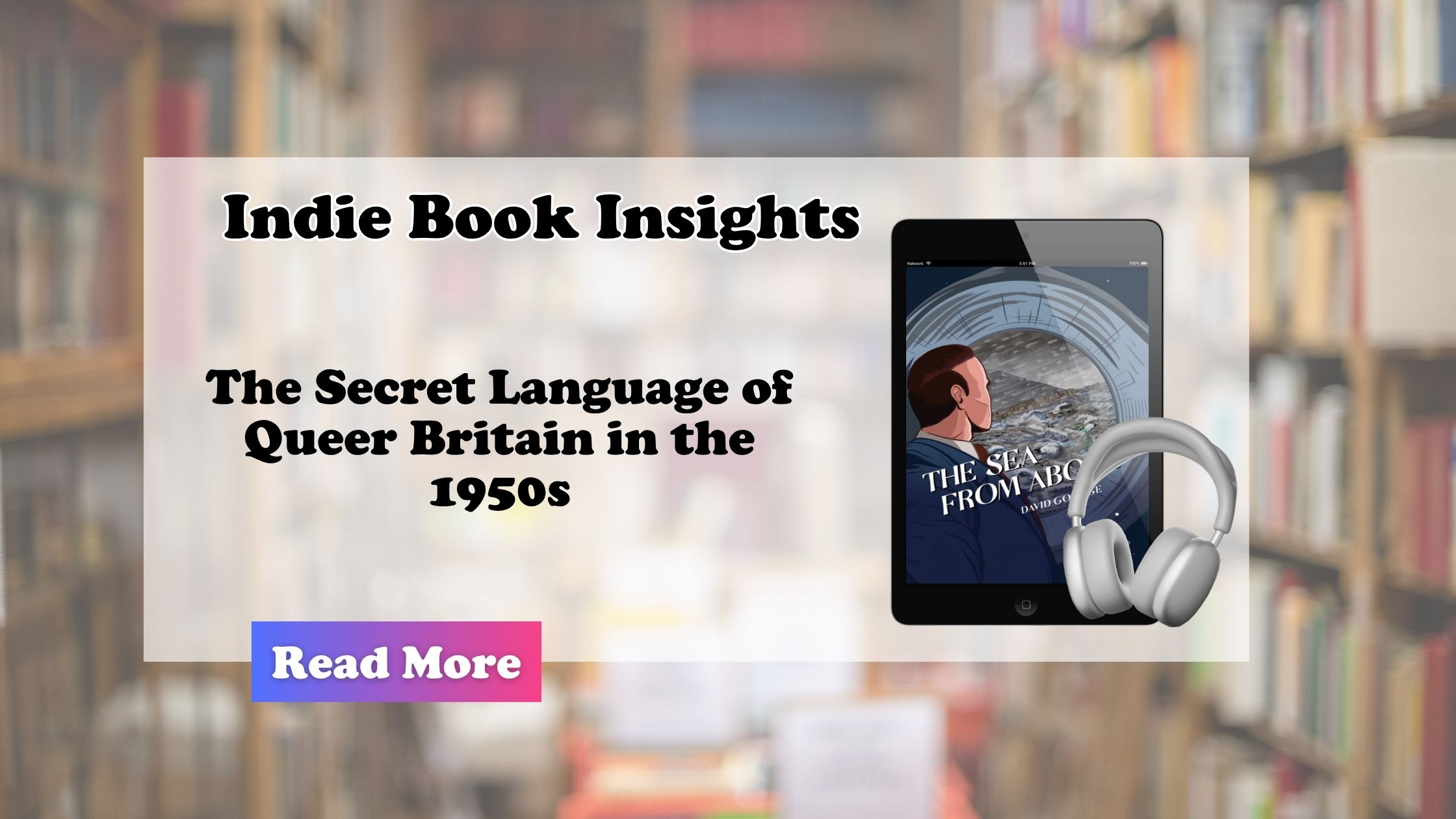
David Goudge’s The Sea From Above captures a time when queer life often had to be spoken indirectly. In 1950s Britain, openness could carry serious danger, so language became a shield, a signal, and sometimes a lifeline. A phrase, a look, a joke, or a carefully chosen word could reveal belonging to the right person while remaining hidden from the wrong one.
The novel understands this world with striking emotional precision. Its characters live in a society where desire must often be disguised, where trust is earned carefully, and where the wrong listener can turn private truth into public threat. Speech is never just speech. It carries risk. It can protect, expose, charm, wound, or invite.
This secret language is not only about coded words. It is also about performance. People learn when to speak plainly, when to deflect with humour, when to pretend, and when silence is safest. In queer spaces, language becomes warmer and freer, filled with wit, theatricality, and shared recognition. Outside those spaces, it becomes guarded, careful, and strategic.
Goudge’s theatre and film settings make this theme especially powerful. The characters understand costume, gesture, timing, and tone. They know that identity can be both hidden and performed. This gives The Sea From Above its rich dramatic quality, where every conversation may carry more than it says on the surface.
What makes the book so memorable is that it never treats coded queer life as a novelty. It shows the emotional cost of having to live that way. To speak in signs is clever, but it is also lonely. To hide in plain sight is resourceful, but exhausting. Yet within that hidden language, the characters still find humour, desire, friendship, and moments of real tenderness.
For readers interested in LGBTQ+ history, literary fiction, postwar Britain, theatre culture, and stories of hidden identity, The Sea From Above offers a vivid and deeply human reading experience. David Goudge brings back a world where language carried danger and possibility at once, reminding us that even whispered lives deserve to be heard.
What makes the book so memorable is that it never treats coded queer life as a novelty. It shows the emotional cost of having to live that way. To speak in signs is clever, but it is also lonely. To hide in plain sight is resourceful, but exhausting. Yet within that hidden language, the characters still find humour, desire, friendship, and moments of real tenderness.
For readers interested in LGBTQ+ history, literary fiction, postwar Britain, theatre culture, and stories of hidden identity, The Sea From Above offers a vivid and deeply human reading experience. David Goudge brings back a world where language carried danger and possibility at once, reminding us that even whispered lives deserve to be heard.
Get Your Copy on Amazon: https://www.amazon.com/dp/B0GSX31TT1/