

Consumer choice is often measured by what appears on shelves, websites, and advertisements. A shopper may see dozens of brands, several subscription plans, and countless product variations. This creates the impression of a competitive market. Yet many of those options may be controlled by the same small group of corporations.
Economic consolidation occurs when large companies acquire competitors, merge with rivals, or gain control over suppliers and distribution networks. The names customers recognize may remain unchanged, but ownership gradually moves into fewer hands. Choice still exists at the level of packaging and branding, while meaningful competition becomes weaker.
This matters because genuine competition gives consumers power. When several independent companies compete for customers, they must improve quality, control prices, and respond to changing needs. A dissatisfied customer can leave one business and support another. That ability to walk away encourages companies to earn loyalty rather than assume it.
Consolidated markets operate differently. When only a few major firms dominate an industry, consumers may discover that switching brands changes very little. Prices can rise across the market at similar rates. Service standards may decline without causing a significant loss of customers. Product features may become more uniform because dominant companies face less pressure to take risks or challenge established practices.
The effect can be difficult to notice because products do not disappear immediately. In fact, large corporations may introduce additional labels, flavours, packages, or service levels. This creates visible variety without expanding independent ownership. Consumers are offered more versions of similar products, but fewer companies are making the important decisions behind them.
Consolidation can also influence where products are sold. Large firms often control distribution agreements, advertising access, online visibility, and supplier relationships. Smaller businesses may struggle to reach customers, even when their products are competitive. As these businesses close or sell to larger companies, the market loses another source of innovation and local accountability.
The consequences extend beyond shopping. When ownership becomes concentrated, decisions affecting prices, employment, production, and access are increasingly made far from the communities experiencing their effects. A local store may keep its familiar name, but its policies may be determined by a corporate office with little connection to local needs.
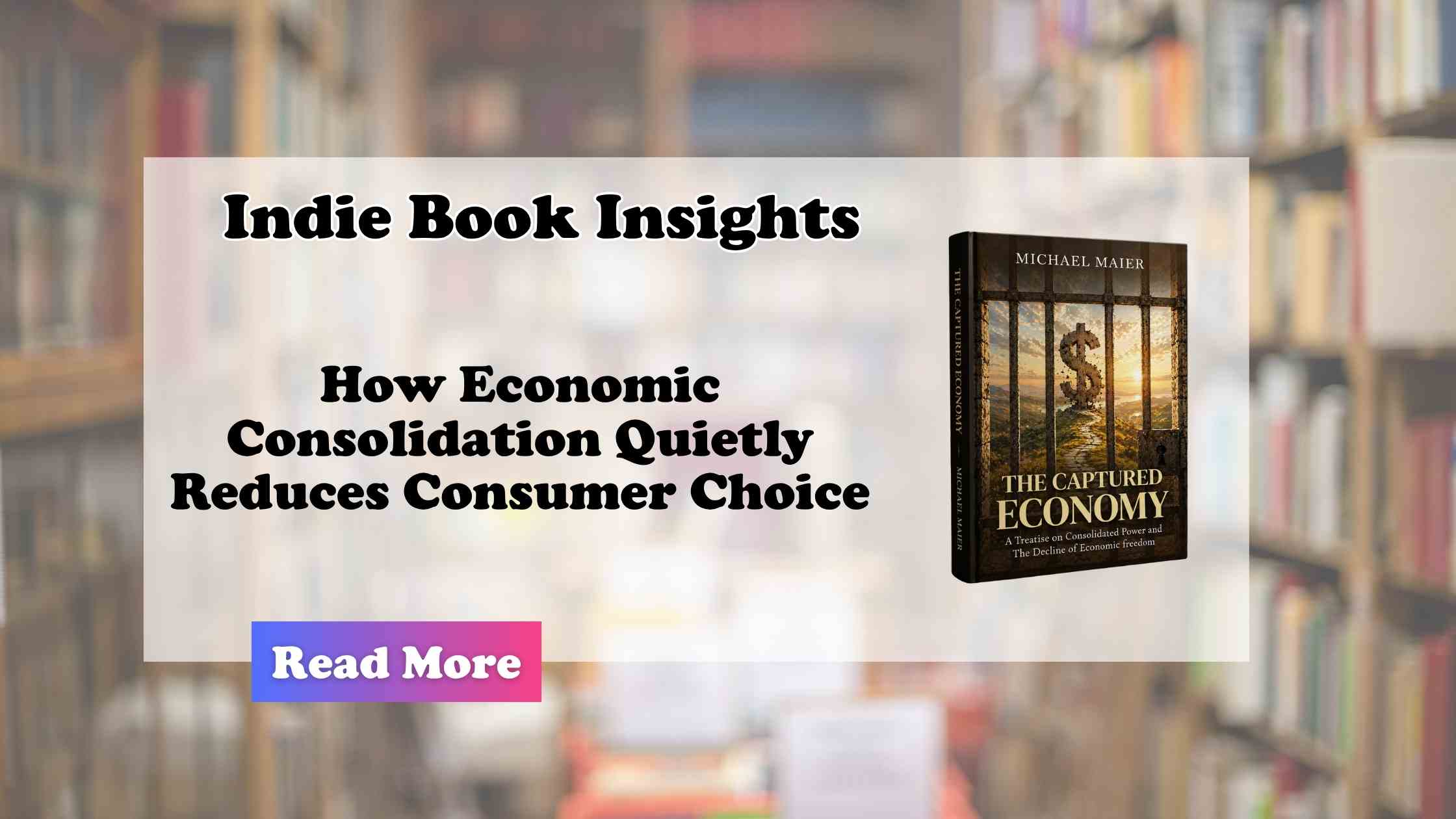
Michael Maier examines these patterns in The Captured Economy: A Treatise on Consolidated Power and the Decline of Economic Freedom. The book challenges readers to look beyond visible brands and consider who controls the systems beneath them. It explores how mergers, regulation, corporate scale, and weakened alternatives can gradually reshape economic freedom without attracting immediate attention.
The Captured Economy is a timely read for anyone who has wondered why modern markets seem full of options while meaningful choices continue to narrow. It encourages readers to question the difference between variety and competition, and to recognise what may be lost when economic power becomes concentrated.