
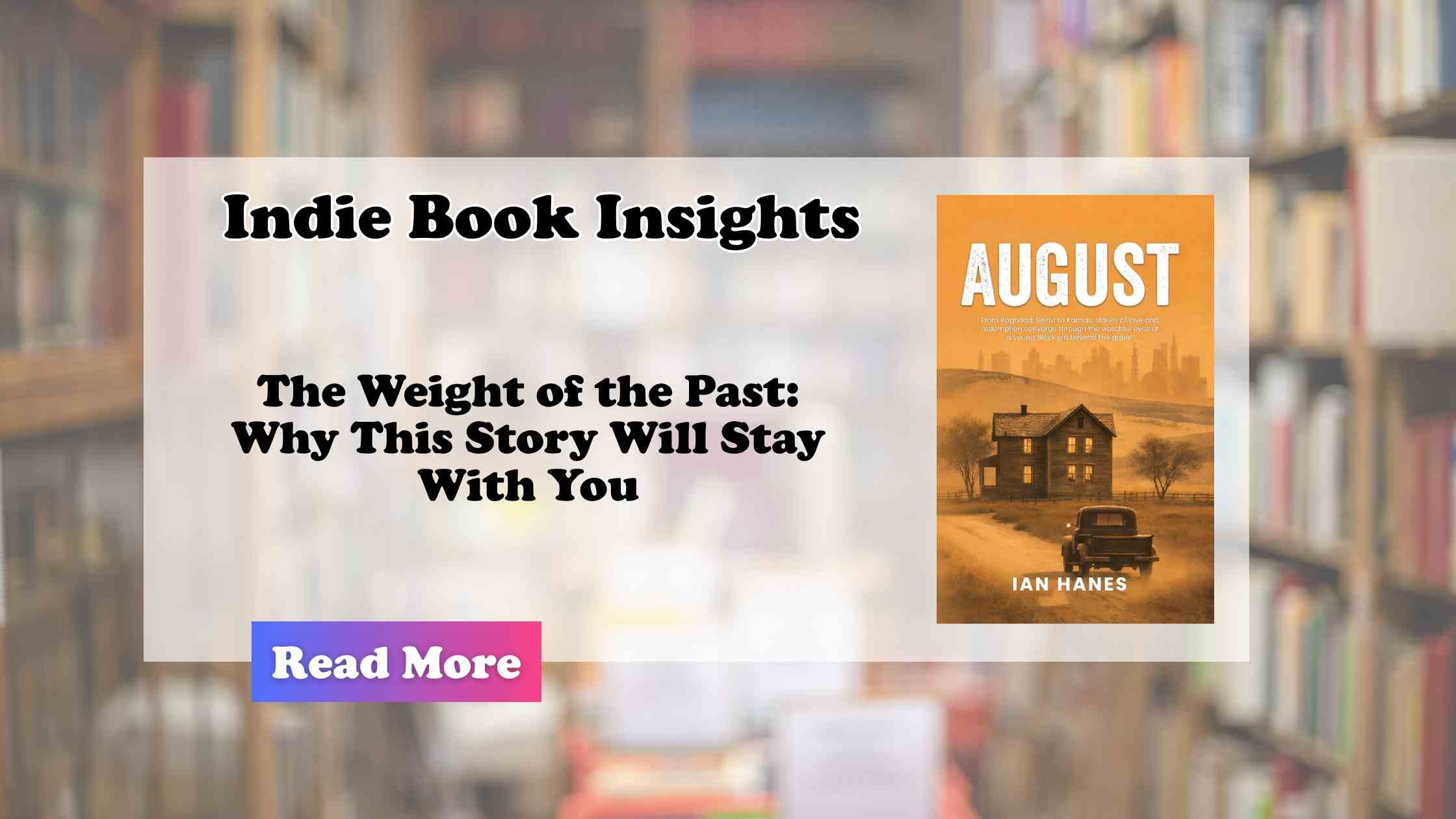
There are some stories you read and forget and then there are stories that quietly take root inside you, lingering long after the final page is turned. August: We Carry What We Bury by Ian Hanes belongs firmly in the latter category. It is not simply a novel you read; it is a novel you feel, carry and return to in your thoughts days, even weeks later.
At its heart, this is a story about the invisible burdens we all carry. The past has a way of shaping us, whether we acknowledge it or not. Memories, regrets, unspoken truths, they don’t disappear just because we try to bury them. Instead, they settle deep within us, quietly influencing the way we think, act and connect with others. This novel dares to explore that emotional terrain with honesty and depth.
What makes this story so powerful is its relatability. You don’t have to share the same experiences as the characters to understand them. Their struggles feel real because they echo something universal: the tension between who we were, who we are and who we hope to become. Readers will find themselves reflecting on their own lives, asking difficult but necessary questions about what they have held onto and why.
Ian Hanes crafts his narrative with a careful balance of emotional intensity and subtlety. The writing never feels forced or overly dramatic. Instead, it draws you in gradually, building a connection between reader and character that feels deeply personal. You begin to see parts of yourself in their fears, their choices and their attempts to move forward despite the weight of their past.
One of the novel’s greatest strengths is its atmosphere. There is a quiet, almost haunting quality to the storytelling, a sense that something unresolved lingers just beneath the surface. This tension keeps you turning pages, not out of urgency alone, but out of a desire to understand. To uncover what has been buried. To see whether healing is truly possible.
And that is ultimately what makes August: We Carry What We Bury so impactful: its exploration of healing. The novel does not offer easy answers or neat resolutions. Instead, it presents a more truthful perspective that confronting the past is messy, uncomfortable and deeply personal. Yet, it is also necessary. Growth cannot happen without acknowledgment. Change cannot occur without reflection.
Readers who appreciate emotionally driven storytelling will find themselves deeply moved by this book. It is the kind of novel that invites you to slow down, to sit with its themes and to engage with its questions. It doesn’t rush you and it doesn’t let you remain passive.
By the time you reach the end, you may not have all the answers. But you will have something more valuable: a new awareness of the weight we all carry and perhaps, a renewed willingness to face it.
This is not just a story about the past. It is a story about what we choose to do with it.
And that is why it will stay with you.