Let’s face it, everything moves fast these days.
We scroll quickly, we skim articles, we binge-watch shows at double speed. Even the books we pick up often promise gripping twists, high drama and page-turning intensity. And while there’s nothing wrong with that, it does raise an important question:
When was the last time you truly slowed down with a story?
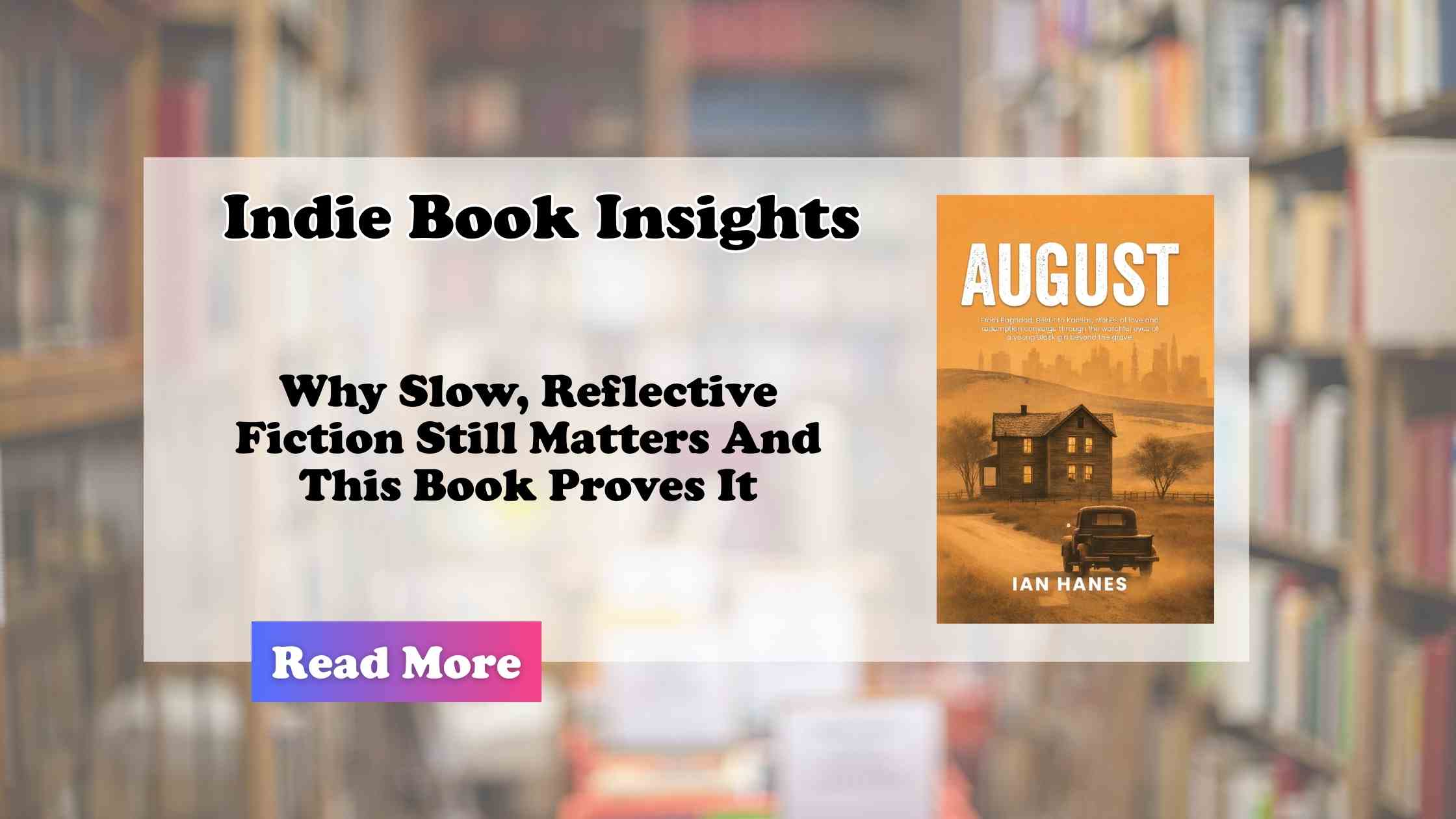
That’s exactly why slow, reflective fiction still matters and why August: We Carry What We Bury by Ian Hanes feels so important right now.
This is not a novel that rushes to impress you. It doesn’t rely on shock value or constant action to keep you turning pages. Instead, it invites you to pause. To sit with its characters. To really feel what’s happening beneath the surface.
And honestly? That kind of storytelling feels rare.
Slow fiction isn’t about “less happening.” It is about different things happening, the internal shifts, the quiet realizations, the moments that might seem small but carry real emotional weight. It is about the space between words, the meaning behind silence and the complexity of human experience.
August: We Carry What We Bury leans fully into that space.
From the very beginning, you can sense that this is a story more interested in truth than spectacle. It explores the things we often avoid: buried memories, unresolved emotions, complicated relationships and it does so with patience and care. Nothing is forced. Nothing is rushed.
And that’s exactly why it works.
Because when a story takes its time, you start to notice more. A subtle glance between characters. A line of dialogue that carries more than it says. A moment of hesitation that reveals everything. These details might be overlooked in faster-paced stories, but here, they are the story.
Ian Hanes understands that emotional depth doesn’t come from big, dramatic moments alone; it comes from buildup. From allowing readers to connect, reflect and recognize parts of themselves in what’s unfolding.
And that’s where this book really stands out.
It doesn’t just tell you how the characters feel, it lets you experience it alongside them. Their regrets, their hopes, their attempts to move forward while still carrying the past… it all feels real, because it’s given the time and space to be real.
In a way, reading this novel feels almost like stepping out of the noise of everyday life. It’s a reminder that not everything needs to happen quickly to matter. That some of the most important changes happen quietly, over time.
And maybe that’s why slow, reflective fiction is more relevant than ever.
In a world that constantly pushes us forward, stories like this ask us to stop and look inward. To consider what we are carrying. To think about the things we have buried and what it might mean to finally face them.
That’s not something you rush through.
It’s something you sit with.
August: We Carry What We Bury isn’t trying to compete with louder, faster stories. It’s doing something entirely different and arguably more lasting. It’s creating a space for reflection, for connection and for emotional honesty.
So if you have been craving a book that feels meaningful… one that stays with you instead of fading quickly… this might be exactly what you’re looking for.
Because sometimes, the stories that move the slowest are the ones that move us the most.