

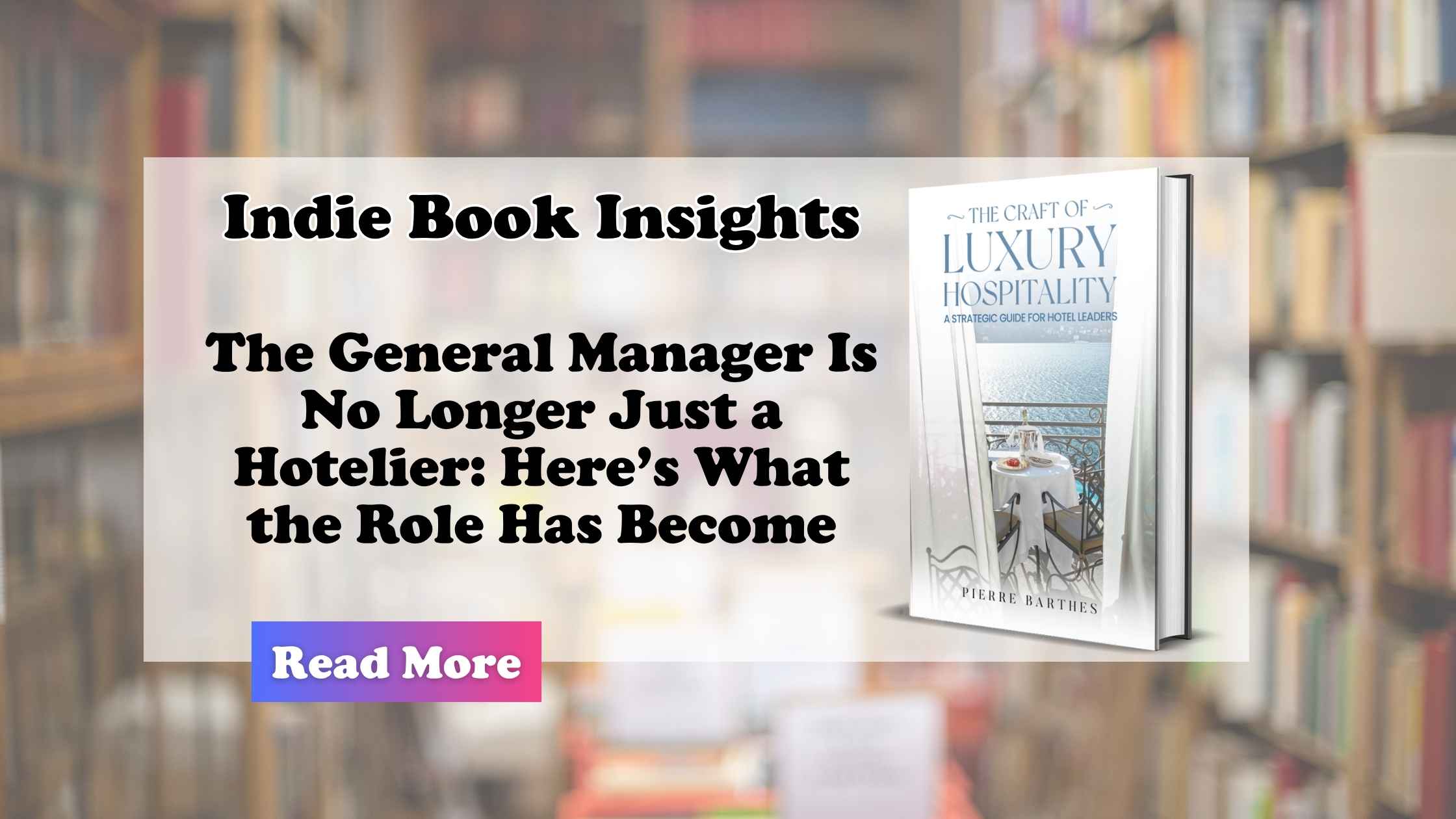
There was a time when the image of a hotel General Manager was relatively straightforward: the gracious host, visible in the lobby, greeting important guests, inspecting standards and keeping operations running smoothly.
That image is no longer enough.
In The Craft of Luxury Hospitality: A Strategic Guide for Hotel Leaders, Pierre Barthes argues that the modern luxury hotel GM has evolved into something far more complex: a strategist, culture builder, financial operator, talent developer, brand guardian, stakeholder diplomat and still, critically, a host. Drawing on more than four decades in international luxury hospitality, Barthes describes the GM as the “visionary heart” of the hotel, responsible for weaving financial acumen, team inspiration and guest connection into sustained performance.
From Operator to Enterprise Leader
Running a luxury hotel today requires a much broader commercial perspective than simply monitoring occupancy and room revenue.
Barthes emphasizes that traditional metrics such as RevPAR and Gross Operating Profit remain important, but they cannot tell the whole story. Modern GMs must also understand measures such as GOPPAR, TRevPAR, payroll performance and the contribution of non-room revenue streams. In other words, they must think like business leaders, not just operators.
At the same time, financial performance cannot come at the expense of the luxury promise.
That balancing act is one of the defining challenges of the role: protecting guest experience, brand equity and service standards while responding to labor pressures, owner expectations, changing consumer behavior and increasingly demanding commercial targets.
The GM as Bridge
The modern GM also operates between competing interests.
Owners may prioritize returns. Operators must protect brand standards. Corporate teams bring strategic expectations. Employees need clarity, development and trust. Guests, meanwhile, care about none of those internal tensions; they simply expect excellence.
Barthes describes the GM as the pivotal bridge between owners and operators, translating strategy into operational reality while balancing financial priorities with brand integrity. Trust, transparency, aligned goals and proactive communication become essential leadership tools.
Culture Is Now Part of the Job Description
Perhaps the biggest shift is that a GM can no longer lead effectively through authority alone.
Modern luxury hospitality depends on empowered people. Barthes explores the evolution of leadership from control toward empowerment, alongside the importance of developing managers, creating strong communication systems and building a culture in which employees understand the hotel’s vision and feel responsible for bringing it to life.
That becomes even more important as new generations enter the workforce. The GM must adapt leadership pathways, invest in development and create opportunities that attract and retain emerging talent. Barthes argues that future-ready leadership means combining analytical precision with genuine human connection.
The Role Has Expanded, but the Purpose Has Not
The contemporary GM may spend more time discussing profitability, strategy, culture, technology, branding, talent and stakeholder alignment than previous generations ever imagined.
Yet the ultimate purpose remains remarkably simple.
Every decision should strengthen the guest experience, the team and the long-term health of the hotel.
That is why The Craft of Luxury Hospitality is particularly relevant for today’s leaders. It does not reduce the GM role to operations or financial management. It presents hotel leadership as a demanding craft requiring judgment, humanity, discipline and vision.
The General Manager is no longer simply the person running the hotel.
The GM is the person connecting everything that makes the hotel worth returning to.