
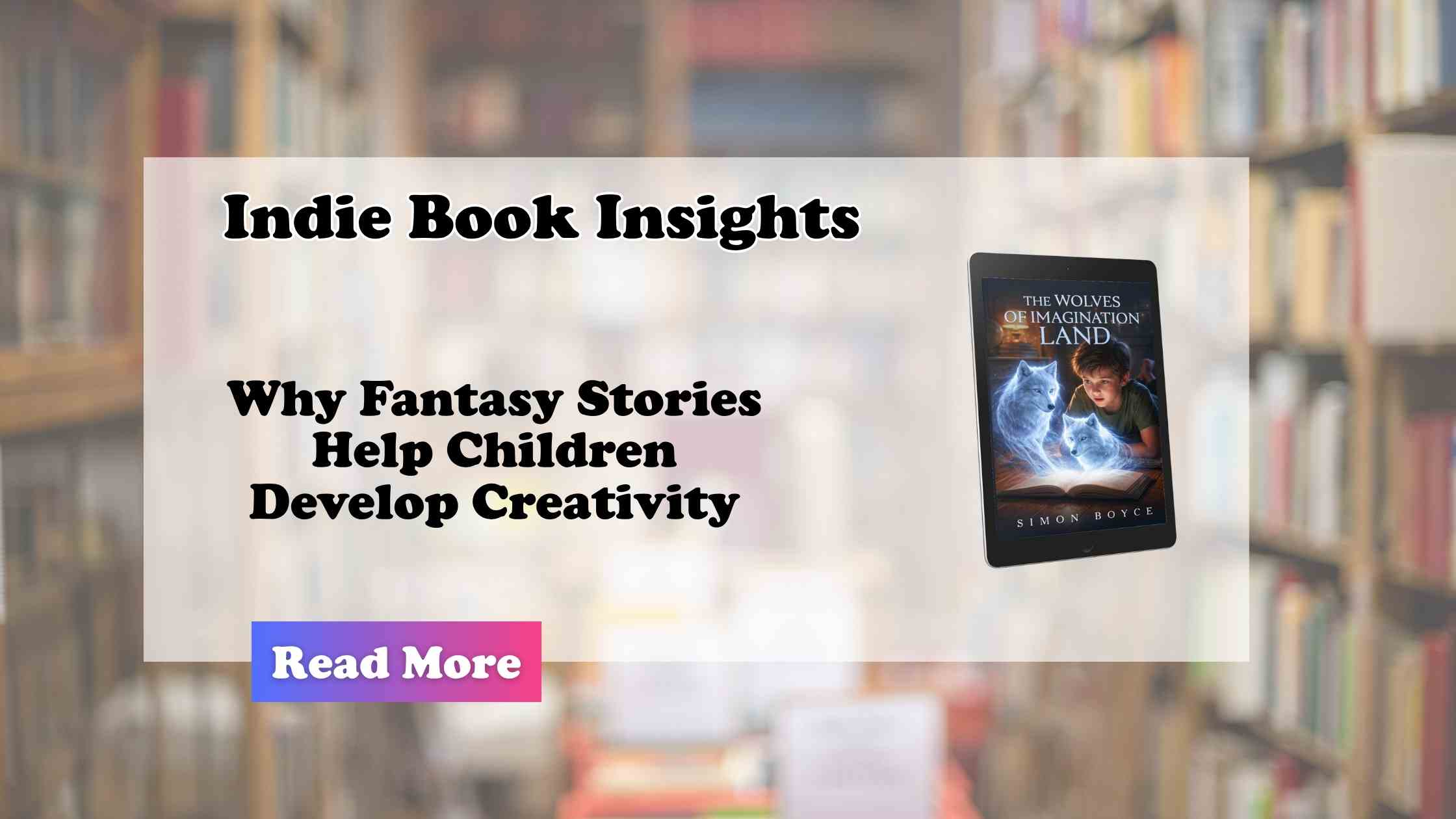
Fantasy stories give children room to imagine beyond the world they already know. They open doors to magical forests, talking animals, secret paths, hidden libraries, and brave adventures. In The Wolves of Imagination Land by Simon Boyce, young readers are invited into a world where stories shape reality and every new idea has the power to change what happens next.
Children develop creativity when they are encouraged to ask, “What if?” This question sits at the heart of fantasy. What if wolves were not villains? What if two young wolves from different worlds became friends? What if imagination itself could create roads, rivers, and places no one had seen before? These ideas help children think freely, build new possibilities, and see storytelling as something alive.
Fantasy also strengthens emotional imagination. When children follow Junior and Luna on their journey, they are not only exploring Imagination Land. They are learning to understand fear, courage, curiosity, friendship, and fairness. Junior’s thoughtful nature and Luna’s adventurous spirit give readers different ways to connect with the story. Children can see that bravery is not always loud. Sometimes it means asking difficult questions, helping a friend, or choosing not to believe an unfair story.
Books like The Wolves of Imagination Land also help children build problem solving skills. In fantasy, characters often face unusual challenges. A glowing path appears. A river rises. A storm changes everything. These moments encourage young readers to think beyond simple answers. They begin to imagine solutions, predict outcomes, and wonder what they would do in the same situation.
Another reason fantasy supports creativity is that it makes reading feel like play. A child entering Imagination Land is not just reading words on a page. They are building scenes in their mind. They picture Moonhill, Terraced Street, the Library of Stories, and the River of Dreams. This mental world building strengthens imagination and helps children become more expressive thinkers.
Simon Boyce’s story also reminds readers that creativity can challenge old ideas. The book gently turns the familiar image of the “bad wolf” into something kinder, richer, and more thoughtful. This is powerful for children because it shows them that stories do not have to stay the same forever. They can be questioned, reshaped, and retold in better ways.
For parents and teachers, The Wolves of Imagination Land offers more than entertainment. It gives children a fantasy adventure with warmth, meaning, and heart. It encourages them to dream, question, explore, and care about others. It also creates space for conversations about friendship, fairness, and the importance of seeing beyond labels.
Fantasy stories help children grow because they make imagination feel important. The Wolves of Imagination Land does this beautifully, giving young readers a magical journey that celebrates creativity, courage, and the power of changing the story.
Get Your Copy On Amazon: https://www.amazon.com/dp/1972989685/