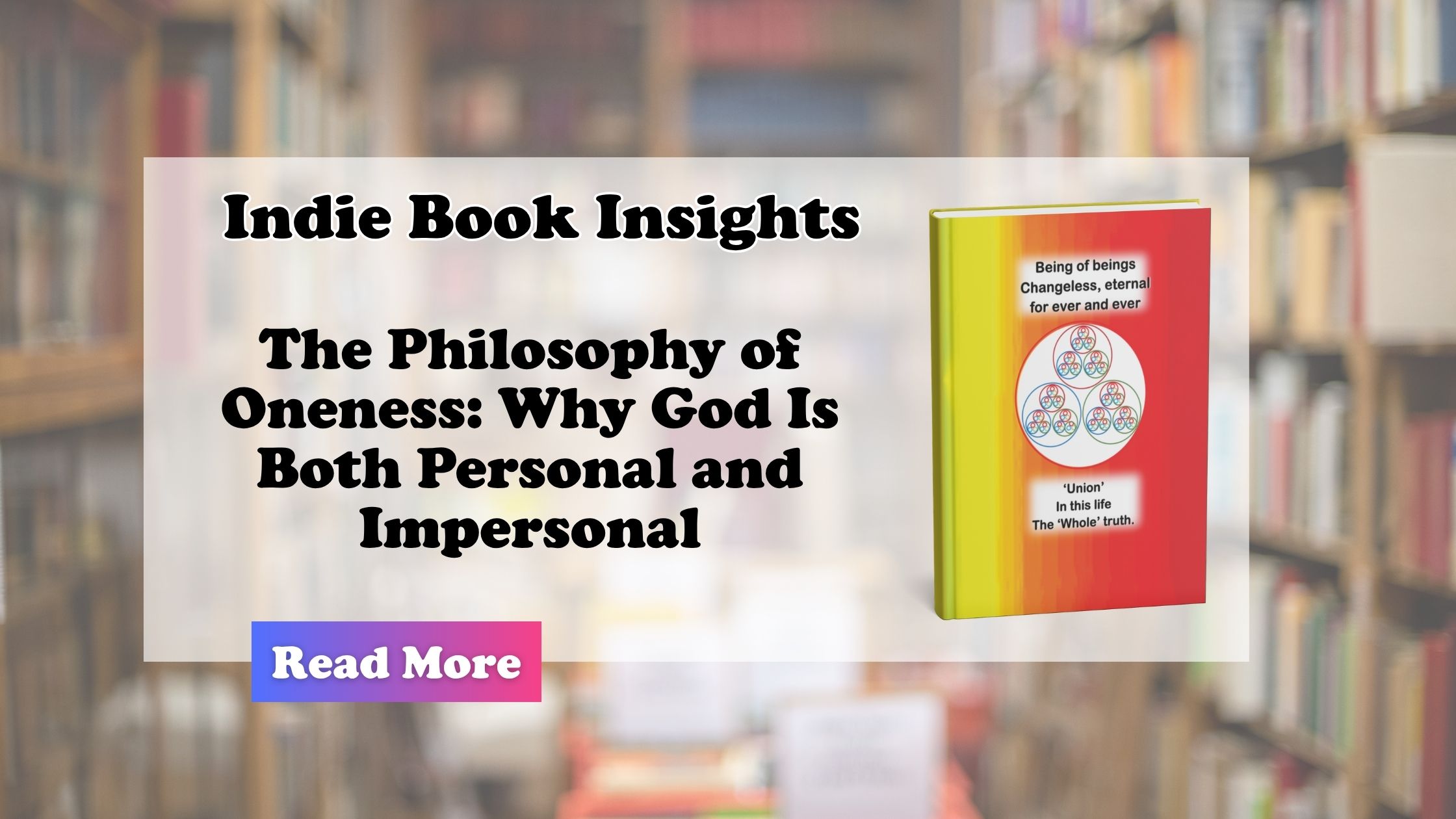
The question of God’s nature has puzzled theologians, philosophers, and seekers for centuries. Is God a personal being who engages with humanity or an impersonal force that transcends our understanding? This paradox of God being both personal and impersonal is beautifully articulated in the ancient texts of Hindu philosophy, particularly the Bhagavad-Gita, and echoed in Peter Luscombe’s Being of Beings: Changeless, Eternal for Ever and Ever. Exploring both perspectives enriches our spiritual understanding, offering a more holistic view of divinity that can guide our spiritual journeys.
The Impersonal Nature of God: The Screen Analogy
In Being of Beings, Luscombe introduces the concept of God as an impersonal “screen” on which the film of existence is projected. This metaphor suggests that the essence of God—often referred to as Brahman or the Absolute Reality—is formless, timeless, and beyond all sensory experience. Just as a screen is necessary for a film to be shown yet remains unaffected by the images projected onto it, God exists as the foundational reality that supports all creation without being altered by it.
This impersonal aspect of God aligns with the teachings found in the Bhagavad-Gita, where Krishna reveals the eternal, unchanging nature of the self (Atman) that is ultimately one with Brahman. In Chapter 2, Krishna explains:
“The soul is neither born nor does it die; it is eternal and indestructible.”
This understanding emphasises that the divine is not limited to human attributes or experiences. Instead, it invites us to realise that God transcends our notions of personality, existing as the infinite essence that pervades all things. This perspective encourages spiritual seekers to look beyond the physical manifestations of divinity and connect with the ultimate reality—the oneness that underlies all existence.
The Personal Nature of God: A Guiding Presence
While the impersonal nature of God serves as a profound foundation for spiritual understanding, the personal aspect of God is equally vital. This perspective highlights God as a guiding presence, a loving and caring force that interacts with creation. In Being of Beings, Luscombe emphasises that even though God is the eternal screen, He is also a personal companion, available to guide and support us on our spiritual journeys.
The Bhagavad-Gita illustrates this personal relationship through Krishna’s interactions with Arjuna. Krishna is not only the cosmic principle of existence but also a friend and charioteer who offers guidance, wisdom, and support to Arjuna in his moment of crisis. This duality is captured in Krishna’s declaration:
“I am the beginning, the middle, and the end of all beings.” (Bhagavad-Gita 10:20)
Here, Krishna embodies both the infinite and the intimate, reminding us that God is not just an abstract concept but a presence we can relate to personally. This relational aspect is crucial for many spiritual seekers, providing comfort, love, and support in their pursuit of truth.
The exploration of God as both personal and impersonal invites us to embrace the fullness of divinity. By recognising God as the eternal screen that underlies all existence while also experiencing Him as a guiding presence in our lives, we can cultivate a deeper, more nuanced spiritual understanding.
This duality is essential for spiritual growth, offering both the transcendence needed to rise above the ego and the relational depth that fosters love and connection. Ultimately, the journey towards understanding the nature of God is a profound and personal one, enriched by the teachings of the Bhagavad-Gita and the insights of Peter Luscombe. As we navigate this complex landscape, may we find harmony in the paradox of oneness, realising that the divine is ever-present—both as the infinite reality and as a compassionate guide.
Available Now On Amazon: https://a.co/d/0gNc4A8j