

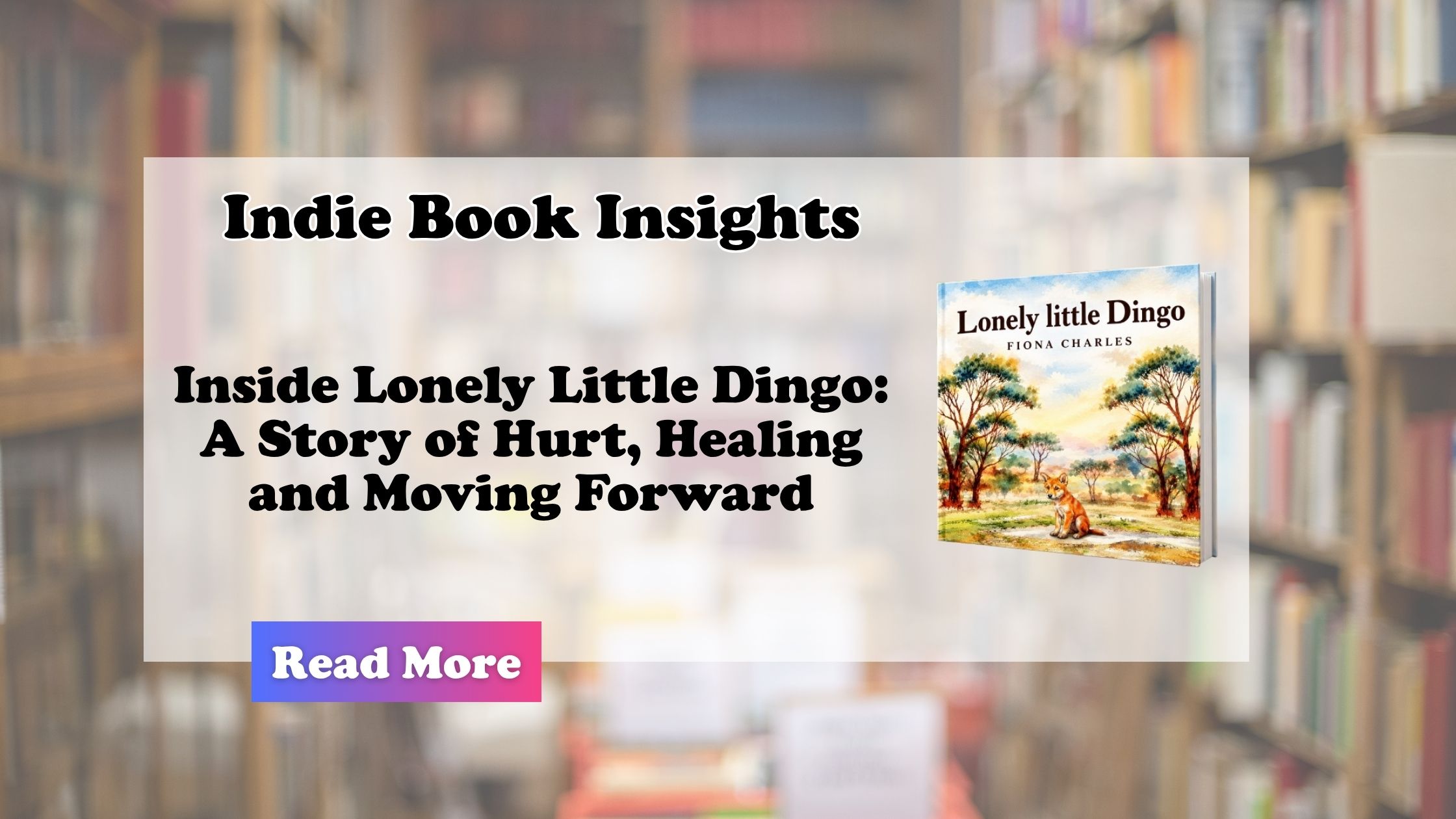
Some children’s stories are memorable because of adventure. Others stay with readers because they speak gently to emotions that can be difficult to explain. Fiona Charles’s Lonely Little Dingo does both, using the journey of a young dingo to explore fear, loneliness, recovery and the courage required to keep moving forward.
The story begins beneath the Southern Cross, where Little Dingo opens his eyes for the first time inside a crowded den. Although he is surrounded by other wild dogs, he does not experience the warmth and security readers might expect from a newborn animal’s home. Instead, his early days are shaped by confusion, growling, snapping, biting and hunger.
That difficult beginning gives the story its emotional foundation. Little Dingo is not simply physically vulnerable. He is growing up uncertain of who will care for him and unsure whether the world around him can be trusted.
As he becomes older and braver, he begins exploring outside the den. Away from the disorder he has known, the air feels fresher and the surroundings calmer. Each trip takes him farther from home and allows him to gain a little more confidence.
For a moment, freedom seems possible.
Then Little Dingo encounters another painful challenge. A trap catches his hind leg, leaving him unable to run or move. Hungry, exhausted and weak, he eventually fades into sleep while waiting for whatever comes next.
Help does arrive. Unfamiliar hands carry him to a warm, clean place where his injuries are treated. With food, care and time, his body begins to heal and grow stronger. Yet Fiona Charles makes an important distinction here: physical recovery does not immediately mean emotional recovery.
Little Dingo remains scared and defensive. He greets his carers with bared teeth, tears apart his bed and strikes at his cage. His behavior reflects the caution he learned long before his rescue.
The book deepens this idea when Little Dingo remembers the disorder of his original den. The biting and growling return in his memories, bringing sadness and anger with them. Despite everything he experienced there, he still longs to see his fractured family again.
That emotional complexity gives Lonely Little Dingo much of its power. The story suggests that hurt and healing can exist at the same time. A character can become stronger while still carrying painful memories. Moving forward does not always require forgetting the past.
By the end, Little Dingo faces uncertainty once more. Released and left to survive on his own, he looks toward an unknown future beneath the familiar Southern Cross. There is no perfect promise that everything will suddenly become easy. Instead, he walks forward with hope as his companion.
For parents, caregivers, educators and young readers, Lonely Little Dingo offers an opportunity to talk about difficult emotions in an accessible way. Its illustrated Australian setting gives children an engaging animal story, while its deeper themes invite conversations about fear, trust, resilience and perseverance.
Fiona Charles ultimately leaves readers with a simple but meaningful idea: moving forward does not mean the hurt never happened. It means continuing despite it.
Lonely Little Dingo by Fiona Charles is available now on Amazon: https://www.amazon.com/dp/B0HLYCX8X3