

When we think of Post-Traumatic Stress Disorder (PTSD), our mind can jump directly to the adults who have survived catastrophic events, combat, or severe accidents. We imagine these individuals reliving memories through flashbacks, nightmares, or having verbal disclosures. Since infants lack the cognitive ability to process complex memories or speak in full sentences, we don’t consider them to be victims of PTSD, long operating under the comforting assumption that babies cannot suffer from PTSD. However, modern neuroscience and developmental psychology tell a vastly different story and assert that trauma does not require spoken language to take root. In fact, pre-verbal trauma that occurs during pregnancy or infancy can be even more profoundly embedded because it lodges directly in the baby’s developing nervous system and somatic memory. Understanding pre-verbal PTSD is crucial for anyone caring for infants coming from hard places.
Infants can experience trauma. It could be because of prenatal stress, in utero substance exposure, medical interventions, severe neglect, or the sudden loss of their primary caregiver. While these experiences are registered through sensory systems, the implicit brain (specifically the amygdala) is fully functioning at birth, storing non-verbal memories as sensory perceptions, emotional states, and bodily sensations; the explicit memory system (the hippocampus) isn’t fully developed in early infancy. So a baby cannot remember an event as a clear, timeline-based story. Instead, the memory is recorded bodily:
- A sudden spike in heart rate when hearing a specific tone of voice.
- Chronic muscle tension or hypertonicity when being held.
- Digestive distress or exaggerated startle responses triggered by specific sensory inputs.
As author Dr. Bessel van der Kolk famously noted, “The body keeps the score.” For an infant, somatic memory is their narrative.
The Impact of Early Stress on Nervous System Regulation
During healthy infant development, a baby relies on a regulated caregiver to act as an external nervous system. Through “serve-and-return” interactions, including eye contact, gentle soothing, rhythmic rocking, and prompt feeding, the baby’s autonomic nervous system learns how to transition smoothly between states of arousal (crying/alertness) and calm (rest/digestion).
When a baby’s early environment is characterized by chaos, neglect, or separation, their nervous system remains flooded with stress chemicals like cortisol and adrenaline. This chronic exposure alters long-term nervous system regulation in two primary ways:
- Hyper-arousal: The nervous system becomes hardwired for “fight or flight.” These infants exist in a state of high alert. They are easily startled, struggle with erratic sleep patterns, cry uncontrollably at minor stimuli, and remain stiff or jittery even in safe environments.
- Hypo-arousal: The nervous system flips into a “freeze or shutdown” state. The infant becomes chronically under-responsive, quiet, or withdrawn, conserving energy in an environment that feels overwhelming or hopeless.
Supporting a Baby with Pre-Verbal Trauma
Healing pre-verbal PTSD requires somatic, felt-safety interventions rather than verbal reasoning, and caregivers can help regulate an infant’s nervous system through consistent, sensory-rich interactions:
- Co-Regulation through Touch: Kangaroo care (skin-to-skin contact) and baby-wearing help synchronize the infant’s heart rate and breathing with a calm adult’s physiology.
- Predictable Sensory Rhythms: Gentle, repetitive movements—such as rhythmic bouncing, swaddling, white noise, and consistent lighting—reassure the infant’s brain that the world is stable.
- Responsive Caregiving: Answering cries immediately signals to the baby’s implicit brain that they are no longer abandoned, rebuilding their internal safety baseline over time.
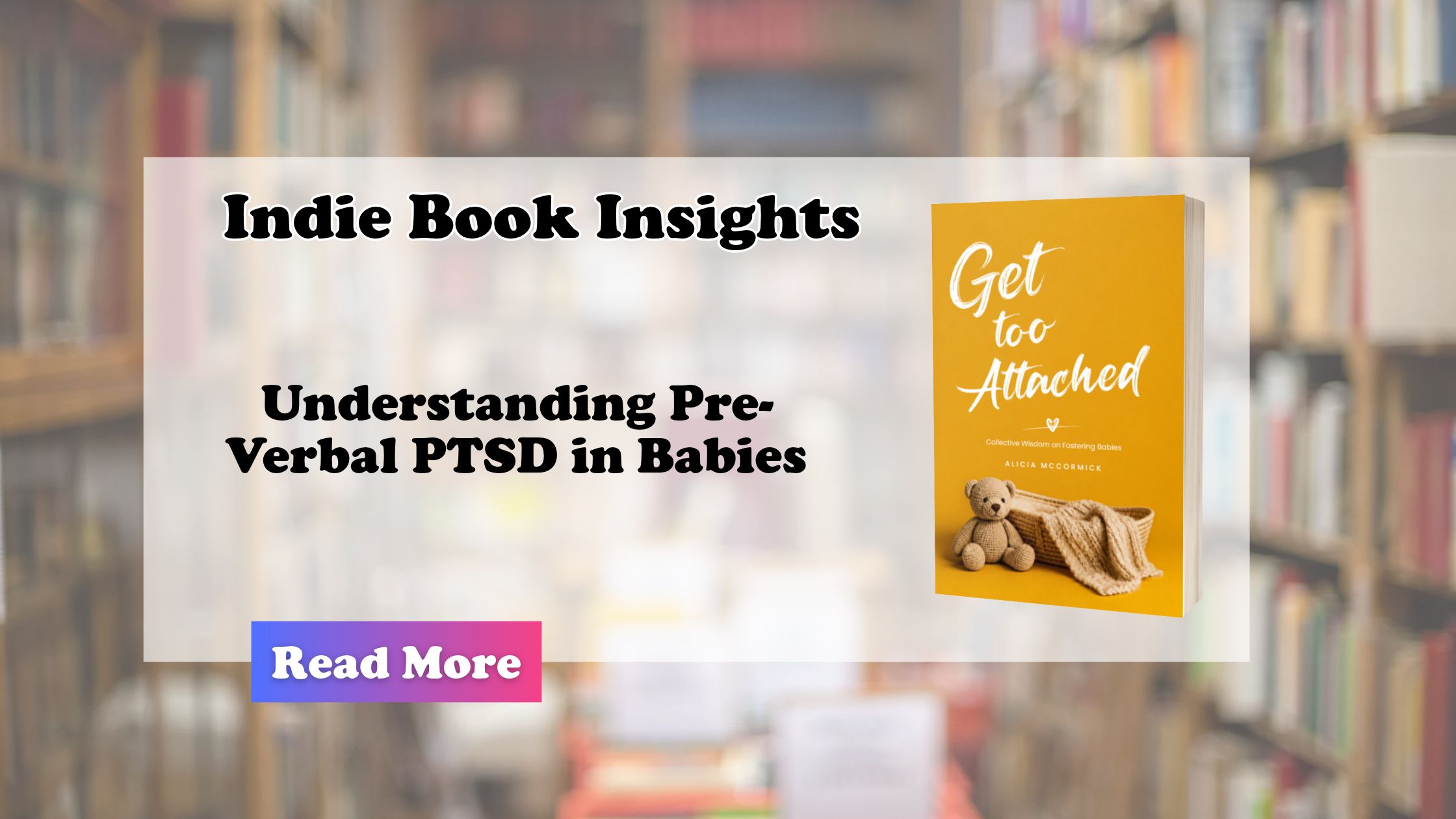
To learn more about how foster parents navigate these challenges in the real world, explore Get Too Attached: Collective Wisdom on Fostering Babies by Alicia McCormick, PhD. The book highlights that, contrary to the common misconception that babies are blank slates untouched by hardship, infants entering foster care invariably carry trauma. This can stem from prenatal stress, substance exposure, and the profound disruption of being separated from their biological families. Through diverse personal accounts, the book and accounts in it emphasize the critical need for trauma-informed parenting, specialized infant development support, and resilient community networks. This book encourages foster parents to lean into attachment, support reunification, and advocate fiercely for vulnerable children to help them overcome PTSD.
Read the book on Amazon: https://a.co/d/021kJ9Y3