

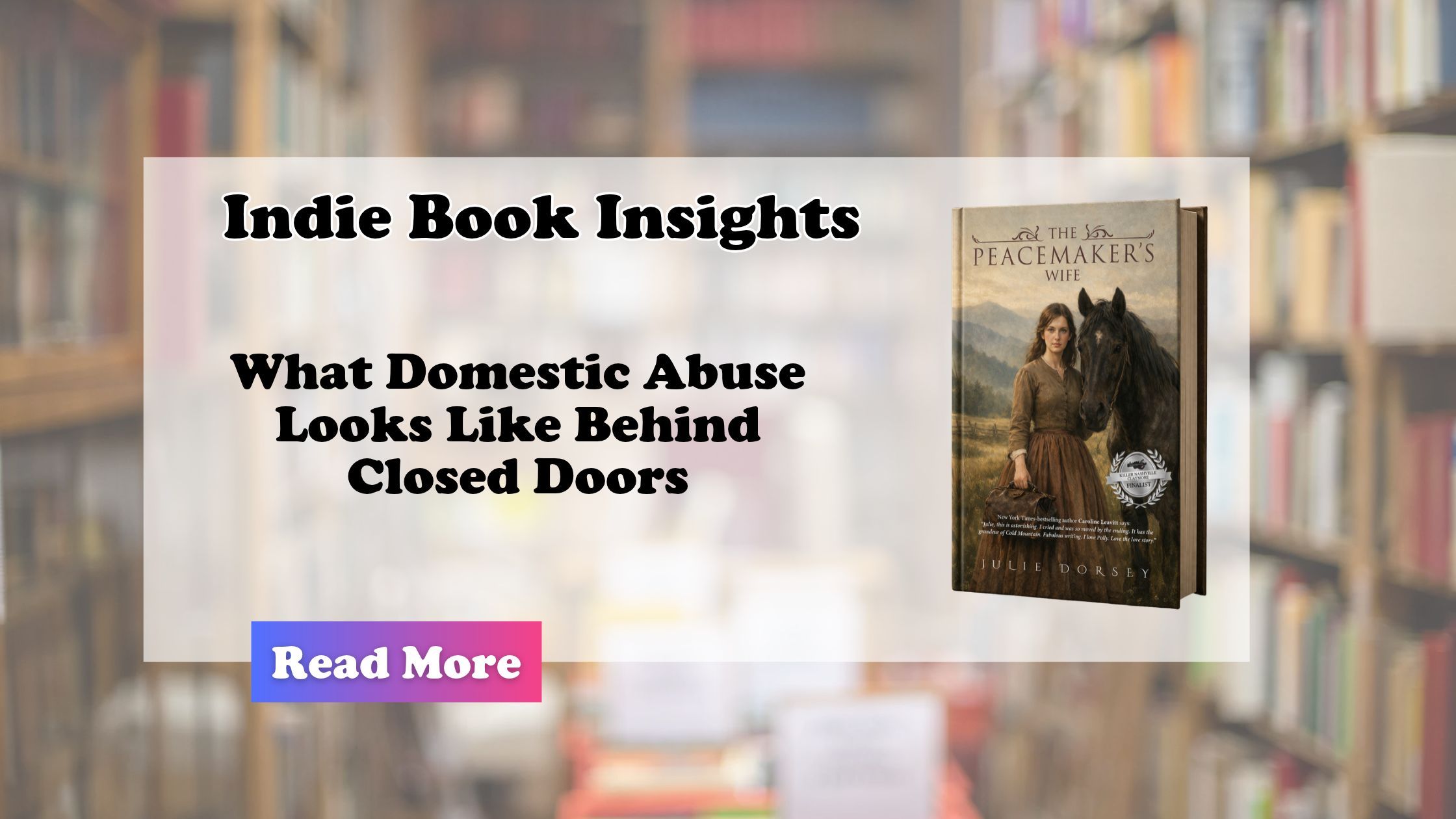
Domestic abuse is a subject we often discuss publicly. But when it comes to books, such as historical dramas like Julie Dorsey’s The Peacemaker’s Wife, it is often shrouded in the silence of an era that offered women zero legal protection or social recourse. This book decodes the behavioral patterns of high-control and abusive personalities and helps us to recognize what domestic abuse would look like, of course, beyond physical violence. Through it, we can understand the norms of this subject of abuse and the psychological prisons that victims are forced to navigate.
Here are 6 key signs of domestic abuse and toxic control explored through character dynamics in frontier literature:
1. The Split Persona (Public Charm vs. Private Tyranny)
An abuser is frequently a master of social deception. In public, they may be celebrated as a pillar of the community—a rational arbiter, a “peacemaker,” or a charming leader. Privately, away from the eyes of neighbors and commissioners, their demeanor shifts entirely into volatility, intimidation, and cruelty. This leaves victims feeling deeply isolated because outsiders refuse to believe the dual reality.
2. Isolation and Restriction of Autonomy
Control often begins by shrinking a partner’s world. An abuser dictates where a partner can go, who they can see, and what activities they are allowed to pursue. If a woman finds purpose in independent work—such as midwifery or herbal healing—the abuser will systematically attempt to ban or restrict it, forcing total confinement to the home.
3. Exploitation of Rigid Cultural or Legal Vows
In oppressive environments, abusers weaponize traditional duties, religious texts, or marriage vows to demand absolute obedience. They twist concepts of “honor and duty” to imply that any expression of independence or self-defense is a moral failure on the part of the victim, making the victim feel guilty for wanting basic respect.
4. Explosive Rage as a Tool of Compliance
Control is maintained through the constant undercurrent of fear. When the abuser faces a challenge to their ego or loses narrative control, frustration quickly escalates into explosive verbal or physical rage. This conditions the victim to walk on eggshells, tailoring their behavior entirely to prevent the next outburst.
5. Blame Shifting and Gaslighting
Accountability is completely absent in an abusive dynamic. If harm is caused, the perpetrator twists the narrative to blame the victim, using phrases like “You forced me to do this” or “You’re too sensitive.” They manipulate reality so thoroughly that the victim begins to doubt their own sanity and judgment.
6. Economic and Resource Deprivation
True independence requires resources. Abusers often seek total control over finances, labor, and movement, ensuring the partner has no independent means of escape, no savings, and nowhere else to turn. In historical settings, this is compounded by laws that legally bind a wife’s property and earnings entirely to her husband.
Reflecting on These Dynamics in Literature
Recognizing these destructive patterns in fiction can be deeply cathartic and eye-opening. If you want to explore how resilient characters navigate toxic marriages, maintain their inner autonomy, and fight for survival against overwhelming odds, The Peacemaker’s Wife offers a profound reflection on these very subjects. Pick up a copy today to dive into a powerful story of endurance and courage.
In the late 1850s in the Blue Ridge Mountains of North Carolina, 16-year-old Polly King marries 19-year-old John Justice, known as the Peacemaker for his skill in settling disputes. Soon, however, they clash, and Polly gets to know that her husband was only a peacemaker on the outside. From the inside, he’s a violent alcoholic who wants her home. But instead of being grounded and fearful, Polly devoted her life to surviving the abuse and manipulation.
Read this book to learn more: https://www.amazon.com/dp/B0GHKW5LCV/.