
Children often look at the world with a freedom that adults gradually lose. They do not always begin with rules, limits, or fear of failure. Instead, they ask questions, imagine alternatives, and create meaning from what is placed before them. Where an adult may see a problem, a child may see a game, a story, or an opportunity to try something new.
This difference begins with the way children learn. They depend on observation, imitation, curiosity, and play. A cardboard box can become a castle, a spaceship, or a secret hiding place. A stick can become a sword, a fishing rod, or a magic wand. Children do not need every detail to be realistic. Their minds fill the empty spaces and turn ordinary objects into something exciting.
Adults usually rely on past experience. This can be helpful because it allows them to make sensible decisions and avoid unnecessary danger. However, experience can also create mental boundaries. After hearing that something is impossible, impractical, or unlikely often enough, many adults stop looking for another answer. Children have not yet collected the same number of disappointments, so they remain more willing to believe that another way may exist.
Children are also less concerned about appearing foolish. They may ask direct questions that adults avoid because they fear embarrassment. They may suggest an unusual solution without worrying whether it sounds intelligent. This honesty can reveal possibilities hidden beneath routine thinking. Their questions remind adults that accepted ways are not always the only ways.
Play strengthens this ability. Through play, children test ideas without carrying the full pressure of success or failure. They can change the rules, begin again, and create a different ending. This develops flexibility, confidence, and creative thinking. Adults often treat mistakes as evidence that they should stop. Children are more likely to treat them as part of learning, especially when they receive patience and encouragement.
The way children understand language also shows their inventive thinking. When they do not know the correct word, they may form a new expression based on what makes sense to them. Their answer may be technically incorrect, yet completely logical. These moments reveal how actively they are studying relationships between objects, words, and experiences.
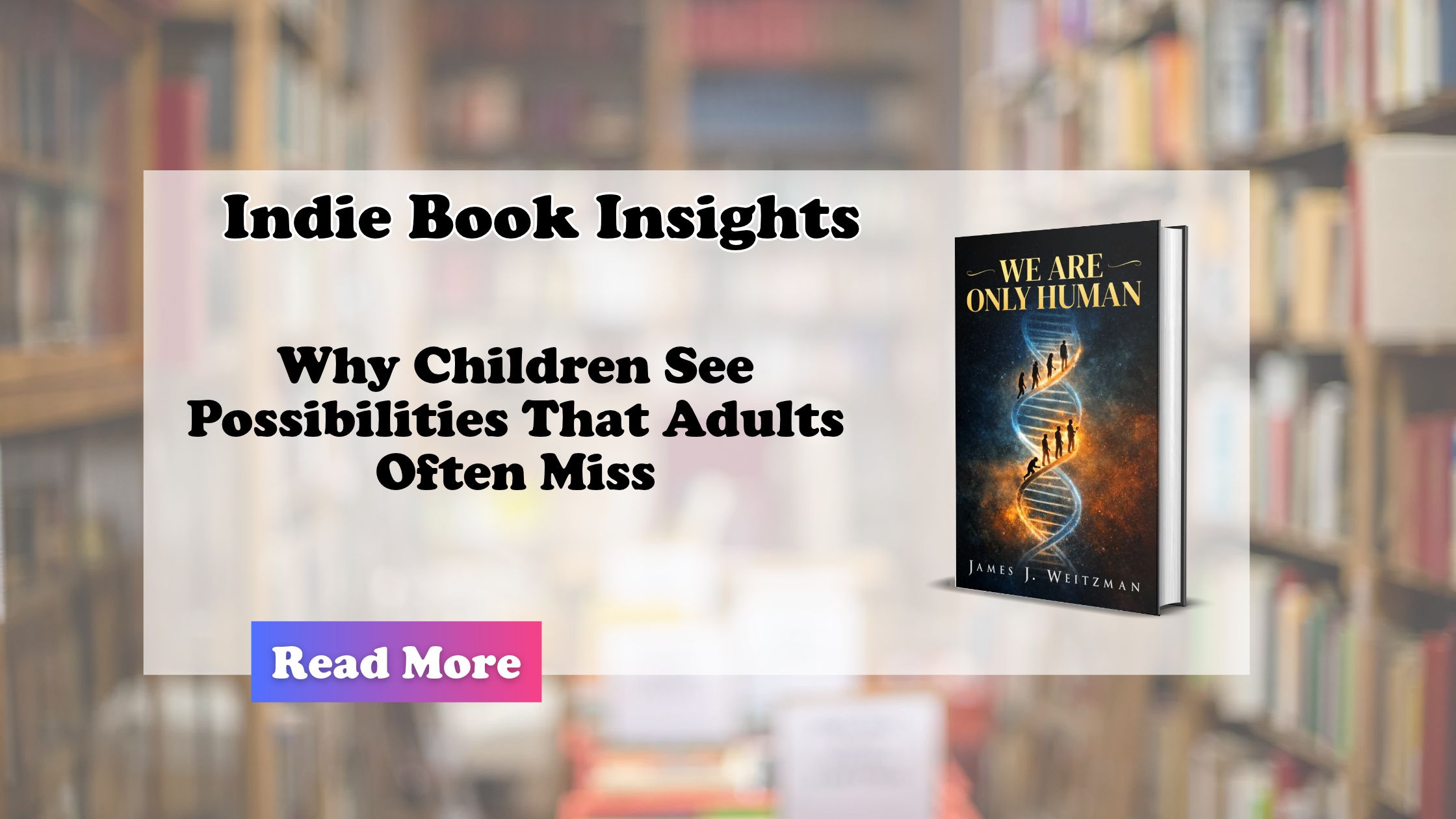
In We Are Only Human, James J. Weitzman reflects on childhood through personal memories, family stories, humour, and his experience as a teacher and parent. He considers how children interpret the world, how they learn from adults, and how adults can learn from them in return.
The book encourages readers to value the imagination, innocence, and honesty found inside the mind of a child. It also reminds us that growing older does not have to mean surrendering curiosity. We Are Only Human invites readers to look again at familiar life and recover some of the wonder that once made every possibility seem worth considering.
Read the Book on Amazon: https://a.co/d/07sgn6TM