

Parenting after divorce rarely follows a neat plan. One week, the challenge may be a tense handover. The next, it may be homework, money, a new partner, a teenager pushing for more freedom or a disagreement about screen time. Families change, children grow and the questions parents face evolve with them.
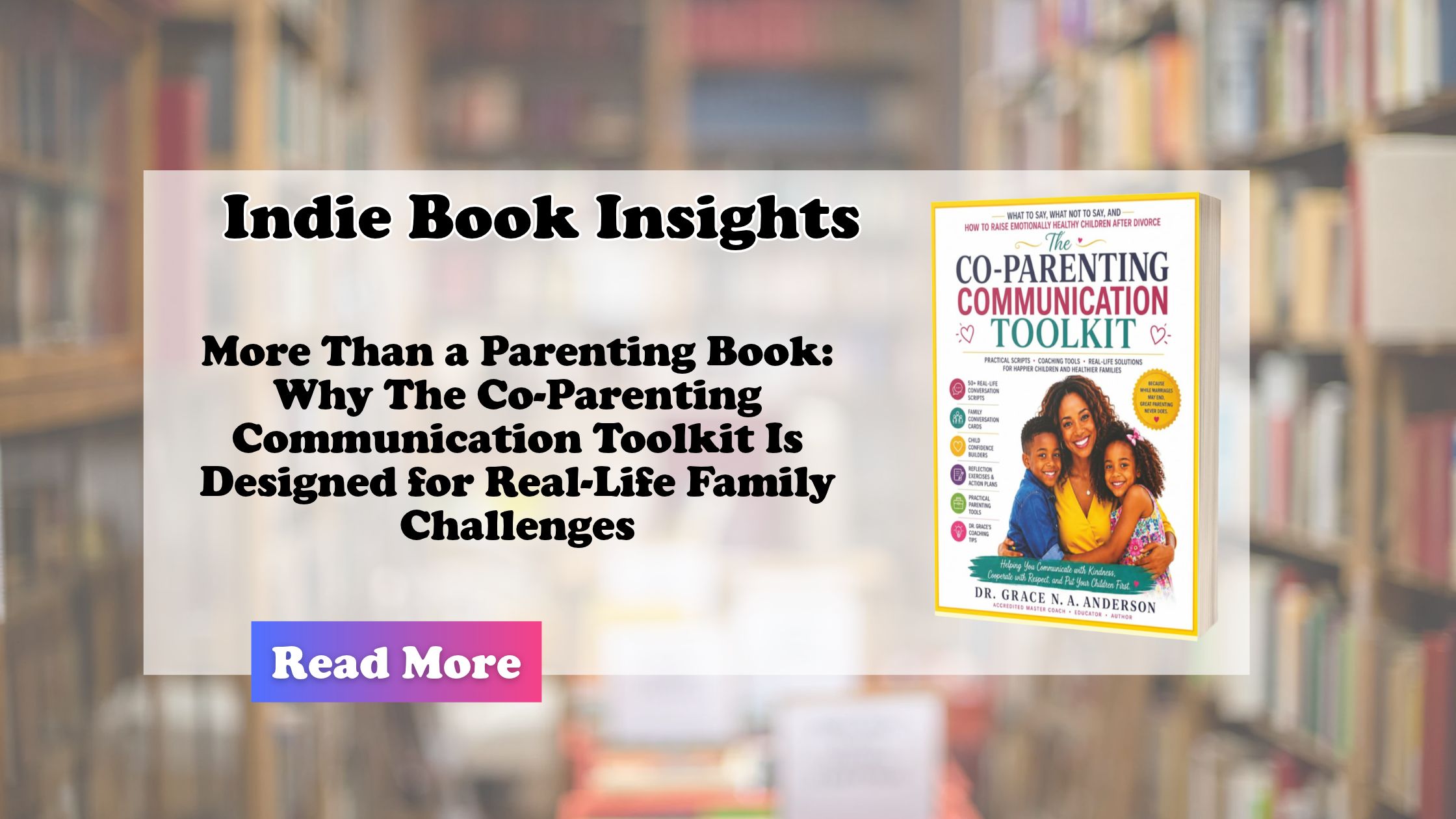
That is exactly why The Co-Parenting Communication Toolkit by Dr. Grace N. A. Anderson is designed to be more than a book parents read once and put away. Dr. Anderson describes it as a practical companion that families can return to whenever a new situation arises.
Built for the Moments Parents Actually Face
The book covers an unusually wide range of real-life issues. It begins with some of the most immediate concerns after divorce, including how to talk to children about the separation, how to manage handovers peacefully and how to create consistency across two homes.
From there, it moves into school, money, holidays, new partners, step-parents, step-siblings, conflict, adolescence, peer pressure, drugs and violence, role models, confidence and safety, faith and values, preparation for adulthood, social media and AI.
This breadth matters because co-parenting does not end when the divorce papers are signed. New challenges appear as children move through different stages of life. The book is structured so parents can return to the chapter that fits the problem they are facing at that moment.
Practical Tools, Not Just Advice
One of the strongest features of The Co-Parenting Communication Toolkit is its emphasis on action.
Every chapter includes word-for-word communication scripts that parents can adapt to their own voice. These are meant for moments when emotions run high and finding calm, constructive language is difficult. A few prepared sentences, Dr. Anderson explains, can sometimes prevent an argument, reassure a child or open a conversation that might otherwise never happen.
The book also includes coaching tips, reflection questions, action steps and Family Conversation Cards. The reflection exercises encourage parents to look honestly at their own reactions, boundaries, habits and communication rather than focusing only on what the other parent should change.
That makes the book participatory. Readers are not simply absorbing ideas; they are encouraged to practise them.
Guidance That Changes as Children Grow
Dr. Anderson also recognises that parenting must evolve. What works for a young child may not work for a teenager and parents need to gradually shift from control toward guidance as children develop greater independence.
The later chapters reflect this long-term view. Parents are encouraged to think about emotional intelligence, practical life skills, responsibility, money management, decision-making, healthy relationships and independence, not merely about getting children through the immediate disruption of divorce.
The book even addresses modern challenges such as misinformation, social media, online safety, privacy, AI-generated content and responsible technology use. Dr. Anderson’s approach is not to make children afraid of technology, but to help them develop judgment and use it wisely.
Ultimately, The Co-Parenting Communication Toolkit is designed for families as they actually are: changing, imperfect, complicated and capable of growth.
For parents who want practical language, realistic strategies and guidance they can revisit through different stages of family life, Dr. Grace N. A. Anderson offers a resource built not just to be read but to be used.
Get The Co-Parenting Communication Toolkit by Dr. Grace N. A. Anderson on Amazon: https://www.amazon.com/dp/B0HFFZBN7P