
The arrival of eight strangers on a secluded island, each lured by a carefully crafted invitation, marks the beginning of Agatha Christie’s And Then There Were None. Isolated from the world as war looms over Europe, each of the eight guests is greeted only by a butler and his wife, with no sign of their elusive host.
In their rooms, they find an eerie nursery rhyme, “Ten Little Soldier Boys.” Little did they know that this poem would be the final custodian to decide their faith—which ominously foreshadows their life. As the guests, along with the two butlers, begin to die one by one, mirroring the verses of the poem, paranoia sets in. The realization that their deaths are part of a predetermined sequence leaves them with one crucial question—who is orchestrating this execution? They know that there are only ten people on the island, which makes it harder for them to survive because the murderer is one of them.
But the question is, who?
The novel’s premise is gripping in its simplicity, but its deeper layers go beyond murder and suspense. The characters are not merely victims. They were all guilty of crimes for which they were never punished. Their host, using the alias “U.N. Owen” (a play on “Unknown”), seeks to enact his twisted form of justice. This deliberate manipulation forces each guest to confront their mortality and their past. Stranded with no hope of escape, they are left with nothing but the certainty that death is approaching.
In many ways, the story mirrors the broader existential struggle of humanity. How?
Much like the guests on the island, we all find ourselves placed in an environment we did not choose, often attempting to decipher the rules of survival and searching for the meaning of our existence. Some, like the characters in Christie’s novel, spend their days in denial. They refuse to acknowledge their ultimate fate. Others frantically seek answers, desperate to identify their “host” and understand the purpose behind their circumstances. This question of whether our lives are carefully orchestrated or merely a sequence of random events has troubled philosophers, theologians, and scientists alike.
According to Alvin Plantinga, a professor at Notre Dame, truth itself is less important than survival if our belief systems are the result of pure natural selection. As a result, humans might not be equipped to recognize objective reality. Similarly, Charles Darwin once admitted his own “horrid doubt” about whether the convictions of the human mind, having evolved from lower animals, could be trusted. If our thoughts are shaped merely by evolutionary impulses, can we truly discern reality, or are we simply acting out survival-driven patterns?
The survival instincts displayed by Christie’s characters highlight this very dilemma, where some guests attempt to reason their way to safety while others succumb to fear and blind superstition.
Ultimately, only those who correctly interpret the situation and act accordingly will have a chance to survive. In much the same way, the quest for truth in life demands careful evaluation of the evidence before us. Whether through faith, science, or philosophy, the search for answers is a universal struggle—that we must conclude by ourselves.
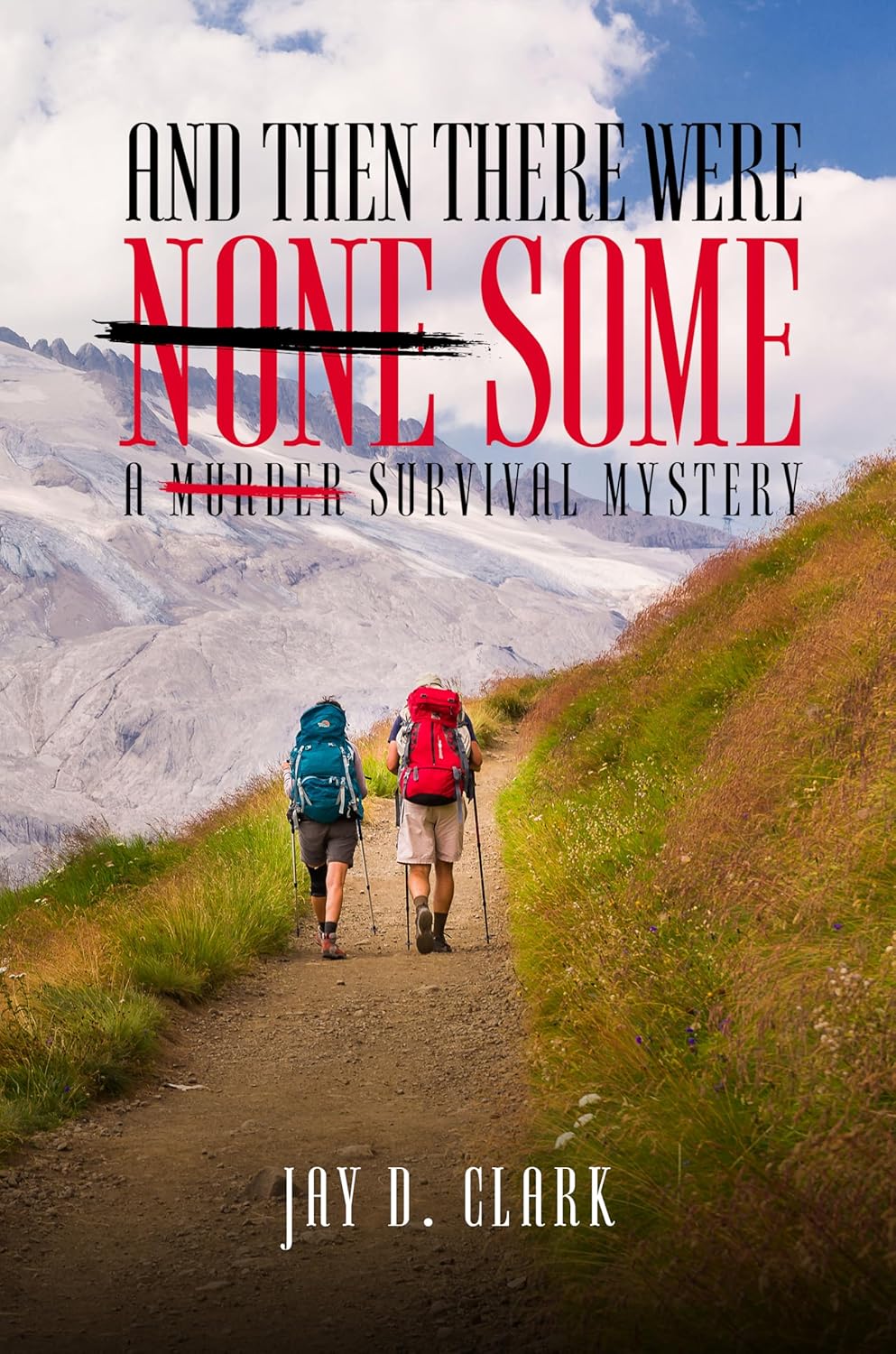
And Then There Were Some by Jay D. Clark can help us to do that.
This book explores the compatibility of science and faith, particularly Christianity, through an evidence-based approach. Drawing from science, history, philosophy, and scripture, Clark challenges the notion that faith and reason are incompatible. The book examines key Christian doctrines, refutes atheism, and presents historical and scientific evidence to support belief in God. It offers readers a thoughtful exploration of the relationship between science and religion, empowering us to defend our faith with rational, evidence-based arguments while providing reassurance that belief in God aligns with modern scientific understanding.
Get your copy on Amazon: https://www.amazon.com/dp/1917505191/.




2 thoughts on “The Mystery of Survival and the Search for Meaning”
Good https://is.gd/tpjNyL
Good https://is.gd/tpjNyL