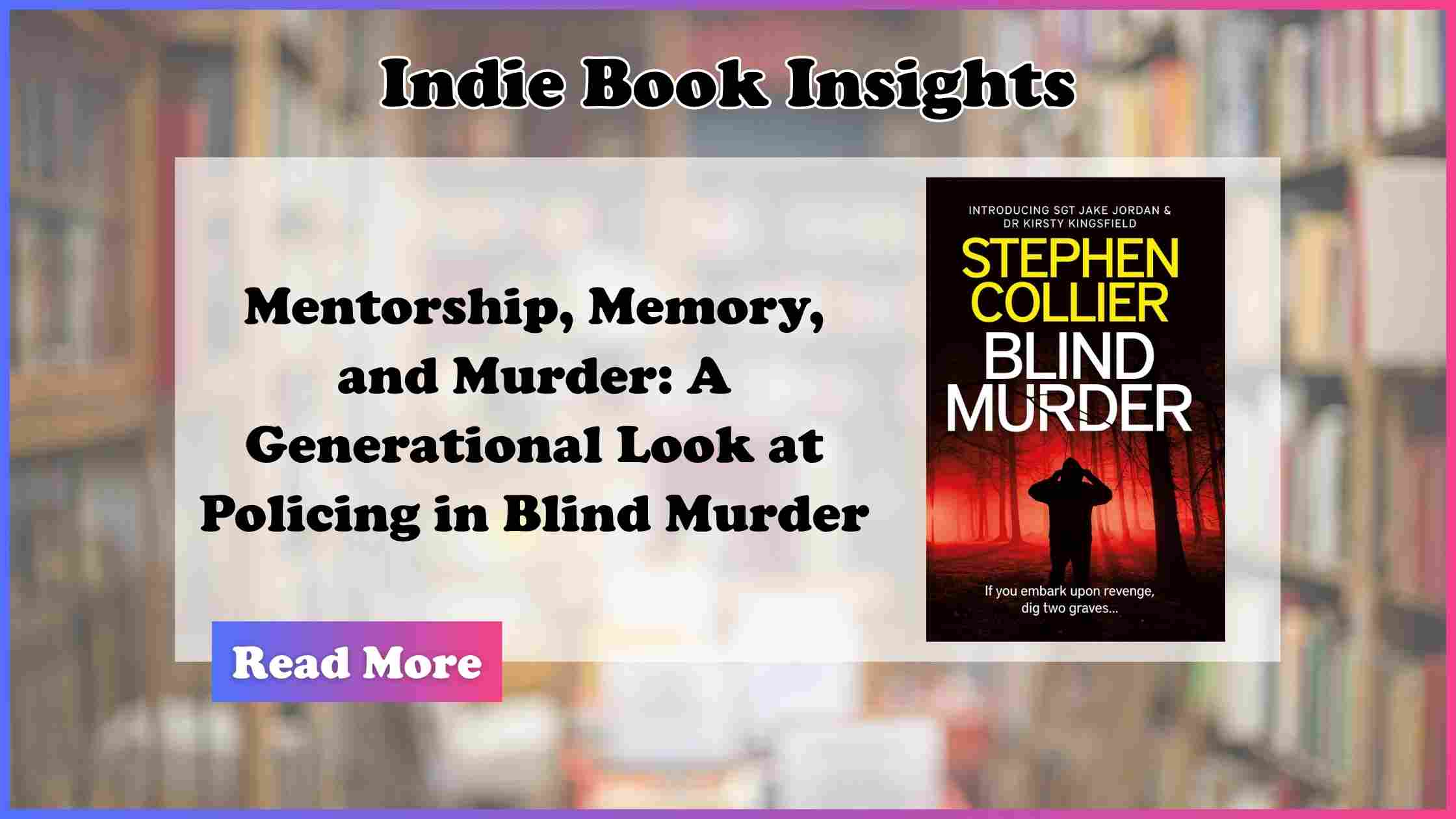
In Blind Murder by Stephen Collier, murder is never just about death—it’s about what it leaves behind. The novel begins with a flashback to 1994, placing readers inside a grim council estate where three young officers, including Jake Jordan and Jim Kingsfield, make a haunting discovery that will shape their careers and their relationships with each other. At the centre of this early case is Stephanie Parker, a police cadet whose first day on the job becomes a baptism by trauma. Eighteen years later, the ghosts of that day return, and the emotional weight of mentorship, memory, and leadership takes centre stage.
At its core, Blind Murder is a story about what policing demands, not just from the body, but from the mind and heart. As young officers, Jake and Jim were still forming their sense of purpose. Parker, eager and nervous, depended on their guidance. When they discovered a murdered woman and a group of traumatised children in a house marked by squalor and fear, none of them was prepared for how much the experience would scar them, or follow them.
Fast forward nearly twenty years, and these officers are older, seasoned, and in some cases, shattered. Kingsfield, now a detective inspector, is called to investigate a new murder in the scenic village of Willoughby. However, what appears to be a fresh case gradually reveals echoes of the past. The history refuses to stay buried. This is more than just a procedural case—it’s a confrontation.
What Blind Murder does so well is explore the dynamic between mentors and those they guide. Kingsfield and Jordan both carry the emotional burden of having brought Parker into the force, of watching her evolve under pressure, and of failing to protect her from the lasting effects of that first case. Parker herself becomes a complex symbol of what happens when trauma isn’t processed but stored away, festering. Her role in the story’s present-day events adds a poignant tension; she is both a product of their training and a casualty of the same.
The novel also serves as a commentary on how institutions handle trauma. There are no debriefs for emotional collapse, no medals for psychological endurance. The characters here were told to “get on with the job,” a familiar refrain in police culture. But Blind Murder shows the cost of that mindset. Parker’s trauma manifests in chilling and irreversible ways. Kingsfield is forced to confront the implications of leadership that left emotional wounds untreated. And Jordan, ever the loyal friend, finds himself pulled back into a story he thought he’d left behind.
By employing a dual timeline, Collier illustrates how memory influences identity. We see these characters not just as professionals, but as people whose younger selves still live within them—conflicted, damaged, reaching for closure. The past is not a backdrop in this novel; it’s a second character, pressing in on every scene.
For readers of crime fiction who crave more than puzzles and clues, Blind Murder offers a deeply human take on what it means to lead others through darkness—and what happens when that darkness follows you home. It’s about mentorship that doesn’t end with training, about choices made in youth that echo into middle age, and about the brutal reality that some cases don’t stay solved, even when the file is closed.
Collier’s writing honours the emotional realities of policing. It’s not only about catching the killer. It’s about understanding the toll of carrying other people’s pain, and still trying to do the job the next day.