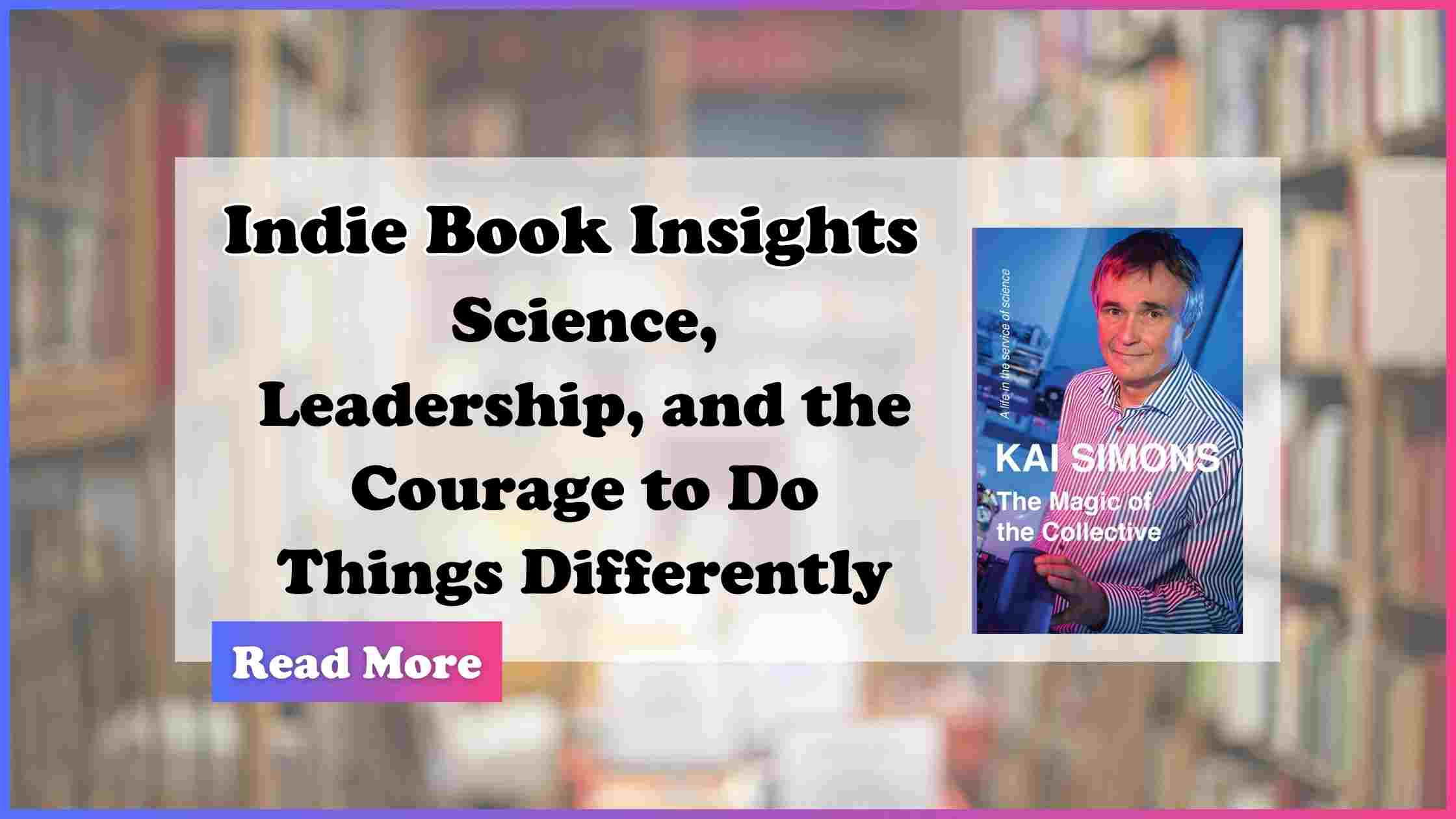
Few scientists can say they reshaped not just a field, but the way that field operates. Kai Simons, in The Magic of the Collective, shares a personal and professional story that is as much about discovery as it is about reform. From biochemistry to institutional leadership, this book captures a life driven by curiosity, collaboration, and change.
Although Simons’ main area of study appeared to be limited to cell membranes, his findings had wide-ranging implications. He revolutionized biology by introducing the term “lipid rafts” to the standard vocabulary. These specialized membrane regions help organize proteins and lipids, acting as platforms for signal transduction and molecular transport. The discovery helped biologists see membranes not as passive barriers but as dynamic participants in cellular life.
The book is rich in scientific insight, but what makes it compelling is Simons’s reflection on the ecosystem of science itself. He does not shy away from critiquing the competitive, often toxic environment that modern researchers must navigate. Instead, he offers a model for what science can be: collaborative, curious, and humane.
This philosophy came to life at EMBL and MPI-CBG, two institutions Simons helped shape. These were not ordinary research centers—they were bold experiments in structure and culture. Scientists worked in open labs, mentorship was shared across teams, and leadership prioritized dialogue over dominance. The results were outstanding. These institutions became breeding grounds for innovation and drew talent from around the world.
Simons’s approach to leadership is particularly striking. He believes that institutions should be built with people in mind, not just technology or prestige. He shows how trust and shared purpose can elevate scientific output more than any expensive equipment or impressive resume. This human-centered approach to research infrastructure is a vital message in an age where burnout and career instability plague the scientific community.
The latter part of the book shifts to a discussion of Simons’s more recent work in lipidomics. At Lipotype, he and his team are creating tools that allow scientists and clinicians to measure a person’s full lipid profile with precision. These tools offer new insights into metabolic health and hold promise for the early detection of chronic diseases. In an age of personalized medicine, this work could change how we approach health altogether.
More than a memoir, The Magic of the Collective is a guidebook for doing science with integrity. It is for those who want to create environments where bold ideas can grow, where young scientists are nurtured, and where research serves society at large.
This book delivers for readers looking for a story of purpose, impact, and a vision of science done right. Kai Simons has not only made his mark in the lab. He has helped shape the world in which labs can thrive and generate effective results.
Here is a link to purchase: https://www.amazon.com/dp/1917007027.