
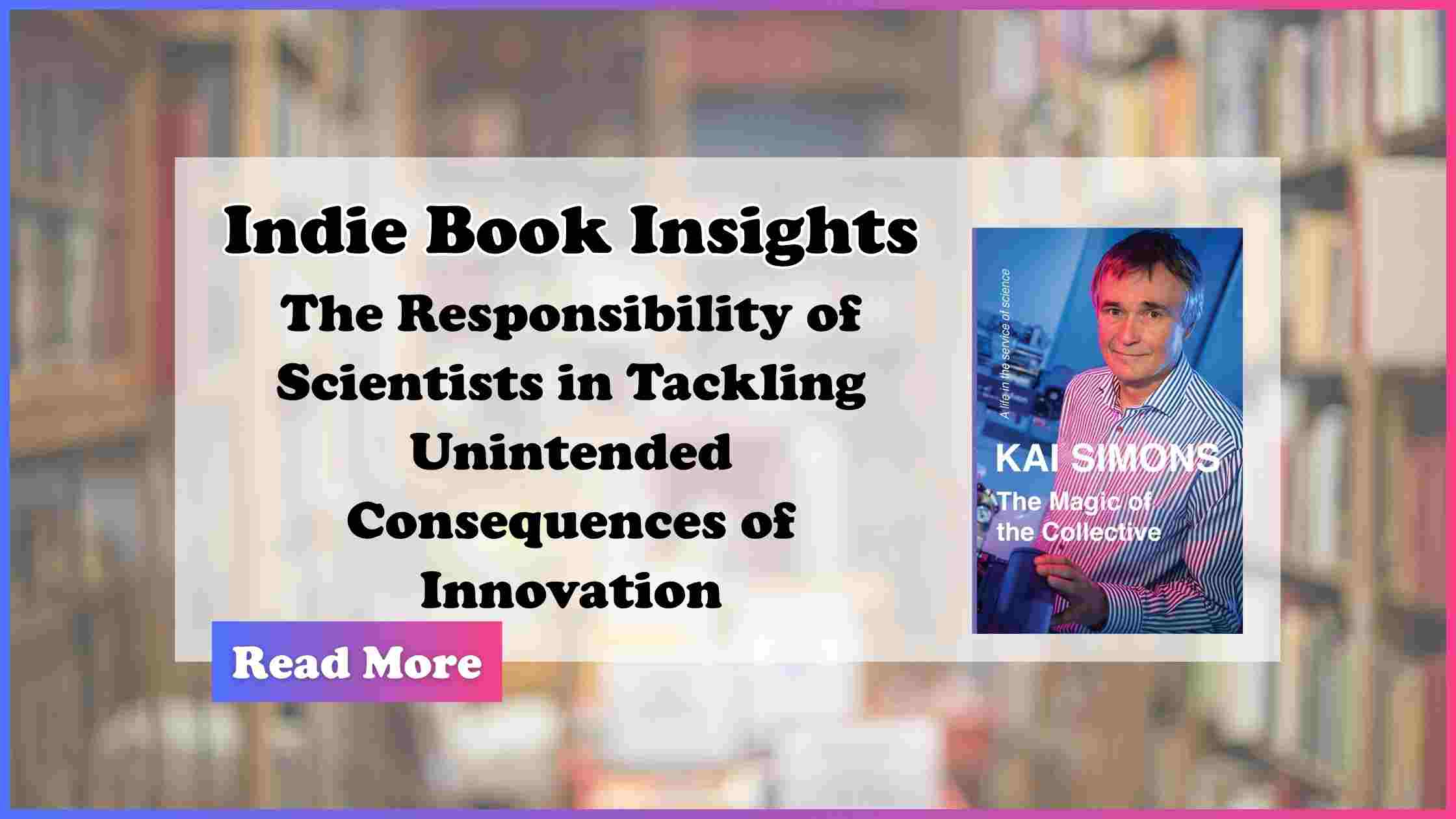
Science has transformed our world, but every great breakthrough brings unintended consequences. In The Magic of the Collective, Kai Simons urges scientists to take responsibility for the ripple effects of their discoveries. From climate change to the COVID-19 pandemic, he shows that scientific progress must be paired with ethical awareness.
1. Science is Powerful—And That Means Responsibility
Simons acknowledges that science has prolonged life expectancy and improved global welfare. But he also warns that scientific progress has often created new problems—ones that scientists must help solve.
- Example: Advances in industry and technology have led to rising CO₂ emissions, driving climate change. Who should fix this? Scientists, engineers, or policymakers?
- Lesson: Scientists must anticipate and address the potential long-term effects of their work, not just the immediate benefits.
2. The COVID-19 Pandemic: A Case Study in Scientific Responsibility
During the COVID-19 pandemic, scientists around the world collaborated at an unprecedented scale, quickly developing vaccines. However, Simons highlights a critical oversight: the failure to anticipate public distrust of vaccines.
- Lesson: Innovation alone is not enough. Scientists must engage with society to ensure their work is understood and accepted.
3. The Ethical Dilemma of Constant Innovation
Simons notes that scientific progress often creates new challenges that require even more innovation to fix.
- Example: Antibiotics revolutionized medicine, but their overuse led to antibiotic-resistant bacteria, creating a new health crisis.
- Lesson: Scientists must focus on sustainable, long-term solutions, not just short-term fixes.
4. Interdisciplinary Cooperation: The Only Way Forward
One of Simons’ biggest arguments is that scientists cannot work in isolation. To tackle unintended consequences, they must collaborate across fields—biology, physics, engineering, and social sciences.
- Example: Climate change solutions require biologists (ecosystem impact), engineers (green technology), and policymakers (legislation) working together.
- Lesson: Scientists must break silos and engage with experts in other fields to prevent and solve large-scale problems.
5. Intellectual Humility: Admit When Science Gets It Wrong
Simons warns that scientists are often blinded by their own success. A key scientific trait must be intellectual humility—the ability to admit mistakes and change direction when needed.
- Example: For years, many scientists dismissed concerns about plastic pollution. Today, we recognize its devastating impact, but early intervention could have prevented much damage.
- Lesson: Scientists must be willing to reassess their work and take action when unintended consequences arise.
6. Public Engagement: Bridging the Science-Society Gap
Simons highlights that public skepticism of science is growing. Whether it’s vaccines, climate change, or GMOs, many people distrust scientific authority. Scientists must do more than innovate—they must educate and communicate effectively.
- Lesson: Scientists should actively engage with media, education systems, and policymakers to ensure scientific literacy and trust.
Simons argues that the power of science comes with ethical responsibility. Scientists must not only solve today’s problems but anticipate and mitigate tomorrow’s. The only way forward is through cooperation, humility, and a commitment to the greater good.
Get Your Copy On Amazon: www.amazon.com/dp/1917007027