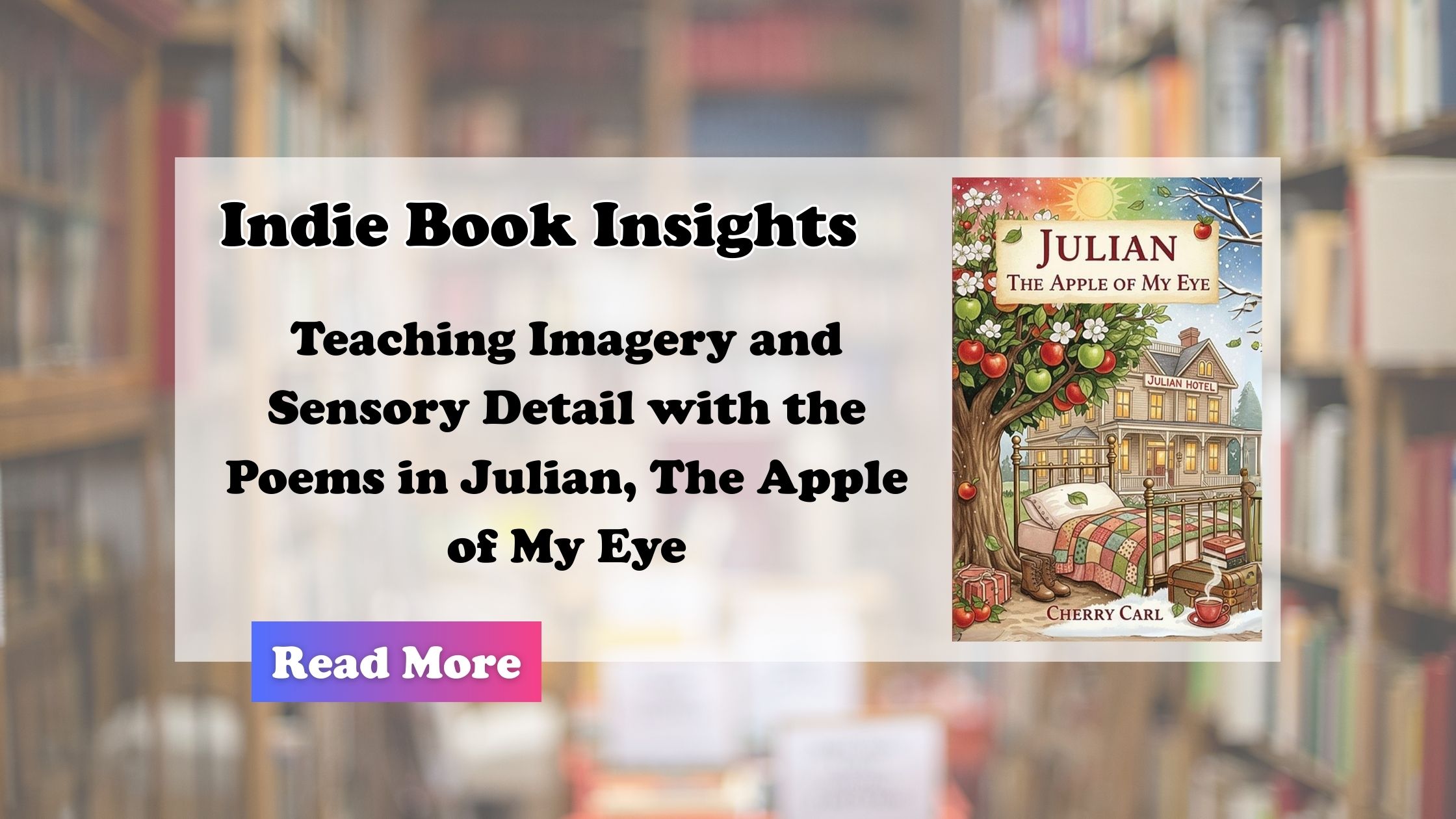
Teaching children to write with imagery and sensory detail can feel challenging at first. However, poetry offers a gentle and effective pathway to achieve that. When children learn to describe what they see, hear, smell, taste, and feel, their writing becomes richer and more expressive. The book “Julian, The Apple of My Eye” is a wonderful resource for this learning journey in this regard. Its poems are filled with vivid descriptions of nature, seasons, and small-town life that help young writers understand how sensory language brings a scene to life.
The first step in teaching imagery is showing students how poets use their senses. The poems in the book describe mountain breezes, crisp apples, warm pies, shimmering snow, and historic streets lined with wooden buildings. These details help readers form clear mental pictures. Teachers can read a poem aloud and ask students which senses the poet used. Did the poem use sight, smell, touch, or sound? This simple exercise helps children recognize the power of sensory detail.
Next, encourage children to imagine themselves inside the poems. Ask them to close their eyes and picture the scene. What colors do they see? What smells drift through the air? What sounds fill the environment? Julian, The Apple of My Eye offers many opportunities for this. For example, a poem about orchards might evoke memories of apple-picking or the scent of cinnamon. A winter poem might inspire children to imagine soft snowflakes falling on their hands.
Teachers can then guide students to practice writing their own short descriptive lines. They might begin by writing one sentence using each of the five senses. For example, a child might write: The warm pie smells like sweet apples. The mountains look blue and peaceful. The air feels cool on my face. This practice builds confidence and helps children understand how each sense contributes to strengthening their imagery.
Another helpful strategy is to use drawing as a bridge to writing. Children can draw a scene inspired by a poem from the book. Once their picture is complete, ask them to write sentences that describe what they drew using sensory language. The visual component makes the process enjoyable and accessible.
Teachers can also create sensory word banks. For example, students can brainstorm words related to autumn in Julian, such as crisp leaves, cool wind, bright orchards, or warm spices. The poems in the book naturally support these discussions, offering rich vocabulary that children can borrow for their own writing.
Sharing the poems in the book also builds appreciation for descriptive language. When students read aloud from Julian, The Apple of My Eye, they hear rhythm, imagery, and emotion. These qualities inspire them to experiment with their own creative voices. Poetry feels less intimidating than long essays, making it a perfect starting point for young writers.
Finally, encourage students to write their own poems about familiar places. They might write about their neighborhood, a park, or a special family location, taking inspiration from the book and its poems. Using the structure and sensory style they observed in the book, children learn to express themselves with clarity and detail.
If you would like to help children explore imagery and sensory detail through poetry, Julian, The Apple of My Eye is a beautiful resource that brings descriptive writing to life. Head to Amazon to purchase your copy: https://www.amazon.com/dp/196861592X/