
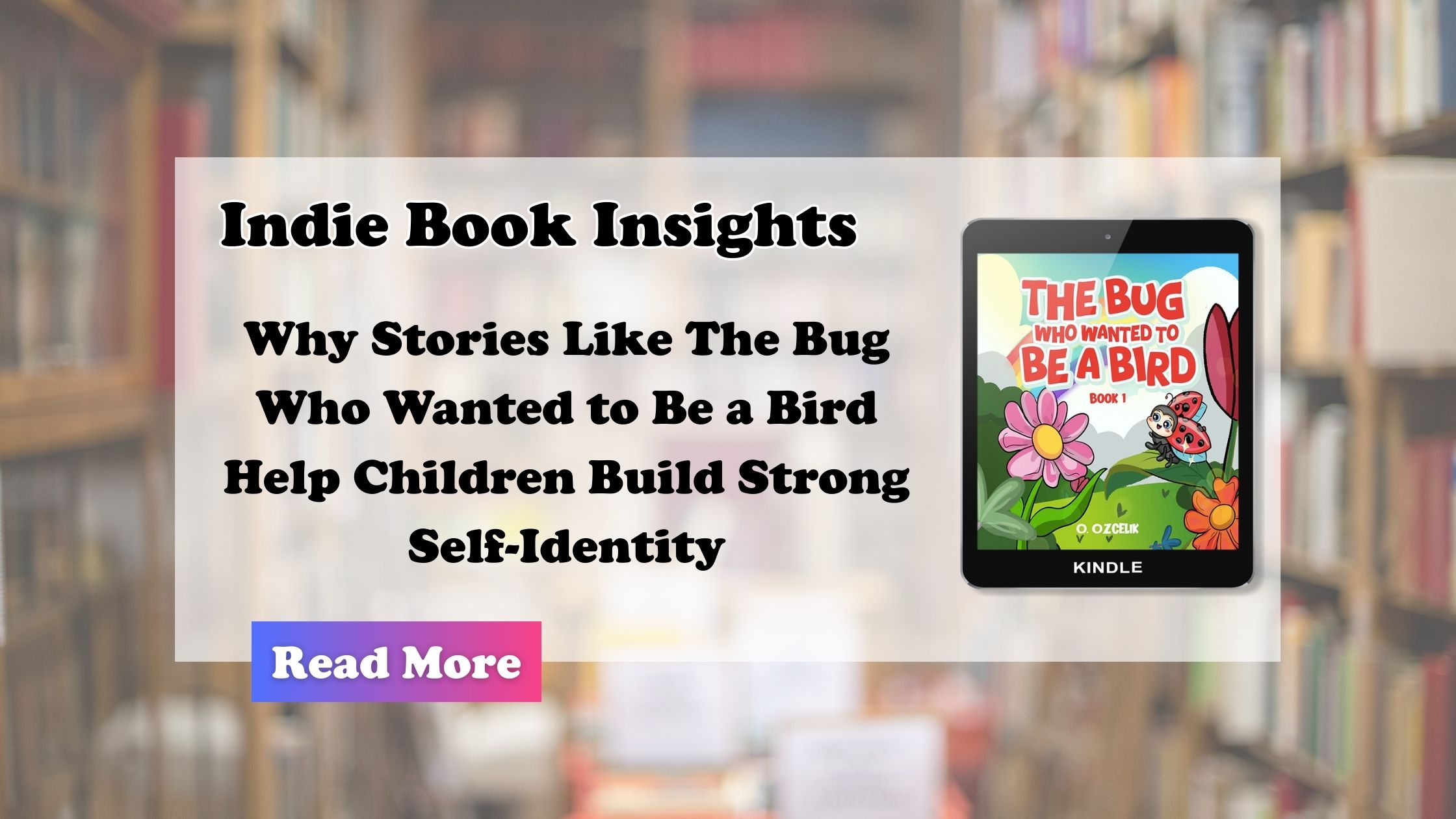
Children begin forming their sense of self much earlier than most adults realize. Long before they can explain their feelings, they are already absorbing ideas about who they should be and how they fit into the world. That is why the stories they read matter. Books that represent characters navigating confusion, self-doubt, or labels can help children understand their own emotions safely and encouragingly. The Bug Who Wanted to Be a Bird by O. Ozcelik is one such story, offering a simple yet meaningful message about identity, confidence, and belonging.
Children often encounter moments when they feel unsure of themselves. They may hear comments from peers, face expectations from adults, or compare themselves to others. Dotty, the main character in The Bug Who Wanted to Be a Bird, experiences this same struggle. Although she lives in a bright and joyful meadow, she feels weighed down by the names others call her and the labels she does not understand. For example, she is also known as a ladybug, ladybird, bug lady, and even a flying raisin. She begins to question who she really is, and this confusion mirrors what many children experience when the world around them gives them mixed messages about identity.
Dotty’s journey shows children that it is normal to feel unsure and that growth often begins with asking questions. Early childhood development research emphasizes that children learn best when they see emotions and challenges modeled in ways they can understand and comprehend. Dotty’s decision to leave her meadow and search for a place where she belongs is a clear example of a character exploring her identity. It creates an opportunity for children to discuss their own feelings, especially when they feel misunderstood or confined to roles they did not choose for themselves.
The story also highlights the importance of emotional intelligence. When Dotty meets Draco, she finds a friend who listens without judging her. Draco supports her by reminding her that being herself is enough. This interaction models empathy, understanding, and validation. Children who read scenes like this learn what healthy friendships feel like and how supportive relationships can shape their confidence. When Draco tells her that being Dotty is enough, it shows young readers that identity is not something others decide for them. Instead, it is something they can grow into with courage and self-awareness.
Representation in children’s literature also plays a crucial role in helping young readers develop their identity. Characters like Dotty demonstrate that it is acceptable to feel different or to question one’s identity. These stories help children see that identity is not fixed. It can grow, shift, and develop over time. Books with memorable characters who face relatable struggles remind children that they are not alone in their feelings.
Stories that highlight self-acceptance encourage children to explore who they are without the fear of judgment. Through Dotty’s simple but meaningful journey, young readers learn that identity is not about fitting into a single label. It is about discovering what makes them feel confident, joyful, and safe.
For parents and educators who want to support healthy identity development, reading stories that reinforce these ideas is a strong place to start. O. Ozcelik’s The Bug Who Wanted to Be a Bird is a thoughtful and uplifting choice that can help guide children as they learn who they are.
Available on Amazon : https://www.amazon.com/dp/B0GCX4R2F1/