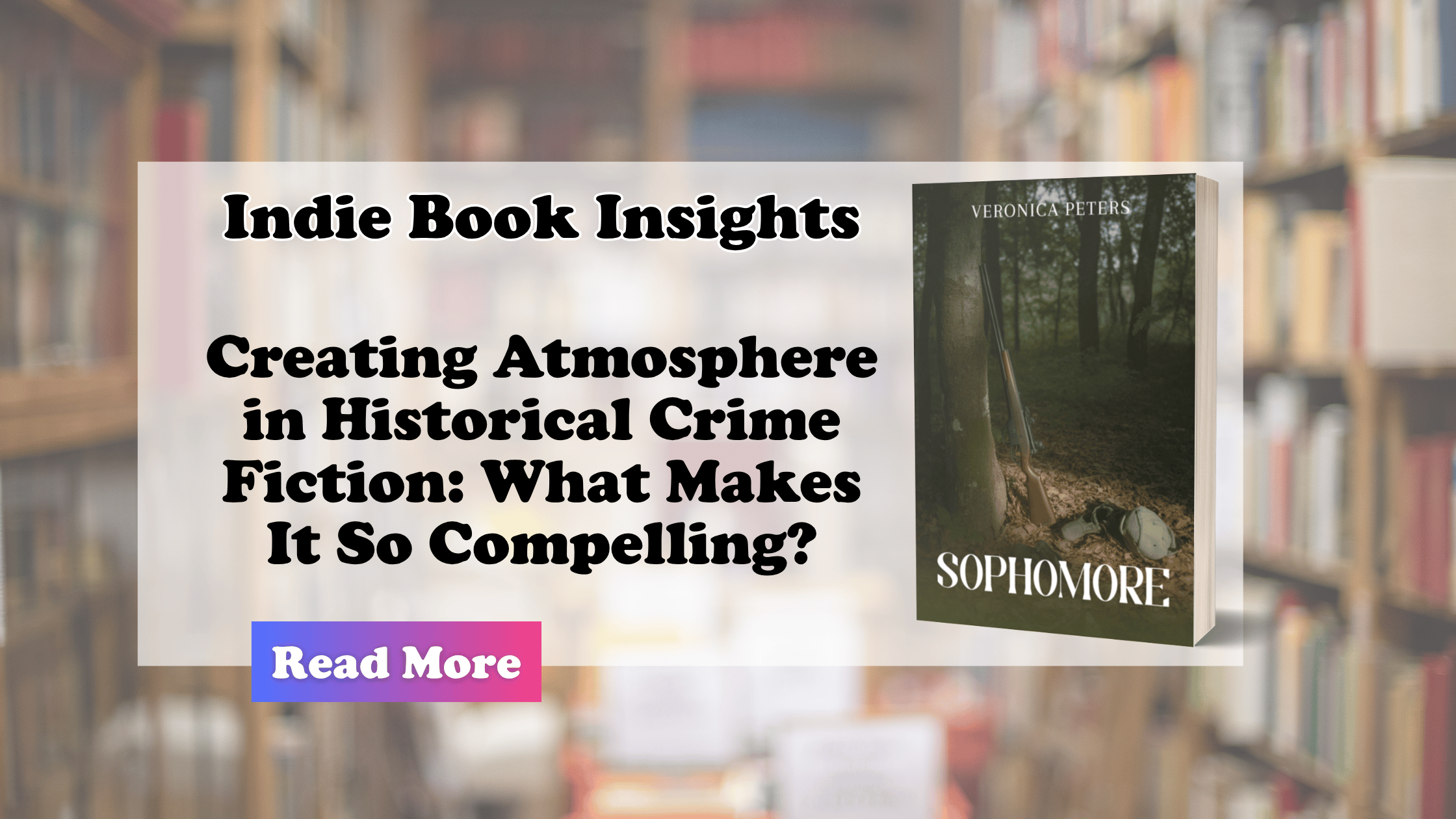
Atmosphere is the heartbeat of historical crime fiction. It’s not just about solving a mystery; it’s about immersing readers in a time and place where every detail feels real, and every moment contributes to the tension building up to the big reveal. Sophomore by Veronica Peters perfectly captures this essence. Set in post-war America, it draws readers into a small rural community where tragedy shakes the very foundation of everyday life. The novel thrives on its atmosphere, from the rustic farmhouses to the quiet streets, where a brutal crime doesn’t just affect a few individuals, it sends ripples through an entire town.
The setting in Sophomore is key. The novel takes place in 1949, a time when America was recovering from the scars of war, yet still holding on to its hopes for a brighter future. The rural town, with its farms and close-knit communities, feels safe at first glance. The landscape shapes the characters’ lives and interactions. Neighbors know each other, and social expectations run deep. This makes the murder of four innocent children even more shocking. The crime fractures the illusion of safety that rural America prides itself on. The atmosphere in this setting creates an undeniable tension. Readers can almost feel the weight of the cold January air, the quiet hum of daily farm work, and the unspoken expectations of the people.
What makes historical crime fiction like Sophomore so unique is the authenticity of its setting. Every detail in the town, from the local grocery store to the church, is carefully crafted to transport readers to a different era. The community’s response to the crime is shaped by the era in which it takes place. The lack of modern forensic technology means that investigations are methodical and slower. There’s no quick fix, no instant results. Instead, readers are drawn into the detective’s observations, the careful retracing of steps, and the interviews that leave as many questions as answers.
The small-town setting also brings with it a level of suspicion that grows with each new piece of information. In Sophomore, the investigation into the murder is not just about finding the killer; it’s about how suspicion spreads like wildfire through the town. In a tight-knit community, public opinion can be as powerful as hard evidence. The emotional toll on the families of suspects is not something easily dismissed. Teenagers face whispers at school, and families are put under a microscope. This level of doubt builds the suspense and atmosphere of the novel, making every interaction feel more charged and every decision carry more weight.
What makes Sophomore stand out in the realm of historical crime fiction is its ability to capture the emotional landscape of the characters. The community is not just grappling with the facts of the crime; they are also wrestling with the emotional aftermath. The psychological effects of the crime on the children and young adults in the town are portrayed with depth, offering readers a glimpse into how trauma affects an entire generation. The grief and fear that hang over the town are palpable, creating an atmosphere that lingers long after the story ends.
For fans of historical crime fiction, Sophomore offers everything that makes the genre so compelling. The carefully constructed atmosphere, the detailed historical context, and the slow burn of tension keep readers on the edge of their seats. It’s a story that’s not just about finding out who did it, but about exploring how the community and its people respond to a world that has suddenly become much darker. The novel is a testament to the power of atmosphere in historical crime fiction and proves that, sometimes, the setting itself is as much of a character as the people in the story.
Get Your Copy On Amazon: https://www.amazon.com/dp/1971950025/