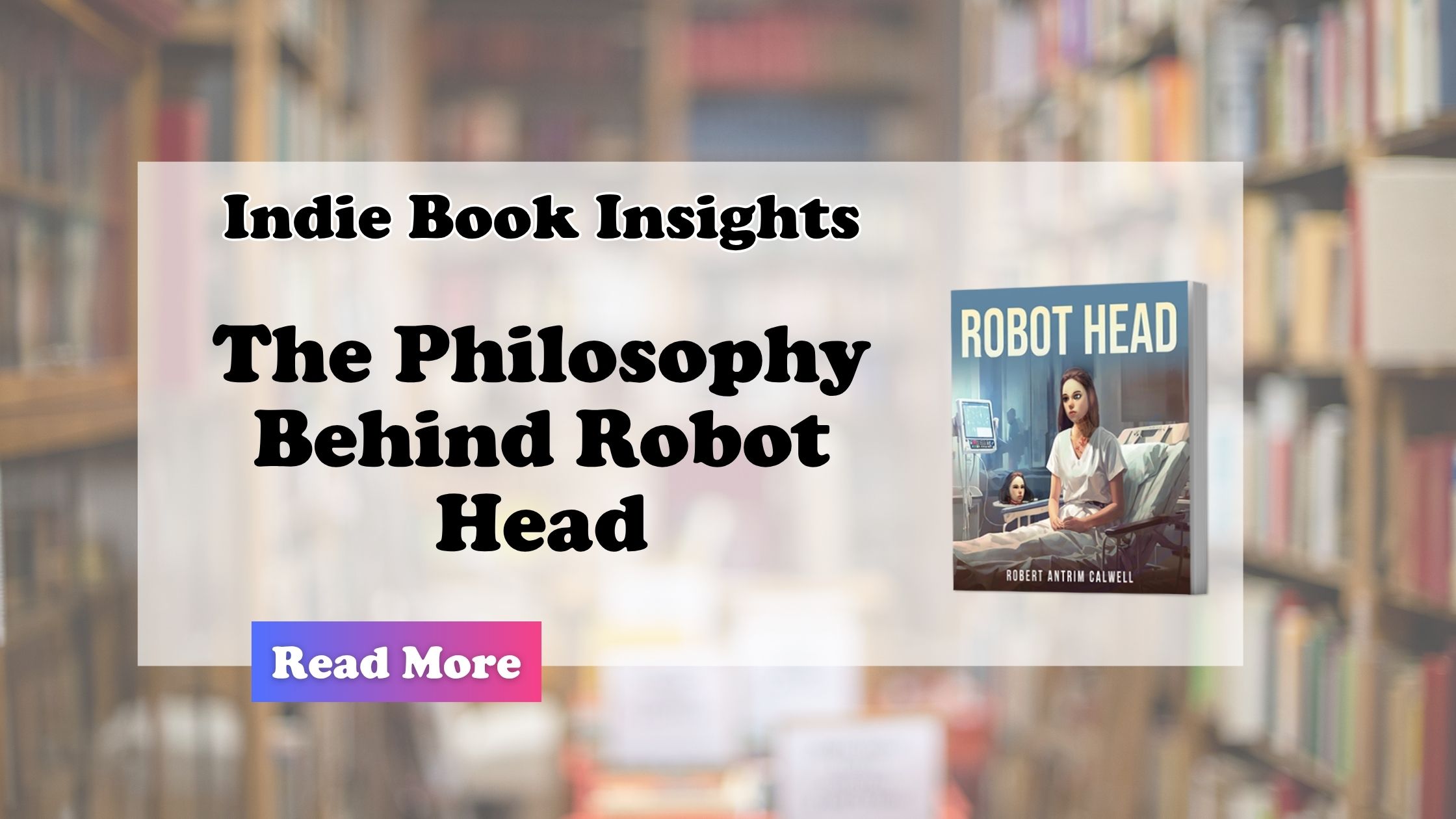
What makes us who we are? Is it our memories, bodies, or something deeper that we often call the soul? These questions sit at the center of Robert Antrim Calwell’s book Robot Head, where the story of a young woman named Tiara becomes a meditation on identity, survival, and the limits of technology. The book raises thoughtful questions about humanity by exploring the idea of attaching a robotic head to a human body and transferring both good and bad memories into it.
At first, the story begins familiarly. Tiara survives a suicide attempt, and her parents face the heavy reality of what comes next. Doctors propose a radical solution: replace her head with a robotic one and move her memories into it. This idea might sound like pure science fiction, but quickly moves into a larger philosophical space. What exactly makes Tiara who she is? Is it her body, her mind, or the collection of experiences that have shaped her? Robot Head uses this unusual medical procedure as a lens to think about these questions.
The central concept of fusing memory, trauma, and identity into a robotic head forces us to look at what it means to be human. Memories are not simple facts stored in a file. They carry emotion, regret, joy, and pain. The book clarifies that positive and negative experiences are part of Tiara’s whole being. If only the good were transferred, the doctors warn, she might lose her sense of self. It raises a powerful point for readers: without struggle and sorrow, can we really understand happiness? Without darkness, can light mean anything at all?
Technology plays a complex role in this story. On one hand, the robotic head is a symbol of possibility. It offers Tiara a second chance at life, a way to carry on despite her earlier despair. On the other hand, it represents the growing tension between machines and human essence. If we can preserve memories inside a machine, does that mean the soul can also be preserved? Or does something irreplaceable get lost in the process? These questions are not answered with certainty, but they invite readers to reflect on where science might take us and where it should not.
The philosophy behind Robot Head also extends to broader human experiences. Many have faced moments when they wished to erase pain or start fresh. Tiara’s journey suggests that healing comes not from deleting the past but from holding it alongside the present. In this sense, the robotic head is less about technology and more about understanding how identity survives through hardship.
By weaving sound effects, poetic lyrics, and dialogue, the book blends the feel of an album with the thoughtfulness of a meditation. It is a story about one character and a wider reflection on what it means to live with memory, trauma, and hope.
In the end, Robot Head does not give easy answers. Instead, it allows readers to think deeply about the connection between body, memory, and spirit. This book offers a compelling journey worth taking for anyone interested in how literature can explore the boundary between humanity and technology.
Explore Robert Antrim Calwell’s book Robot Head now, available on Amazon: https://www.amazon.com/dp/B0DJH76L3D/.