
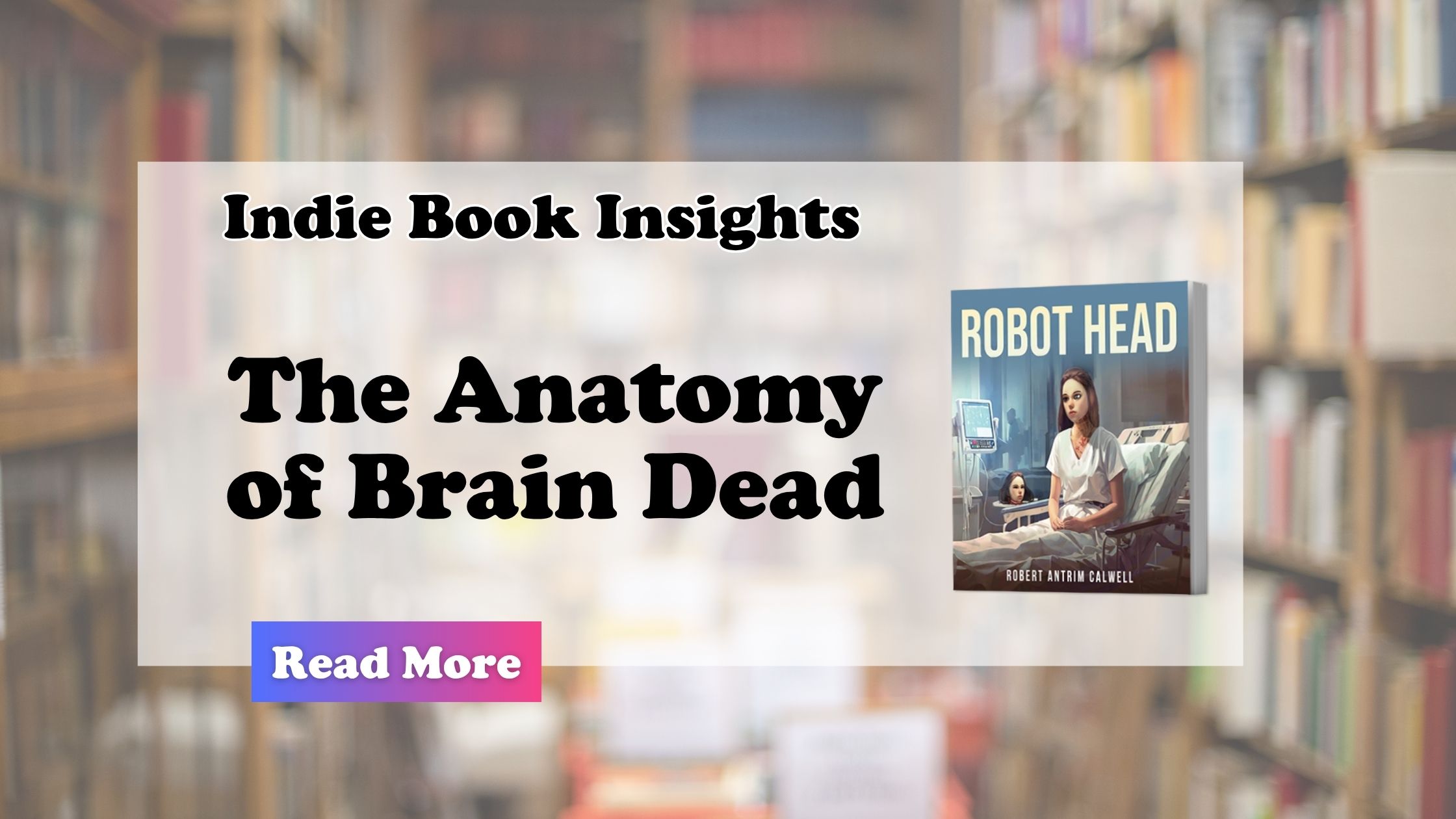
What does it mean to be alive? The question seems simple until science and emotion collide in the stillness of a hospital room. In Robert Antrim Calwell’s Robot Head, the story begins with the sound of an engine running in a closed garage and ends with the sound of a heartbeat that may no longer belong to the living. Tiara, a young woman who survives a suicide attempt, becomes the focus of a medical and moral experiment that explores the boundary between life and death.
The idea of being “brain dead” has long challenged both doctors and families. Machines can keep a body breathing, but can they preserve a person’s essence? When Tiara’s parents are told their daughter’s brain is no longer functioning, they face the unbearable choice of letting her go or trying to save her in a new way. A team of doctors proposes an experimental procedure: transplanting her consciousness into a robotic head. What follows is not a story about machines taking over humanity, but about humanity’s effort to hold on to what it cannot bear to lose.
Robot Head uses this strange and haunting situation to explore what makes a person truly alive. Is it the body that houses us, or the memories that define us? Tiara’s parents cling to the hope that if her memories and emotions can be transferred, some part of her soul will live on. But the doctors warn that the transfer cannot be selective. The pain, despair, and confusion that led her to that moment must also be carried forward. Without the darkness, the light would make no sense.
This idea sits at the heart of the story and reflects a broader truth about life. Modern science can restore a pulse or even mimic thought, but it cannot recreate the human experience without imperfection. To live is to feel both joy and sorrow, clarity and confusion. Tiara’s second life forces readers to think about survival in a world that wants easy answers.
Being “brain dead” in the book is not only a medical condition; it becomes a symbol of emotional disconnection in the modern age. Many people live surrounded by noise and technology yet feel hollow inside. Tiara’s robotic rebirth becomes a mirror for that emptiness, asking whether technology can reconnect what despair once severed.
By the end, Robot Head is less a story about science and more a reflection on humanity. It suggests that the anatomy of being alive is not only found in organs and neurons but in memory, emotion, and the capacity to hope. Tiara’s story may be fictional, but the questions it raises are real.
For readers who seek a thoughtful and poetic exploration of life, loss, and what it means to begin again, Robert Antrim Calwell’s Robot Head offers a rare and moving perspective that stays with you long after the final page.
Head to Amazon to get your copy: https://www.amazon.com/dp/B0DJH76L3D.
In Robot Head, Robert Antrim Calwell blends poetry, sound, and storytelling to explore survival, memory, and the thin line between life and death. The book tells the story of Tiara, a young woman who survives a suicide attempt and becomes part of an experimental surgery to replace her damaged head with a robotic one capable of carrying her memories. Through this unusual concept, Calwell raises deeply human questions: what defines identity, how we rebuild after despair, and whether hope can exist without pain. The book’s structure, divided into “tracks” like a musical album, brings rhythm and emotion to Tiara’s journey as she faces the challenges of living again. More than science fiction, Robot Head is a meditation on the soul’s endurance and the meaning of second chances.