Workplace decisions carry consequences. Hiring, scheduling, promotion, discipline, performance review, safety monitoring, and termination all affect people’s livelihoods, dignity, and trust in an organization. When these decisions are shaped by automated systems, the responsibility does not disappear. In fact, it becomes more complex.
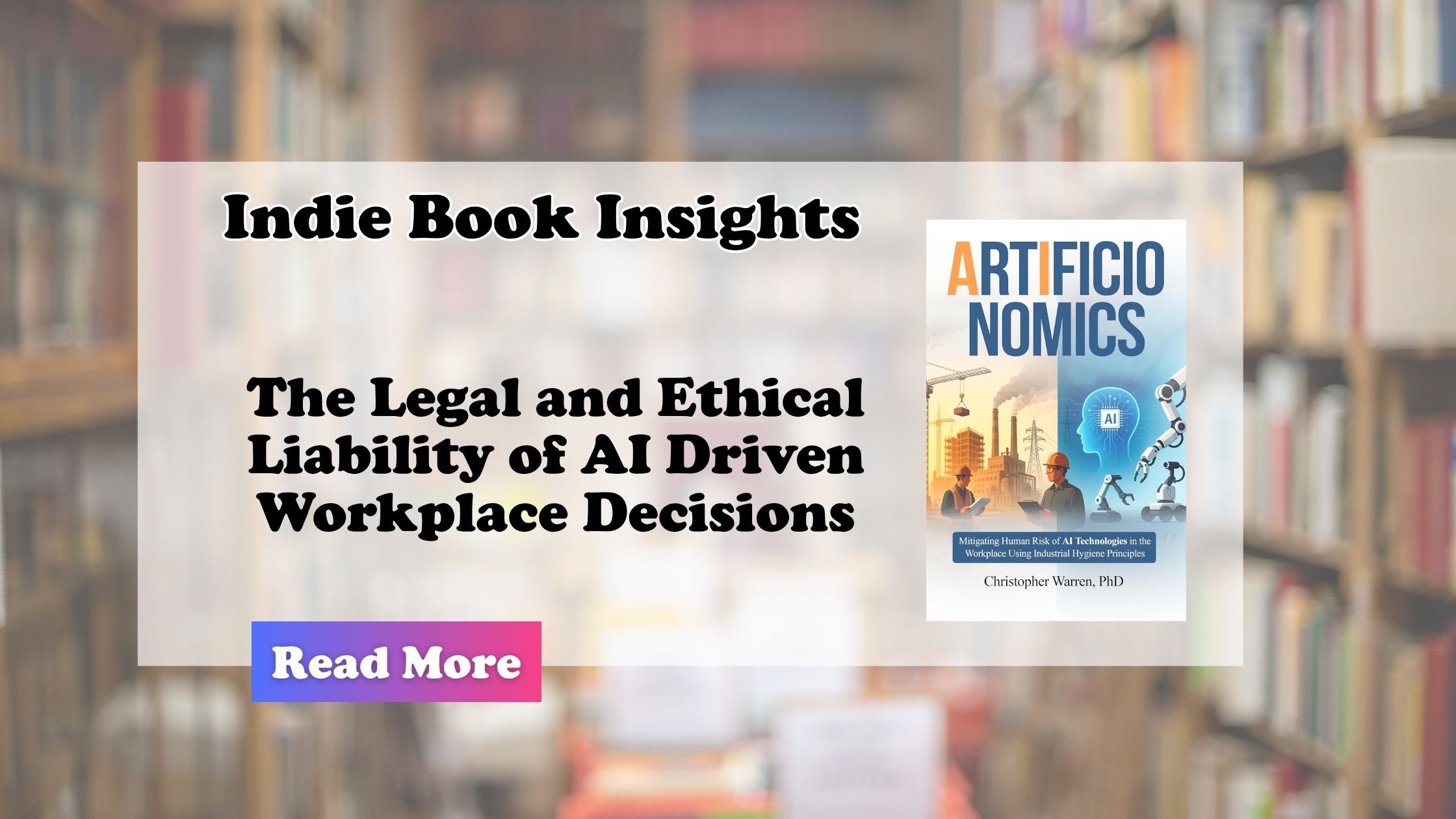
This is one of the most urgent issues addressed in Artificionomics: Mitigating Human Risk of AI Technologies in the Workplace Using Industrial Hygiene Principles by Christopher Warren, PhD. The book makes a powerful case that organizations cannot treat advanced workplace tools as neutral or harmless simply because they are efficient. When a system influences a worker’s future, health, privacy, or professional standing, leaders must ask who is accountable when something goes wrong.
A company may use automated screening to rank job candidates, digital monitoring to assess productivity, predictive tools to assign tasks, or robotic systems to manage safety alerts. Each of these applications can create legal and ethical exposure. If a tool produces biased results, violates privacy, misjudges performance, causes stress, limits due process, or removes human judgement from serious decisions, the employer may face more than operational failure. It may face damaged trust, reputational harm, worker grievances, regulatory scrutiny, and liability.
The ethical concern is just as serious. Workers deserve transparency, fairness, and the right to understand how decisions affecting them are made. A workplace that relies on hidden systems can easily create fear and resentment. Employees may feel judged by processes they cannot see, challenge, or correct. Over time, this weakens morale and damages the relationship between leadership and the workforce.
Christopher Warren presents Artificionomics as a necessary framework for this new reality. By applying industrial hygiene principles to technology related workplace risk, the book helps leaders identify, evaluate, and control hazards before they become legal or ethical crises. It encourages organizations to build oversight into every stage of implementation, from procurement and testing to training, policy, worker feedback, and ongoing review.
The message is clear: responsible innovation requires accountability. Human oversight must remain central when workplace decisions affect safety, opportunity, discipline, and well-being. Policies must be transparent. Systems must be audited. Workers must be informed. Leaders must understand that efficiency is not a defense against harm.
Artificionomics is essential reading for executives, safety professionals, industrial hygienists, human resource leaders, policymakers, and anyone responsible for guiding organizations through technological change. Christopher Warren shows that the future of workplace safety is not only physical. It is legal, ethical, psychological, and deeply human.
For organizations using advanced decision systems, this book offers more than insight. It offers a warning and a path forward. Progress must be governed with care, because when machines influence workplace decisions, human responsibility still remains.
Discover the framework for protecting people in AI-driven workplaces. Read ArtificIonomics today. https://www.amazon.com/dp/B0GFY4RL6B