

Revolutions often begin with a vision of change, but their greatest challenge comes after victory. Replacing an existing government is only the first step. The far more demanding task is building institutions, creating public policy, managing the economy, and meeting the expectations of an entire nation. Cuba’s revolutionary journey offers one of the twentieth century’s most significant examples of how a revolutionary movement transformed into a governing state.
The Cuban Revolution culminated in 1959, marking the beginning of a new political era. What followed was not simply a change in leadership but an ambitious effort to reshape the country’s political, economic, and social structures. The revolutionary government sought to introduce reforms that reflected its vision of equality, national sovereignty, and social development, believing that lasting change required more than replacing those in power.
Education became one of the government’s earliest priorities. Expanding literacy, increasing access to schools and universities, and promoting scientific and cultural development were viewed as essential investments in the nation’s future. These initiatives reflected the belief that an educated population would play a central role in building a stronger and more independent society.
Healthcare also became a cornerstone of the new government’s approach. Efforts to expand medical services and improve public health were presented as fundamental responsibilities of the state. Alongside these reforms, programmes addressing housing, employment, and social welfare sought to improve living conditions and reduce long-standing inequalities.
Economic transformation proved equally important and equally challenging. The revolutionary government introduced policies designed to increase national control over key industries and strengthen economic independence. These decisions reflected Fidel Castro’s conviction that political sovereignty could not be fully achieved without greater control over the country’s economic future. At the same time, changing international conditions and economic pressures required continuous adaptation as Cuba navigated a rapidly evolving global landscape.
Foreign policy became another defining feature of Cuba’s transformation. During the Cold War, the country assumed a prominent role in international affairs, developing relationships with nations across Latin America, Africa, Asia, and beyond. Questions of diplomacy, trade, security, and international cooperation became closely connected with the government’s broader vision of national development and independence.
The transition from revolution to government also brought difficult questions about leadership, governance, and public administration. Turning revolutionary ideals into practical policies required balancing long-term goals with immediate national needs. This process highlighted the complex relationship between political philosophy and the realities of governing, making Cuba an important case study for historians and political scientists alike.
Today, Cuba’s transformation continues to attract worldwide attention. Supporters emphasise achievements in education, healthcare, and national sovereignty, while critics examine political freedoms, economic performance, and institutional challenges. These differing perspectives have made Cuba’s experience one of the most widely studied examples of revolutionary government in modern history.
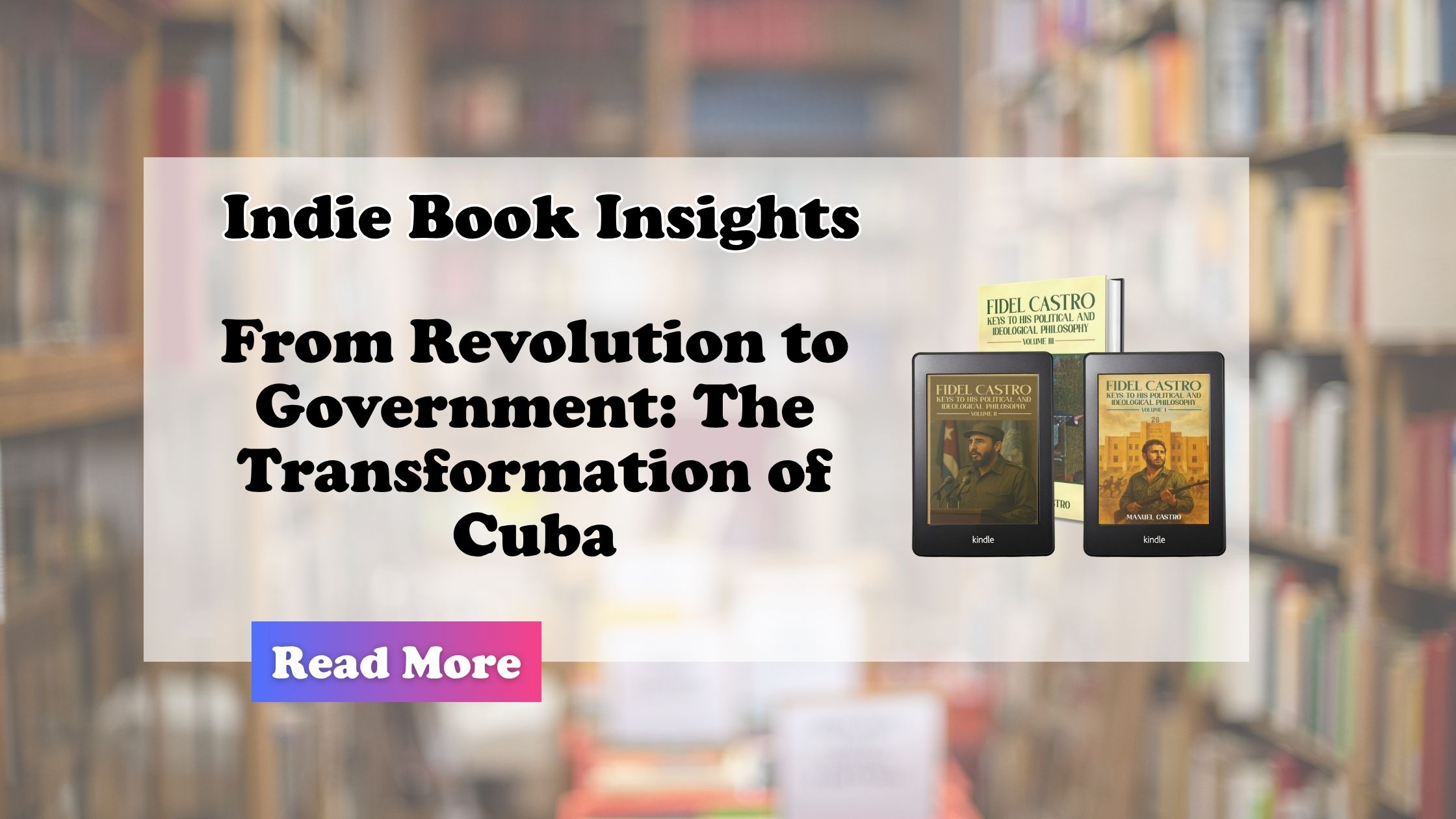
In Fidel Castro: Keys to His Political and Ideological Philosophy, Manuel A. Castro explores the ideas that guided Cuba’s transformation from revolutionary movement to governing state. Across three comprehensive volumes, the series examines Fidel Castro’s views on revolution, socialism, leadership, sovereignty, ethics, economics, education, and international relations, providing readers with a deeper understanding of the political philosophy behind this historic transition.
For readers interested in history, political science, Latin American studies, and international affairs, this collection offers an insightful exploration of how revolutionary ideals were translated into government and why Cuba’s experience continues to influence political thought around the world.
Start reading today and rethink history.
Volume I: https://www.amazon.com/dp/197213454X
Volume II : https://www.amazon.com/dp/1972134558
Volume III : https://www.amazon.com/dp/1972134566