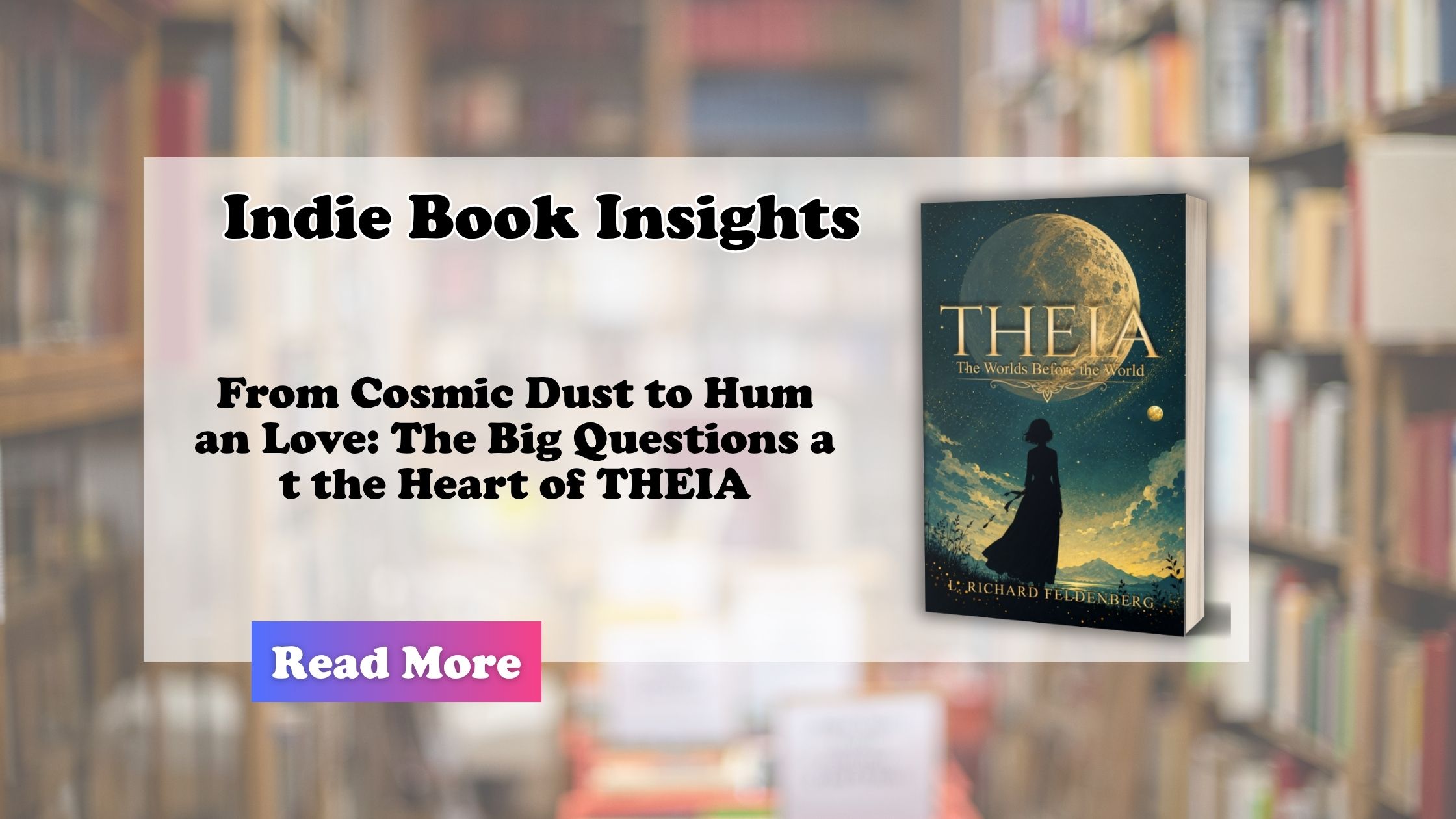

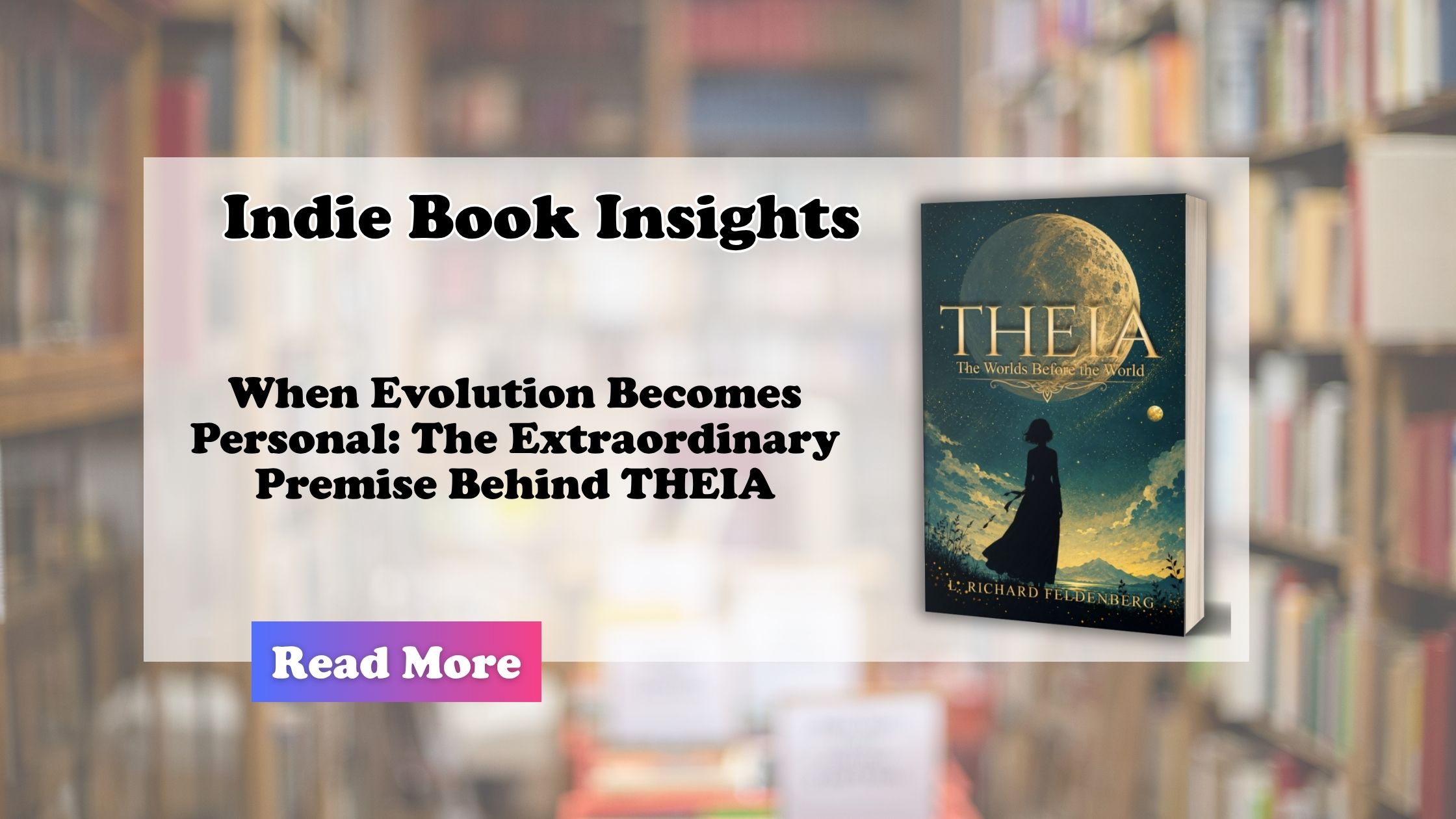
Evolution is often described through fossils, timelines, extinct species and branches on a family tree. In L. Richard Feldenberg’s forthcoming novel THEIA, however, evolution becomes something much more intimate.
It becomes personal.
The story centers on Theia Soul, a singer, songwriter and actress who has spent her life experiencing something no one around her can easily explain. Since childhood, she has been able to communicate mentally with beings from distant periods of Earth’s past. These are not random visions. They are companions connected to her through the long evolutionary chain that eventually led to humanity.
One of the most important is Pretty Flower, a prehistoric woman who becomes a deeply meaningful presence in Theia’s life. Their connection is emotional as much as mysterious. Theia can see parts of Pretty Flower’s world, sense danger around her and communicate with her across an enormous gap in time.
As Theia grows older, she learns that her unusual ability has a name. She is a Prajna, a gifted being capable of communicating with evolutionary ancestors. The novel establishes that these powers are not merely extraordinary; they are connected to a much larger purpose involving survival, extinction and the future of life on Earth.
That premise gives THEIA a distinctive way to explore one of science’s biggest ideas.
Instead of treating evolution as a distant process that happened long ago, Feldenberg turns it into a living relationship. Theia’s companions are not abstract ancestors. They are individuals with their own environments, fears, instincts and struggles to survive.
This makes the history of life feel immediate.
Through her connections, Theia encounters worlds filled with creatures that no longer exist and witnesses the dangers that shaped the course of evolution. Her experience with companions such as Cinnamon places her close to periods of catastrophic change, including the extinction event that ended the age of the non-avian dinosaurs.
Those experiences force Theia to confront an uncomfortable truth: survival has never been guaranteed.
Every species alive today exists because its ancestors somehow made it through what came before. Some adapted. Some found shelter. Some simply got lucky. Many others disappeared forever.
For Theia, that realization carries emotional weight because the beings who survived are not just scientific examples. They are part of her story.
As the novel develops, that connection between past and present begins pointing toward the future. Theia starts to understand that her ability to communicate across evolutionary time may be linked to a responsibility much larger than herself. Questions of climate change, mass extinction, humanity’s choices and the preservation of life become increasingly important.
Yet THEIA is not only about evolution or catastrophe.
It is also about identity, relationships, grief, creativity, belonging and the search for meaning. Theia is trying to understand her place in the world while discovering that her life may be connected to the entire history of life on Earth.
That is what makes the premise so compelling.
THEIA asks readers to imagine evolution not as a line in a textbook, but as a chain of lives, each one depending on the survival of the one before it.
For readers who enjoy speculative fiction with science, mythology, romance and big philosophical questions, L. Richard Feldenberg’s THEIA offers an ambitious journey through deep time and human possibility.
THEIA is currently in the publishing phase and will be available soon for readers.
Want To Discover More? Head Over To Our Website: https://www.librarything.com/profile/RichFeldenberg