
Luxury hotels measure almost everything.
Occupancy.
RevPAR.
Guest satisfaction.
Labour costs.
Quality assurance.
Service times.
Restaurant performance.
The modern hotel dashboard is rich with data.
Yet according to Pierre Barthes, one important question still remains unanswered.
How did the guest actually feel?
Drawing on more than four decades of international luxury hospitality leadership, Barthes introduces the Dual Excellence Index (DEI)—a framework that challenges traditional definitions of hotel performance by evaluating two equally important dimensions of excellence: technical execution and emotional intelligence.
Measuring Two Dimensions of Excellence
Barthes presents the Dual Excellence Index through a simple framework:
DEI = (Technical Compliance % + Emotional Intelligence %) ÷ 2
The value of the framework lies less in the calculation than in the conversation it creates.
Technical Compliance measures how consistently employees execute established standards and procedures.
Emotional Intelligence measures how effectively they recognise, understand and respond to the human being in front of them.
A hotel that excels in one dimension while neglecting the other has not achieved true luxury excellence.
Warm, engaging service cannot compensate indefinitely for inconsistent execution.
Likewise, flawless operations cannot create memorable hospitality if guests leave feeling processed rather than genuinely cared for.
Luxury requires both.
Why Emotional Intelligence Belongs on the Dashboard
For decades, hospitality organisations have measured whether employees completed a task correctly.
It has always been more difficult to measure whether they made someone feel genuinely welcome.
But difficult to measure does not mean less important.
Guests may forget exactly how long check-in took.
They rarely forget the receptionist who noticed an exhausted child and quietly made the family’s arrival easier.
They may forget the precise sequence of restaurant service.
They remember the server who instinctively knew when to engage and when to step back.
These moments influence loyalty, recommendations, online reviews and, ultimately, brand reputation.
According to Barthes, emotional intelligence should not be regarded as a soft skill.
In luxury hospitality, it is an essential component of performance.
From Quality Assurance to Experience Assurance
The purpose of the Dual Excellence Index is not merely to introduce another performance metric.
Its purpose is to change the conversation.
If luxury hotels adopt this mindset, recruitment changes.
Training changes.
Coaching changes.
Performance reviews change.
Mystery-shopping programmes change.
Leadership conversations change.
Leaders begin asking not only,
“Was the standard delivered?”
but also,
“How was it experienced?”
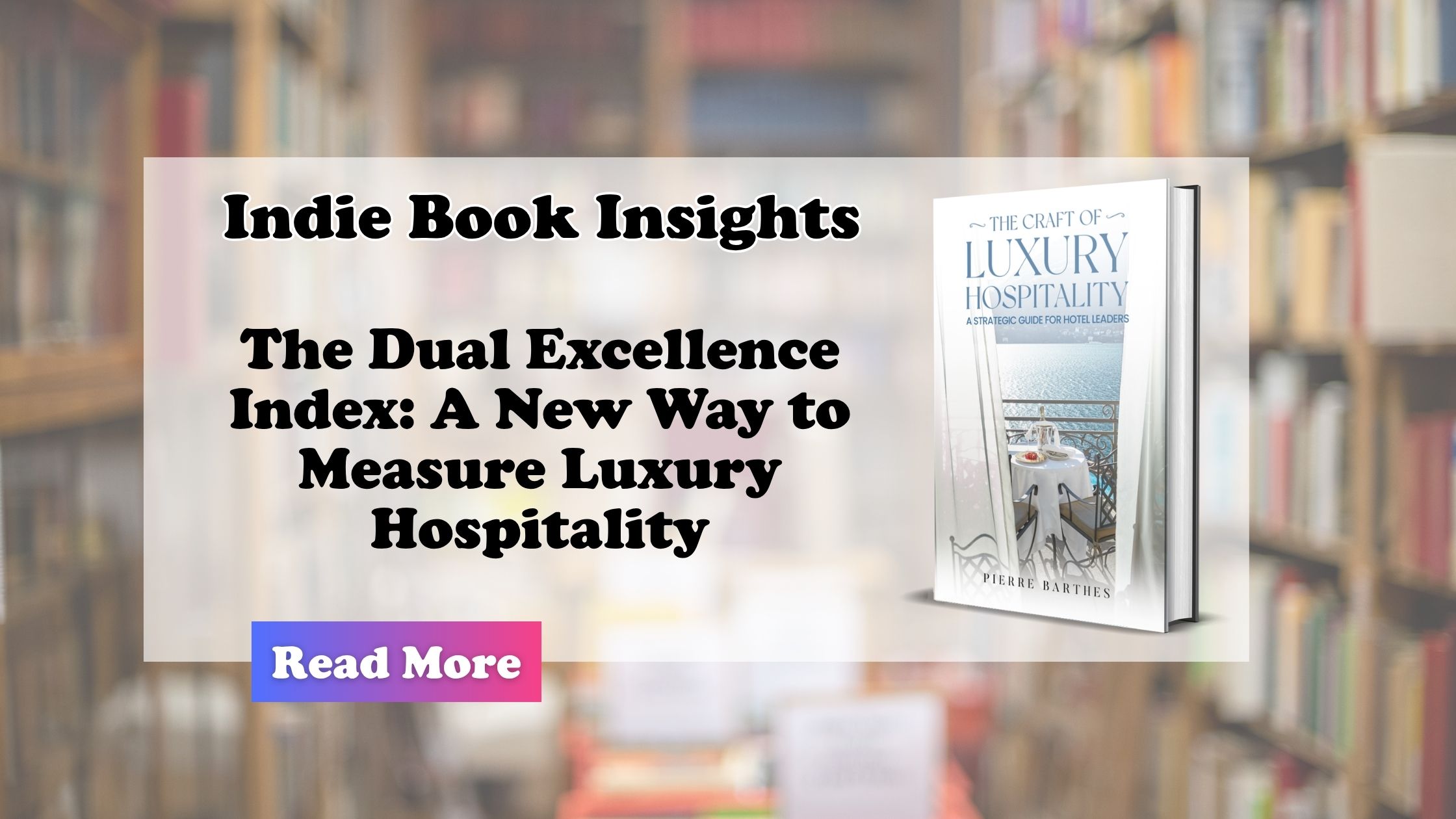
This philosophy lies at the heart of The Craft of Luxury Hospitality: A Strategic Guide for Hotel Leaders, where Barthes argues that the future of luxury hospitality belongs to organisations capable of combining discipline with humanity.
Because five-star hospitality cannot be defined by flawless procedures alone.
True excellence happens when everything works…
…and the guest feels that it mattered.