

The Declaration of Independence gave America more than a reason to separate from Britain. It established a standard for what the new nation was supposed to become.
Its language placed Equality, Life, Liberty, and the Pursuit of Happiness at the center of the American ideal. It also declared that government exists to secure those rights and receives its authority from the consent of the governed.
Nearly 250 years later, the difficult question is whether America has fulfilled that promise.
There has unquestionably been progress. Slavery was abolished. Voting rights expanded. Civil rights protections grew. Social Security, Medicare, Medicaid, and other programs created forms of protection that earlier generations could hardly have imagined. Opportunities in education, employment, and public life have expanded for millions of Americans.
Yet progress is not the same as completion.
Questions about equality remain unsettled. Americans still disagree sharply over voting rights, health care, economic inequality, discrimination, gun violence, immigration, reproductive rights, and the role of government in protecting individual freedom.
There are also deeper questions about democracy itself. Does every citizen have an equal political voice? Does the structure of government consistently reflect the consent of the governed? Are elected officials accountable to ordinary citizens, or can wealth, political influence, and institutional power outweigh the wishes of the public?
These questions matter because the Declaration was not simply a statement about independence. It offered principles against which government could be measured.
The promise of 1776 should therefore be understood as an ongoing responsibility. Equality is not achieved merely because the word appears in national ideals. Liberty is not complete simply because certain freedoms are protected. The Pursuit of Happiness has little meaning if large numbers of citizens lack reasonable access to the conditions that allow them to build secure and productive lives.
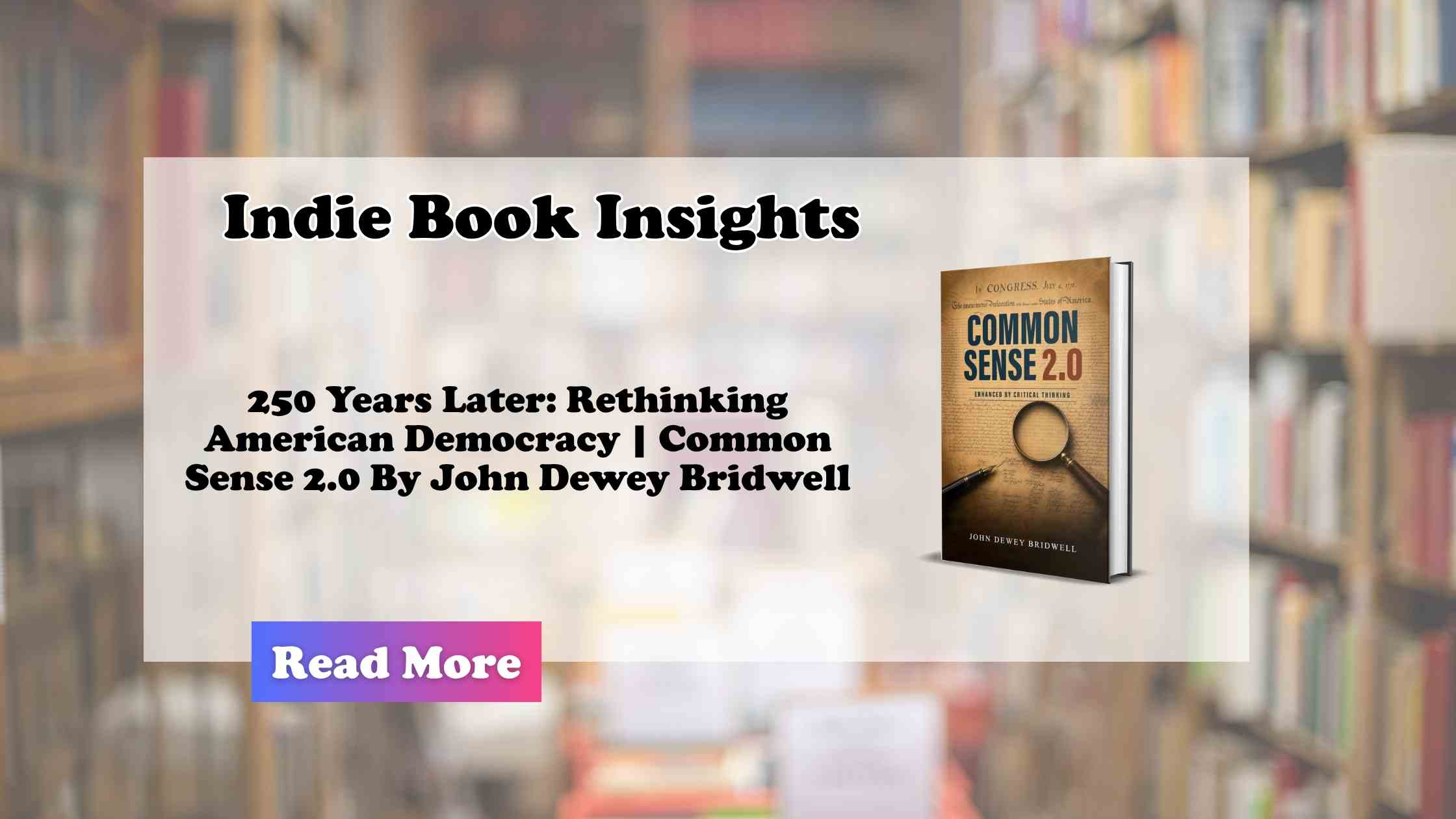
In Common Sense 2.0: Enhanced by Critical Thinking, John Dewey Bridwell examines this unfinished American story. Looking across 250 years of history, he considers where the country has advanced, where it has fallen short, and what changes may be necessary to bring American government closer to its founding principles.
At the center of the book is the American Democratic Mission, a framework that connects the promises of the Declaration of Independence with practical responsibilities for modern government.
America has accomplished much since 1776. The larger question is whether the country is willing to keep moving toward the ideals it declared at its birth. That question belongs not only to historians or politicians. It belongs to every American.