

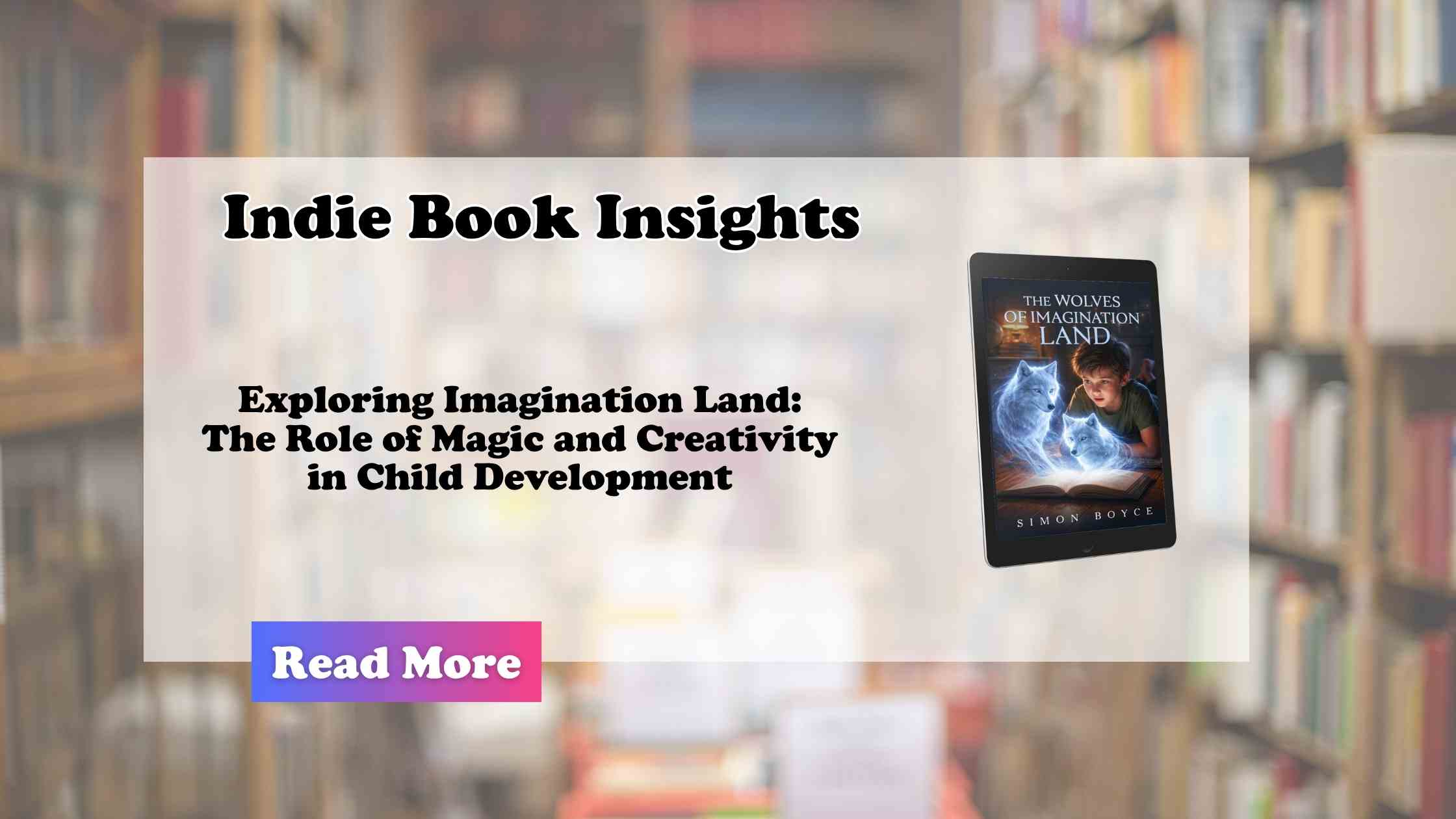
Children have an incredible capacity to imagine, to see worlds beyond what is visible and to breathe life into places that exist only in thought. This creative spark is not merely play; it is an essential part of cognitive and emotional development. In Simon Boyce’s “The Wolves of Imagination Land,” readers are invited into a world built entirely from imagination, where forests, rivers, and even the behavior of wolves shift according to the stories told about them. This magical environment is more than a backdrop for adventure; it is a reflection of the ways in which creativity nurtures problem solving, empathy, and self-expression in children.
Imagination Land demonstrates that when children engage with fantastical worlds, they practice thinking beyond immediate limitations. Junior, the curious young wolf, explores streets, mansions, and forests that change according to human stories. Through his adventures, children see that ideas can transform reality, that one’s imagination is a tool for innovation and exploration. This ability to envision possibilities is closely linked to creative thinking skills, which support learning in areas ranging from mathematics to social interaction.
Magic in children’s stories serves a similar purpose. It suspends rules, allowing young minds to explore consequences and moral questions without real-world risk. In Boyce’s story, Luna’s daring spirit and Junior’s curiosity lead them along unpredictable paths, encouraging readers to embrace uncertainty and take thoughtful risks. Children absorb lessons about cause and effect, decision-making, and the value of courage in situations that might otherwise feel intimidating. The fantastical elements make abstract ideas tangible, giving them a safe space to experiment and imagine outcomes.
Equally important is the way stories like this foster empathy. In Imagination Land, wolves from different backgrounds meet and learn about one another’s perspectives. By witnessing the challenges and triumphs of characters like Junior and Luna, children gain insight into experiences that may differ from their own. They begin to recognize the influence of perspective on understanding and behavior, an essential skill for emotional intelligence. The story shows that friendships, even across differences, can flourish when imagination guides understanding, reinforcing the idea that creativity and empathy are deeply connected.
“The Wolves of Imagination Land” also emphasizes that stories themselves are powerful tools for shaping perception. When children read about worlds where kindness, courage, and curiosity lead to change, they internalize the belief that their actions and ideas matter. Imagination becomes not only a source of enjoyment but a vehicle for self-discovery and personal growth. The playful, adventurous narrative encourages children to create, to ask questions, and to imagine solutions in their own lives, extending the lessons of the story into reality.
For parents and educators, introducing children to books like Boyce’s offers more than entertainment. It is an opportunity to cultivate creativity, critical thinking, and empathy. By exploring Imagination Land alongside Junior and Luna, children engage in active learning, developing the skills to navigate both fantastical and real-world challenges. Simon Boyce’s magical world reminds readers that creativity is not just a pastime; it is a vital part of growing, understanding, and shaping the future.
For anyone seeking a story that combines adventure, magic, and meaningful lessons, “The Wolves of Imagination Land” offers a captivating journey where imagination truly makes a difference in child development.
Discover this book now, available on Amazon: https://www.amazon.com/dp/1972989685/