
For decades, the United States has occupied a dominant position in global politics, international finance and economic decision-making. However, a major transformation is unfolding as emerging economies expand their influence and question the traditional balance of power. At the center of this shift stands China, whose remarkable economic growth and expanding international partnerships are reshaping global relationships.
But could the rise of BRICS signal the beginning of a new world order?
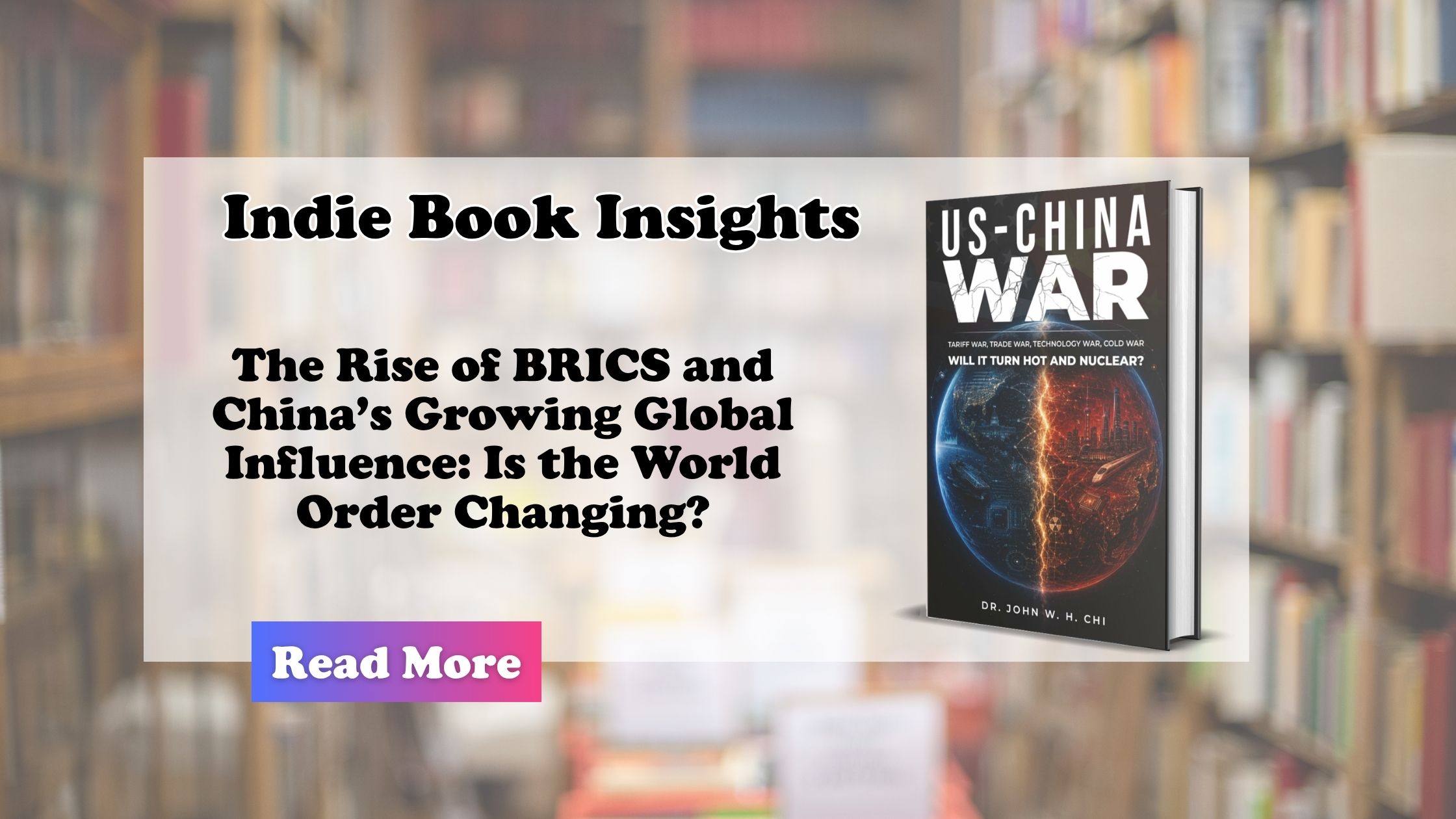
In his thought-provoking book, US-China War: Will It Turn Hot and Nuclear?, Dr. John W. H. Chi examines China’s growing global influence, the changing international economic landscape and the geopolitical tensions accompanying these developments.
What Is BRICS and Why Does Its Expansion Matter?
Originally formed by Brazil, Russia, India, China and South Africa, BRICS emerged as a platform for cooperation among major developing economies. Its growing membership and international influence reflect increasing interest in economic partnerships beyond traditional Western-led institutions.
Through trade agreements, financial cooperation and development initiatives, BRICS countries seek greater representation in global economic decision-making.
Dr. Chi examines this emerging cooperation as part of a broader transformation in international relations. He argues that developing nations increasingly seek alternatives to economic structures historically dominated by the United States and its Western allies.
For readers interested in global economics, this raises an important question: Could a more multipolar international system create new opportunities for developing countries?
China’s Economic Rise and Expanding Global Partnerships
China’s transformation from a struggling economy into a global manufacturing and technological powerhouse represents one of the most significant economic developments of modern history.
Through investments in infrastructure, international trade and technological innovation, China has strengthened relationships across Asia, Africa, Latin America and beyond.
In US-China War: Will It Turn Hot and Nuclear?, Dr. Chi highlights initiatives such as the Belt and Road Initiative, which seeks to improve international connectivity through infrastructure development and commercial partnerships.
He argues that China’s approach to expanding international influence places considerable emphasis on economic engagement rather than military confrontation.
These developments have also intensified debates about whether America’s longstanding global dominance can coexist with China’s expanding economic and diplomatic presence.
Is the U.S. Dollar’s Global Dominance Being Challenged?
Another important issue explored in Dr. Chi’s book is the international role of the U.S. dollar.
For decades, the dollar’s position in global trade and financial markets has provided the United States with considerable economic influence. However, discussions about conducting international transactions in alternative currencies have gained attention among emerging economies.
Dr. Chi examines how financial sanctions, trade disputes and efforts to diversify international payment systems could influence the future of global finance.
Although the dollar remains central to the international monetary system, these developments raise questions about how financial power might evolve.
Can a Changing World Order Remain Peaceful?
While shifting economic influence creates opportunities, it can also intensify geopolitical rivalry.
Dr. Chi argues that attempts to preserve global dominance through confrontation could increase tensions between established and emerging powers.
Drawing upon his background in nuclear engineering and defense-related technology, he warns that escalating competition between the United States and China carries dangers far beyond economic disagreements.
Ultimately, his book advocates diplomacy, mutual respect and peaceful coexistence as essential foundations for international stability.
As BRICS expands and China’s influence grows, the central question is not simply which nation will lead the world, but whether competing powers can build a more cooperative future.
Discover a thought-provoking perspective on global power, economic transformation and the importance of peace in US-China War: Will It Turn Hot and Nuclear? by Dr. John W. H. Chi.
Get your copy today on Amazon: https://www.amazon.com/dp/B0HLR9TXH9/