
Children learn best when all their senses are engaged. Whether they’re clapping out rhythms, drawing note shapes, or feeling the keys beneath their fingers, the more interactive the experience, the more effective the learning. That is where the multisensory approach comes in handy. This approach to piano instruction goes far beyond simply reading notes and hitting keys.
Traditional music education often focuses too heavily on visual learning. Be it reading sheet music, memorizing note names, or following instructions, many children, especially beginners, can be limited and feel confused. But a multisensory approach invites children to feel rhythm, hear patterns, see structure, and even move with music.
What is a Multisensory Approach?
A multisensory approach involves using multiple senses simultaneously to teach a concept. In piano learning, this might look like combining:
- Visual (seeing notes, watching demonstrations)
- Auditory (listening to melodies and rhythms)
- Kinesthetic (physically playing, tapping, or clapping)
- Tactile (touching the keyboard, feeling patterns and finger shapes)
This integrated method helps children absorb music and retain it longer. Instead of memorizing abstract symbols, they begin to connect music to motion, sensation, and emotion, which will help them engage multiple senses and help embed concepts more effectively. They understand why they’re doing something and can learn piano more naturally.
How to Incorporate Multisensory Learning in Piano Lessons
- Have children clap or tap rhythms before playing them.
- Let them sing note names while playing scales.
- Use colorful stickers or diagrams to map finger numbers and note positions.
- Introduce improvisation to explore sound and touch freely.
- Encourage students to listen to backing tracks and play along with them.
A Book That Understands All of This
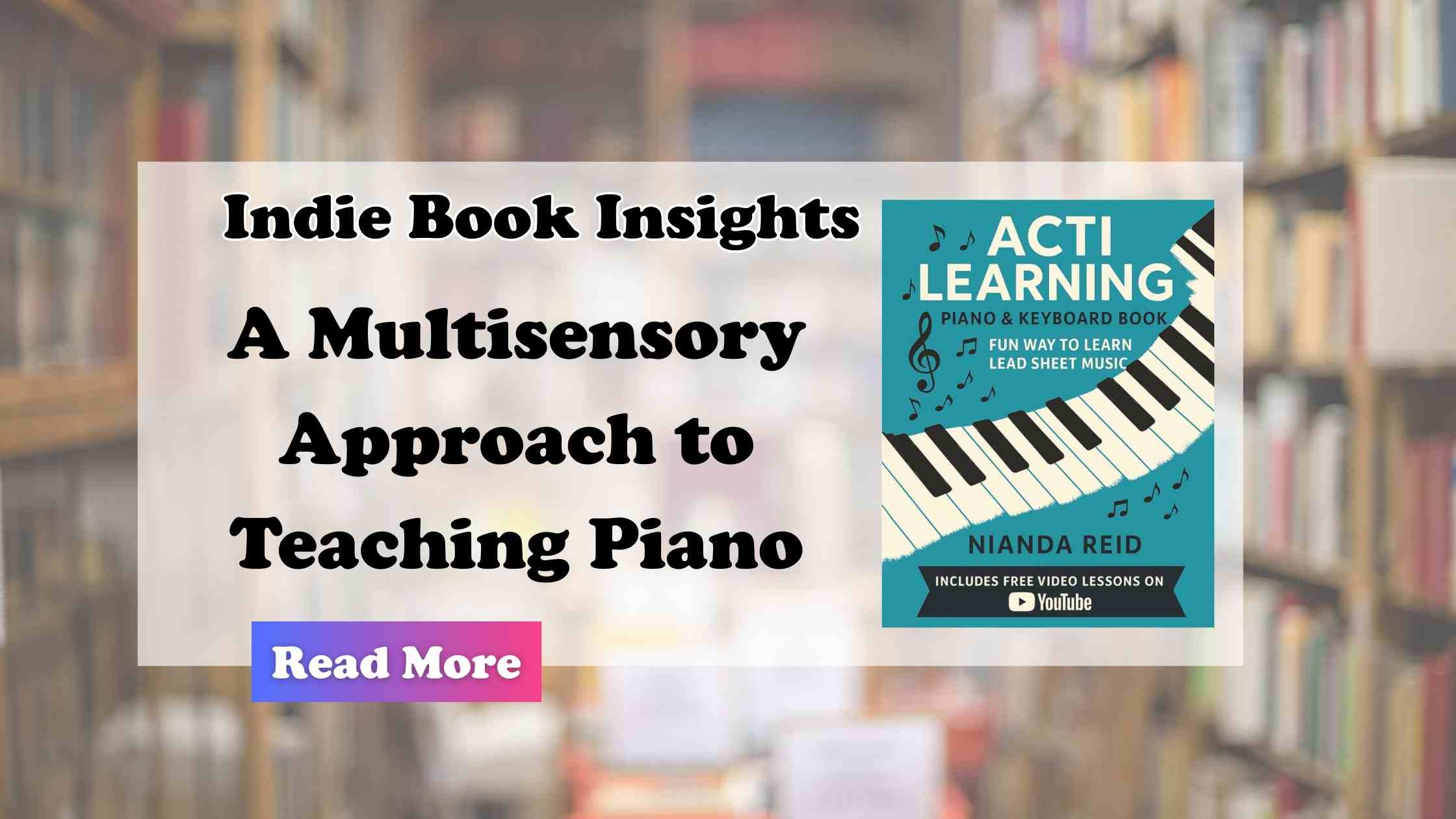
One piano method that naturally includes multisensory learning is Acti Learning Music: Piano & Keyboard Book 1 by Nianda Candace Reid. This book is an invitation to play, listen, create, and explore. From the very first unit, children are clapping, listening to rhythm tracks, improvising on black keys, and composing their own melodies. The book uses playful language and engaging visual layouts. It encourages movement and expression. Concepts like chords, scales, dynamics, and rests are introduced with rhythm games, teacher duets, and YouTube video support, which all enhance the learning experience through multiple senses.
There are even musical quizzes and theory. These will be challenges that break the monotony and spark curiosity. And by the time children reach later units, they’re interpreting, composing, and understanding music on a deeper level.
The multisensory approach is more than a teaching technique. It is a bridge to joyful, effective music education. Children flourish when they can see, hear, move, and feel what they’re learning. If you want to give your child or students a richer, more complete way to learn piano, this method is the key.
Start your journey with Acti Learning Music: Piano & Keyboard Book 1.