Each one of us is unique and different. Our choices, perceptions, and passions vary, which makes each one of us different and extraordinary from the rest.
However, some individuals stand out. The same goes for Kai Simons, MD.
Leading the way in redefining research culture in Europe, Kai is a key figure in modern cell biology whose ground-breaking work has revolutionized our understanding of the organization of cell membranes.
With multiple decades of groundbreaking discoveries and institutional accomplishments under his belt, Simons is the CEO of Lipotype GmbH and Director Emeritus of the Max Planck Institute for Molecular Cell Biology and Genetics.
Simons’ scientific journey began at the University of Helsinki, where he earned his MD degree and board certification in 1964. His early work focused on biochemistry and cell biology. After completing postdoctoral research with A.G. Bearn at Rockefeller University in New York, he returned to Helsinki and persued appointments in the Departments of Biochemistry and Bacteriology and Serology.
During these formative years, Simons developed a deep interest in the structure and function of cell membranes.
One of Simons’ most significant contributions to cell biology is his pioneering work on lipid rafts, a key organizing principle of cell membranes. Lipid rafts are specialized microdomains within the membrane. They are composed primarily of sphingolipids and cholesterol, which play a critical role in cellular processes such as signaling, trafficking, and protein sorting.
Kai Saimos’s discovery of lipid rafts challenged the traditional view of cell membranes as homogeneous structures, offering a new perspective on membrane organization and function. Moreover, his research opened new avenues for studying the mechanisms underlying various diseases, including cancer, neurodegenerative disorders, and viral infections.
Simons’ insights into the phase-separating capabilities of lipids revolutionized the way scientists understood cellular membranes and led to the development of new techniques for studying membrane dynamics. His research continues to have a profound impact on fields ranging from immunology to virology, and his work with Lipotype GmbH, a company he founded to provide lipid analysis services, extends his contributions to applied science.
Beyond his research contributions, Kai Simons has played a pivotal role in shaping the culture of scientific research in Europe. In 1975, he became a Group Leader at the European Molecular Biology Laboratory (EMBL) in Heidelberg, where he started the Cell Biology Program. Under his leadership, EMBL became a focal point for molecular cell biology in Europe, bringing together scientists from across the continent to work on cutting-edge research.
Simons’ vision for EMBL is different and reflects his broader philosophy. According to him, scientific progress was best achieved when scientists worked together, sharing ideas and resources. This collaborative approach became a hallmark of the institutions he helped build, including the Max Planck Institute for Molecular Cell Biology and Genetics in Dresden, which he founded in 2001. The institute quickly gained international recognition as a leading center for research in molecular cell biology, attracting scientists from around the world.
Simons’ influence also extended to individual institutions. For example, his commitment to fostering young talent and encouraging innovative, original research led to the establishment of the European Research Council (ERC), which later became the most important funding agency for fundamental research in Europe. Simons’ advocacy for supporting young researchers and creating dynamic, interactive research environments is reflected in the success of the ERC and the countless careers it has supported.
Throughout his career, Kai Simons has been recognized with numerous awards and honors for his contributions to science. Among these accolades are the Anders Jahre Prize for Medical Research, the Schleiden Medal of the Academy Leopoldina, the Laurens van Deenen Medal, and the Runeberg Prize. He has also been a Harvey Society Lecturer and a Keith Porter Lecturer for the American Society for Cell Biology. Furthermore, his scientific achievements have been recognized globally, and he has been named Doctor Honoris Causa by multiple universities, including those in Geneva, Oulu, Kuopio, and Leuven.
Simons is also a foreign member of the National Academy of Sciences in the United States and has served as the President of the European Life Scientist Organization. His influence on global research extends, demonstrating his role as co-director of the Shanghai Institute for Advanced Studies at the Chinese Academy of Sciences in 2007-2008.
In short, Kai Simons’ legacy is defined not only by his groundbreaking research but also by his efforts to transform the culture of scientific research. His leadership at EMBL, the Max Planck Institute, and the European Research Council reflects his belief that science thrives in environments that encourage collaboration, support, creativity, diversity, and interdisciplinary exchange.
By promoting cooperation among scientists, Simons helped create a new model for research institutions in Europe, one that emphasizes collective achievement over individual competition.
Simon’s dedication to fostering the next generation of scientists has left an indelible mark on the global scientific community. His collective approach underscores the importance of collaboration in science and other areas of life to thrive—for years to come.
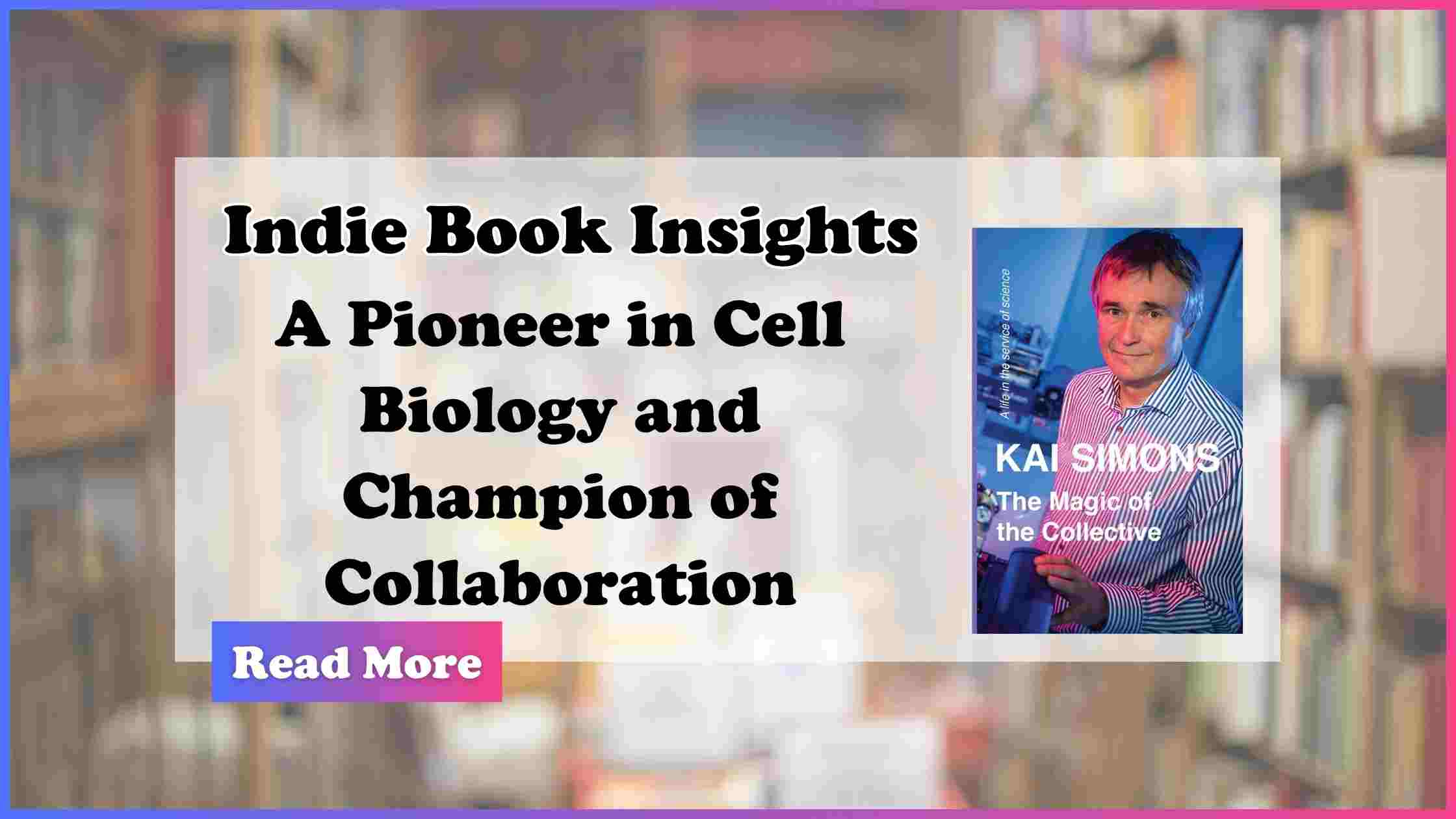
To learn his collaborative approach and various other crucial aspects of science, get your copy of “The Magic of the Collective: A Life in the Service of Science” from Amazon: https://www.amazon.com/dp/1917007027.