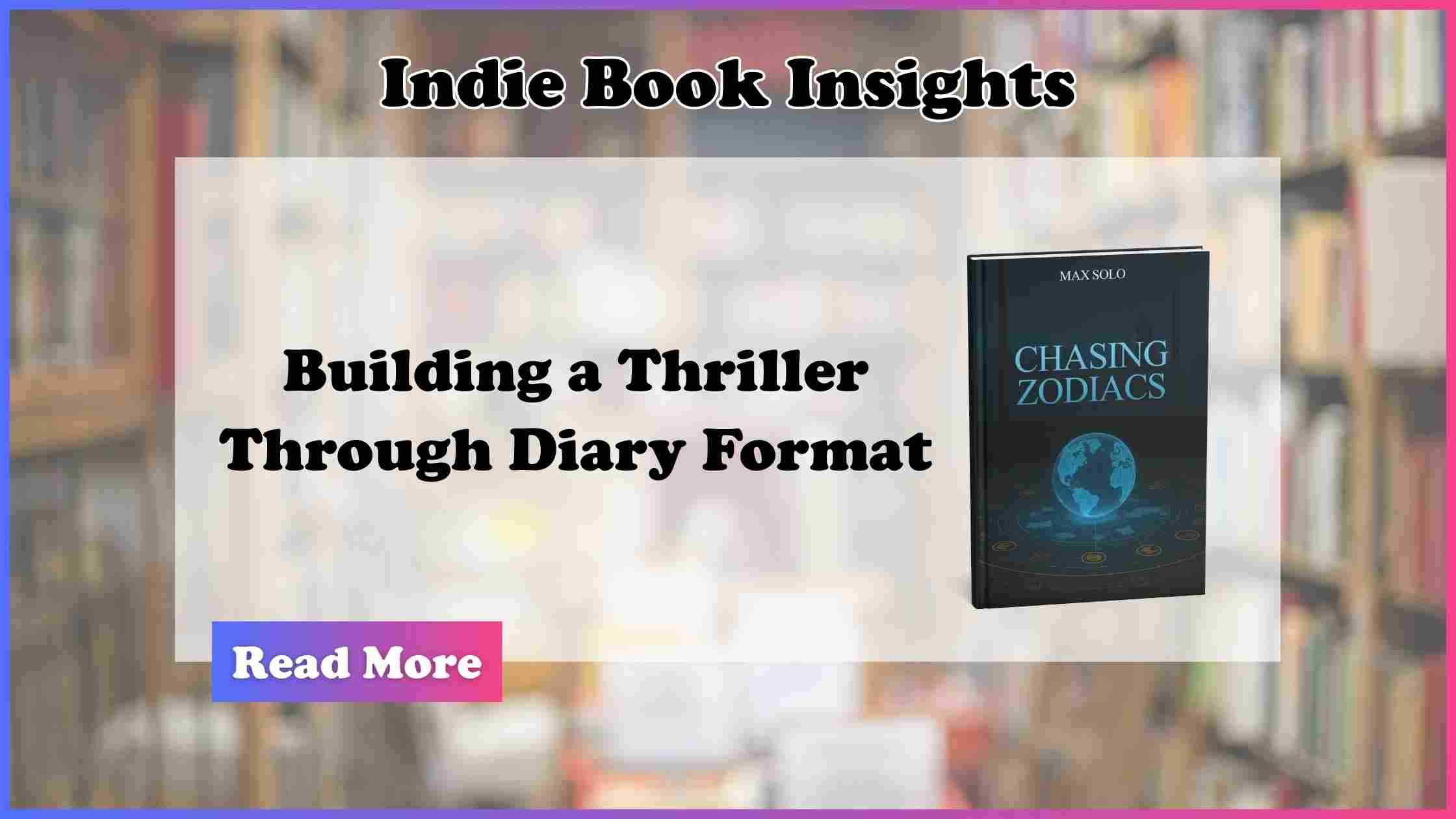
Thrillers often depend on speed. They propel readers through rapid chases, tense confrontations, and moments where every decision seems life-or-death. However, the most impactful thrillers sometimes slow down and allow readers to focus on one voice at a time. That is what the diary format accomplishes. It introduces a different rhythm, one that is intimate, fragmented, and deeply personal. In Max Solo’s Chasing Zodiacs, this method transforms a story of global surveillance and human exploitation into something that feels close, raw, and urgent.
The diary format is not just a stylistic choice. It changes the way readers experience the story. Instead of following events from a distance, we see them filtered through one character’s mind. In this case, it is Max, an AI researcher scarred by violence and thrown into a battle with forces far larger than any one person. Each entry, each note, feels like a record left behind, as if Max is writing not only to remember but to survive. This makes the stakes feel heavier. If Max does not write it down, maybe the truth will vanish forever.
Using a diary structure also helps the story feel unstable in the right way. Max’s accounts are fragmented, sometimes unreliable, and often written in bursts. For a novel that deals with manipulation of data, erased identities, and global corruption, this fits perfectly. The gaps in the record remind readers that memory itself is fragile. What is missing may be just as important as what is written. In this sense, the diary format mirrors the central theme: truth is always under threat, and holding on to it takes effort.
Another strength of the diary style is how it links the personal with the global. Chasing Zodiacs deals with AI, trafficking, and syndicates that operate across continents. But through Max’s entries, these large systems are kept grounded in human feelings, fear, resilience, anger, and hope. The reader sees how technology and crime affect individual lives. The scale of the problem feels both overwhelming and deeply personal.
The diary format also heightens tension. In a typical thriller, readers might jump between characters to see every perspective. Here, everything hinges on what Max knows or uncovers. This builds natural suspense: what hasn’t been revealed yet? What is Max hiding? What occurs after the final entry? Every missing piece intensifies anticipation.
Some readers may find the style unconventional, but that is also its strength. The clipped updates, coded reflections, and fragmented notes feel close to how we consume information today. Messages, alerts, and broken data streams are part of modern life, and in that sense, Max’s diary is not far from reality. Solo turns this into a storytelling device that feels both fresh and eerily familiar.
Ultimately, the diary format in Chasing Zodiacs creates a thriller that explores not only global networks but also the fragility of one voice fighting to be heard. It demonstrates how stories don’t need to be told in perfect order to be impactful. Sometimes, the cracks, silences, and hurried notes are what make the story most compelling. For readers, the experience feels intimate, haunting, and impossible to ignore.
Do you dare to read this thrilling tale? If you are interested in knowing more, we recommend reading Chasing Zodiacs. Head to Amazon to purchase your copy.