Have you ever wondered if life on Earth truly began here? Or if our roots stretch far beyond our planet? For centuries, humans have gazed at the stars and asked where we came from. While science has explained much about evolution, the question of life’s very beginning remains wide open. Some researchers suggest that perhaps our origins are not purely Earth-bound at all, but cosmic. This idea is not only fascinating from a scientific perspective but also fuels much of our science fiction storytelling.
The theory of panspermia is at the center of this conversation. It suggests that the components of life, or even microscopic life forms, may have been transported to Earth from other parts of the universe by interstellar dust, comets, or asteroids. In other words, we might all be children of the stars in a far more literal way than poetry suggests.
Interestingly, modern science has found hints that make this possibility harder to dismiss. Meteorites that have fallen on Earth have been found to contain organic molecules, including amino acids, which are the building blocks of proteins. Even more exciting, some space missions, like those studying comets, have found these same molecules floating in space. If life’s raw materials are scattered throughout the galaxy, then the chance that they seeded Earth becomes more plausible.
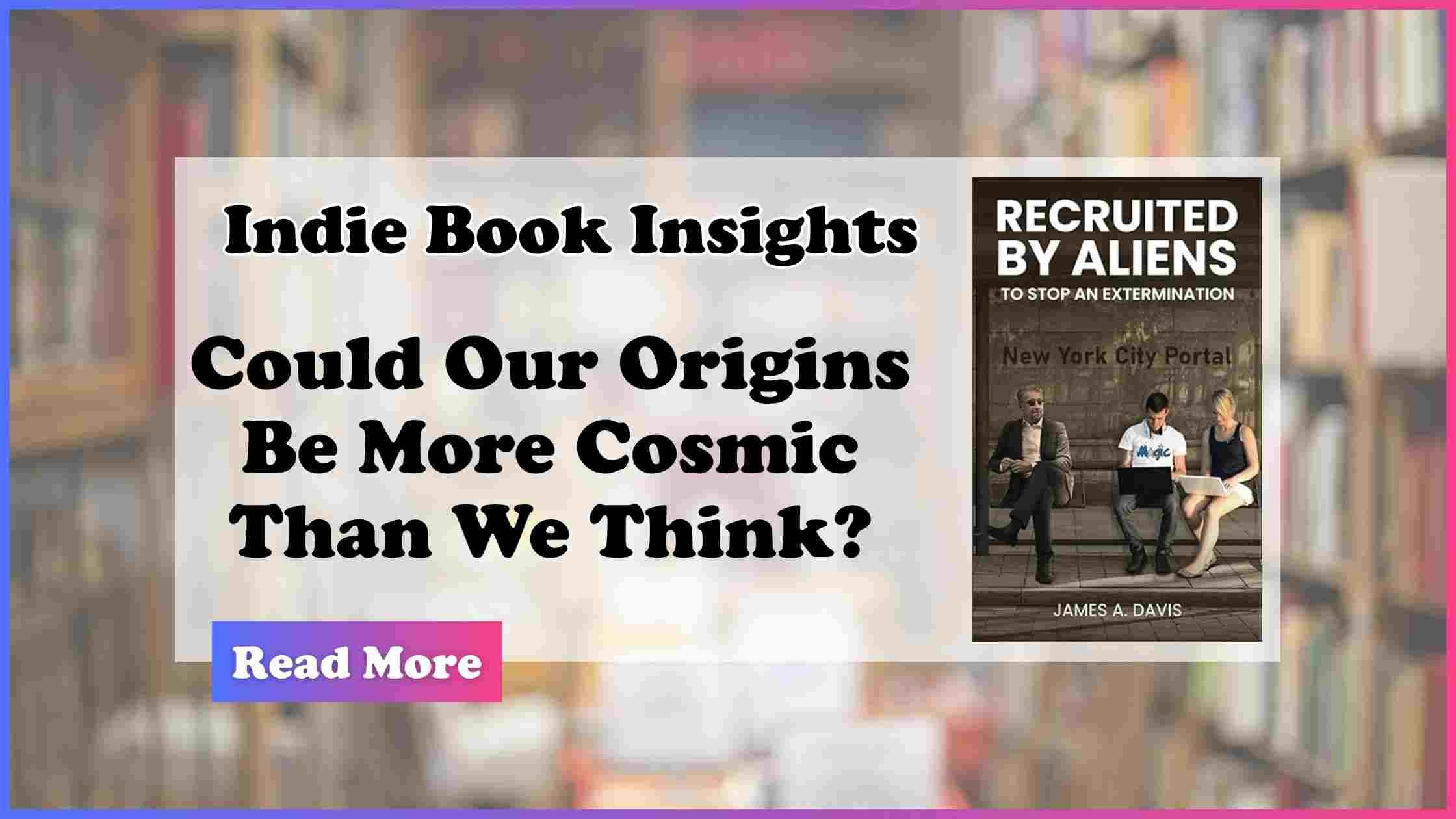
This idea resonates strongly in fiction because it transforms our sense of identity. In James Davis’s Recruited by Aliens, for instance, the story plays with the notion that alien intervention might have played a role in shaping human evolution. While framed as a thrilling adventure, the idea taps into real questions: What if human beings are more than an Earthly species? What if we were designed, guided, or nudged into existence by forces beyond our world?
From a human perspective, the thought is both humbling and empowering. On the one hand, it casts doubt on the notion that we are special beings, formed by accident in a tiny region of the universe. The possibility that we are a part of a much wider web of life that spans the galaxy, on the other hand, is what links us to.
Critics of panspermia point out that while the theory explains where life’s building blocks might come from, it simply shifts the question: where did those molecules originate? Did life arise on some distant planet and hitchhike to Earth, or did it spark independently wherever the right conditions existed? These debates are ongoing, and new discoveries from telescopes like the James Webb Space Telescope are adding more data to the discussion every year.
What matters most, though, is how such ideas expand the way we think. They remind us that science is not only about cold facts but about curiosity and imagination. Science fiction plays a key role here too, taking these theories and exploring what they might mean for us as individuals and as a species. If our DNA carries echoes of the stars, then our destiny may also be written in them.
So, could our origins be more cosmic than we think? The evidence suggests it is possible, and the questions raised are too compelling to ignore. Books like Recruited by Aliens bring these possibilities to life, making readers ask not just “where are we going?” but “where did we truly come from?” That, perhaps, is the greatest mystery of all.
Grab your copy on Amazon: https://www.amazon.com/dp/B0DFCVLJK3.